


25 March 2026
Robert Longhurst is a consultant optometrist, but outside of the testing room he can be found writing, running, or hiking.
Those interests have combined in the publication of his debut novel, A Man and a Mountain.
Longhurst describes the novel as a story “about what happens when life quietly falls apart and what it takes to begin putting it back together.”
The novel follows character, Tom Briggs, who, experiencing heartbreak, loneliness and a “growing sense of disconnection” decides to climb Scafell Pike, Cumbria, on Christmas Day.
Longhurst explained to OT: “As he climbs, the challenge becomes less physical and more internal. The mountain forces him to confront memory, regret and identity.”
“It is not about achievement, but about survival, acceptance, and the possibility of change,” he said, adding: “Ultimately, it’s not a story about reaching the summit, but about making it back down and realising that even in difficult moments, change remains possible.”
Ultimately, it’s not a story about reaching the summit, but about making it back down and realising that even in difficult moments, change remains possible
Built on a personal experience
Longhurst told OT that the story is inspired by his own experience, written during a period when he felt lost.
He said: “There were moments during that time where I felt overwhelmed, isolated and unsure how to move forward. At my lowest, I came closer than I would like to admit to not wanting to be here at all. On the surface I was still working and functioning, but internally it was a very different experience.”
“That contrast between how someone appears and how they are actually coping is something that has stayed with me,” he said.
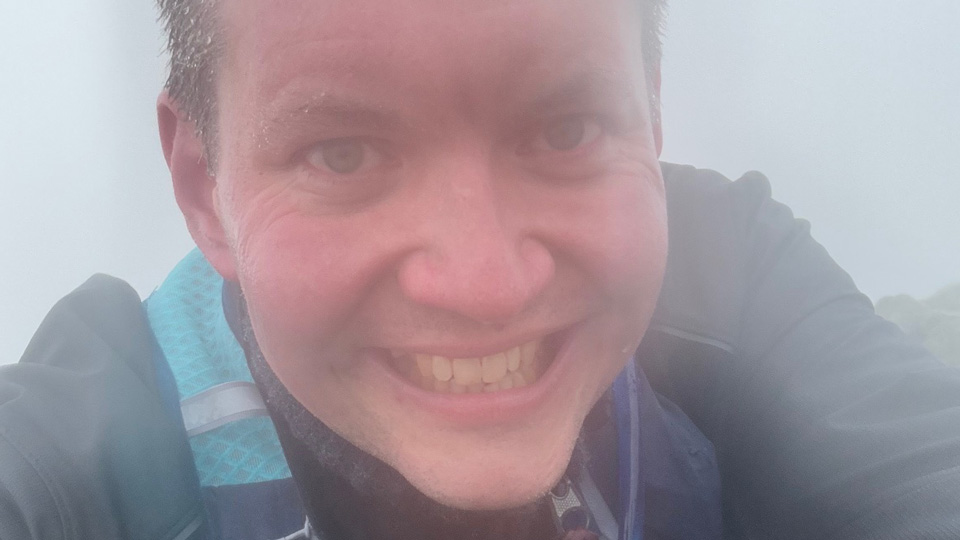
Christmas Day in 2024 saw Longhurst climbing Scafell Pike, a decision he describes as “not especially rational or well-planned. It felt more instinctive.”
“That Christmas, I was not in a particularly good place mentally. It is a time of year that can amplify how you are feeling, and for me it highlighted a sense of loneliness and disconnection that I had been trying to manage quietly,” he said.
Conditions on the mountain changed quickly, bringing a sense of vulnerability, he shared.
“There is a point where you realise you are completely responsible for your own safety, and that brings a kind of clarity that is difficult to find in everyday life,” Longhurst explained.
He added: “At the same time, there were moments of stillness and perspective that stayed with me. Being removed from everything familiar strips things back. You start to think differently, or perhaps more honestly.”
Climbing the mountain brought a physical and emotional exposure that Longhurst suggests is difficult to replicate elsewhere.
He said: “There is nowhere to hide, and I was forced to confront thoughts and feelings I had been avoiding. That experience shaped much of Tom’s journey in the book.”
A chance meeting
A turning point in the novel comes when Tom meets Yusuf, Longhurst shared, describing this character as: “A quiet stranger who offers warmth, presence and perspective at a critical moment.”
Speaking with OT, Longhurst acknowledged that he encountered someone on his own hike, a delivery driver from Luton called Ali.
Describing this interaction, Longhurst shared: “He was quiet and kind, and he shared his biscuits with me when I had brought no food. We only walked together briefly, and then he was gone, almost as suddenly as he had appeared. That planted a seed that later became Yusuf in the novel.”
Starting conversations in optometry
Writing the novel became a way for the optometrist to process the experience, but over time Longhurst realised many people can relate to going through periods where they feel lost, overwhelmed, or unsure of how to move forward.
He said: “I wanted to share it because if even a small part of it resonates with someone, or helps them feel a little less alone, then it has served a purpose.”
The story has connected with others in the profession.
Longhurst told OT: “The response within the profession has been more meaningful than I expected. I think many colleagues have recognised parts of themselves in the story, particularly around the idea of appearing to cope on the surface while managing a lot internally.”
I think many colleagues have recognised parts of themselves in the story, particularly around the idea of appearing to cope on the surface while managing a lot internally
“I have had a number of messages from optometrists and other clinicians who have shared their own experiences more openly as a result of reading it or seeing discussions around it. That has probably been the most important outcome for me. It has started conversations that might not otherwise have happened,” he said.
A group within the profession are now considering planning a hike of Scafell Pike as an opportunity to promote wellbeing and to encourage conversations.
Longhurst commented: “What has been especially rewarding is seeing something that started as a very personal experience begin to create a sense of shared purpose. It has prompted reflection not just on individual wellbeing, but on how we support each other as a profession.”
The meaning behind a spring onion
An unlikely item referenced within the story has become a meaningful theme beyond the page.
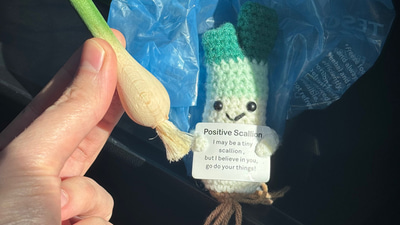
In the novel, the main character, Tom, sets off for the mountain with a spring onion in the glovebox.
Longhurst shared: “It is never fully explained, but it is meant to symbolise a small piece of stability in the middle of uncertainty and ‘something green in a grey world.’”
The author explained that the idea for the small detail came from a series of children’s stories he had previously written. He had decided to include a reference to the vegetable in all of his writing.
Longhurst shared that this has become a simple way of “creating space for honesty,” adding: “Sometimes it is easier to start with something small and slightly unexpected.”
He is encouraging colleagues to share their own ‘spring onion’ moments on social media, reflecting on their experiences and conversations that might otherwise remain unsaid. Colleagues can participate by using the hashtags #SpringOnionStories and #BehindTheSlitLamp.
“I would encourage colleagues to engage in whatever way feels comfortable, whether that is posting an image of a spring onion with a personal story or just a sentence about something they are struggling with, or simply taking a moment in clinic to listen more closely. If something that small can help open that space, then it is worthwhile,” he shared.
Learnings for the testing room
Sharing his story with OT, Longhurst highlighted the underlying context that patients can bring with them into a consultation.
He said: “I am very aware that patients rarely present with purely clinical problems. They bring context, stress, and often unspoken difficulty.”
The experience Longhurst had hiking Scafell Pike has influenced how he practises as an optometrist.
“As optometrists, we often meet people at routine moments in their lives, but those moments do not always reflect what is really going on,” he said.
Longhurst continued: “It has made me more aware of the importance of listening, of picking up on what is not immediately obvious, and of recognising that small, human interactions can have a much greater impact than we might realise.”
As optometrists, we often meet people at routine moments in their lives, but those moments do not always reflect what is really going on
Small shifts forward
Asked what he hopes readers take away from the book, Longhurst commented: “I think, above all, I hope readers take away a sense that they are not alone in how they feel.”
“Many people go through periods where life feels overwhelming, where they are struggling quietly and carrying more than they show to others. If the book helps someone recognise that those experiences are shared and valid, then that is important,” he said.
He is also hopeful that the story offers a sense that things can change: “The story is not about a perfect resolution. It is about small shifts, small moments and the idea that moving forward is still possible, even when it does not feel that way.”
From his perspective in the testing room, he said: “I hope it encourages a slightly different way of looking at the people we see every day. Patients, colleagues and even ourselves. It is a reminder that what is visible on the surface is not always the full picture, and that small acts of care, attention and kindness can have a meaningful impact.”
For Longhurst, the pages keep turning as he explores further stories around the themes of growth, kindness and “finding your place.”
“I would like to continue building on what this book has started. Not just in terms of writing, but in terms of the conversations and connections it has created,” he said.


Comments (1)
You must be logged in to join the discussion. Log in
John Gurney26 March 2026
Great article Rob glad you came out the other side
Keep up the writing budd , you never know you may even see it on the big screen one day
ReportLike1