


05 June 2025
Often when it comes to making decisions in practice, the choice can be made instinctively – a confidence that comes from seeing the same set of circumstances many times before.
But when there is hesitation in the best course of action, or a decision falls in uncharted territory, many optometrists welcome the opportunity to walk down the corridor or pick up the phone to seek guidance from a colleague.
Below, OT presents insight from experienced optometrists on the approach they take in a range of myopia management scenarios – helping you to make an informed choice in practice.
The experts
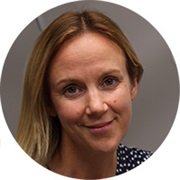
Name:Sarah Farrant
Occupation:Optometrist and director, Earlam and Christopher Optometrists
Location:Taunton

Name:Dr Keyur Patel
Occupation:Optometrist and director, Tompkins, Knight & Son Optometrists
Location:Northampton
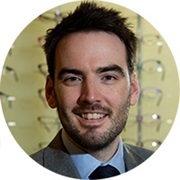
Name:Craig McArthur
Occupation:Optometrist and director, Peter Ivins Eye Care
Location:Bearsden
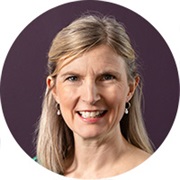
Name:Gillian Bruce
Occupation:Clinical lead optometrist, Cameron Optometry
Location:Edinburgh
A patient’s myopia is continuing to progress at a faster than expected rate despite using a myopia management intervention
Sarah Farrant (SF):
When things aren’t going to plan, it’s important to consider whether patients are actually complying with the regime. It may be a case where they are not using the intervention enough – they are taking the glasses off at home or they are not wearing their contact lenses all day.
You need to go back to basics and ask ‘What time do you put your glasses on in the morning?’ or ‘When do you put your contact lenses in?’ The solution may be a simple one – the patient might tell you that their spectacles are getting sore around their ears. Sometimes those small things can have a big impact.
Another thing is that even when patients are in treatment, we are talking to them about their visual environment – screen time, working distance and outdoor time. It is an ongoing conversation.
You may also want to consider doing something different – for example, from a spectacle into a soft contact lens or swapping from a soft contact lens into orthokeratology (ortho-k).
I wouldn’t rush that decision, but if they are really not engaging with that particular therapy then it is worth considering whether there is a better option. A key aspect of this is managing expectations. From the beginning, you want to make sure that the patient fully understands that we are not halting progression – we are just aiming to slow progression down.
Craig McArthur (CM):
My advice would be not to react too quickly – stay the course with your initial treatment plan and only make changes if a prolonged period of progress has been noted. Children don’t grow in a linear manner. Myopia is much the same. A growth spurt in height is commonly observed throughout childhood.
Explaining that myopia can progress in a similar manner helps patients and parents understand that growth in the eye is inevitable and normal. If we react too quickly, we may miss a period of myopic stability. It is important to set expectations before treatment that some progression is normal. The aim of treatment is to slow the rate of progression rather than stop it in its tracks.
Gillian Bruce (GB):
This can happen, so it’s important to discuss with families before starting treatment that average efficacy varies — some eyes respond better than others, while some may not respond at all. While we can’t predict individual responses, we can identify those at higher risk of progression based on factors such as ethnicity, age of onset, previous progression rate, parental myopia, and lifestyle.
It’s important to be clear and consistent in how you measure progression and define success. I would also recommend assessing adherence to wearing times and reinforcing the importance of lifestyle factors like reducing intense near work and maximising outdoor time while using the intervention. If the patient is comfortable with overnight lenses, then you might consider customisation for better myopia control.
Every child is an individual, with unique genetic and lifestyle risks factors
A patient asks when they will be able to stop their myopia management plan
Dr Keyur Patel (KP):
We know that myopia should ideally stabilise in late teens or early 20s and that would be our goal. Children going into further education may need slightly longer in management, but we are able to cease a treatment and restart if we feel myopia is creeping again. Many of the products, although created with myopia in mind, can be used as ‘regular’ refractive interventions.
SF:
Most people will stop progressing by their early 20s.
I tend to tell patients, when they reach that age, that we can start to consider more conventional contact lens and spectacle options. I find with my patients that the idea of cessation is not a major thing – they don’t dwell on the long-term future.
When people become myopic, they accept that they are going to need some form of correction, whatever form that takes. It makes sense to them to choose a form
of correction that will also slow their rate of progression.CM:
The age where a patient can stop myopia management will vary from child to child. In this scenario, we continue to monitor spherical equivalent refraction (SER) and axial length to ensure there is no rebound effect and no further myopic progression upon cessation of treatment. Every child is an individual, with unique genetic and lifestyle risks factors. Advice on cessation should be based holistically on the child’s individual circumstances.
It is important to inform parents starting their myopia management journey with their child that myopia management is a long-term commitment throughout childhood. I talk about cessation during the first year of myopia management to helpplant this seed and provide complete transparency of the commitment the parents and child are making.
GB:
I would reassure the patient that they only need to stop if they choose to – many patients continue wearing overnight contact lenses into adulthood for convenience. I would also explain that studies show around 75% of myopes stabilise by age 18, 90% by the age of 21, and nearly all will stabilise by the time they are 24, though mild progression can still occur, especially with extensive near work.
Even when patients are in treatment, we are talking to them about their visual environment – screen time, working distance and outdoor time. It is an ongoing conversation
A patient becomes myopic in their teens or early 20s. Would you consider myopia management?
KP:
Yes, particularly if they are showing active progression. Although, we expect myopia to have stabilised in this age group, there is still a cohort of people who will keep progressing. It is important to be honest with the patient about the evidence base and mention the potential ‘off label’ use for these products in older patients.
SF:
You do have cases where this happens, but it’s certainly not common. You need to keep in mind that this is not the typical patient group that is captured in the research – so they may respond differently to the curves you might expect. However, that’s certainly not a reason to refrain from starting myopia management. You need to give them an informed choice, letting them know that they might fall outside of the conventional expected results. It may be more challenging to give them an idea of what their predicted outcome could be.
CM:
Yes absolutely. In this scenario, an open and frank conversation regarding off-label use of myopia interventions should take place. Having full visibility of the individual genetics, lifestyle and educational status can help in decision making. It is helpful to have serial data for SER and axial length combined with predictive software that can help illustrate the likely progression of the patient’s myopia.
GB:
I would recommend firstly ruling out underlying pathology, such as lens changes or keratoconus, which can present initially with low astigmatism. If the patient is concerned about progression – especially if they have a longer axial length, then myopia management would be appropriate.
It should be explained that while there is limited research on treatment efficacy in adults, interventions that suit their lifestyle and vision needs can still be considered. Adults may be more sensitive to visual distortions, so trialling interventions for visual quality is beneficial.
A patient is not yet myopic but is at risk of myopia (eg family history, lower hyperopic reserve)
SF:
If they have a lower hyperopic reserve (a hyperopic prescription of +0.75DS or less at the age of six), I would have that conversation where I explain that the level is lower than we would expect it to be and give them a few tips about how they can reduce their myopia risk. I would advise them to go outside for a couple of hours each day, to ensure that near work is an elbow’s length away and make sure they attend regular eye examinations.
If you are worried about their risk, then you can schedule them for more frequent eye examinations. It’s important to start discussing myopia with them, and the options available, so that when the time comes to start myopia management it doesn’t come as a big shock.
They will be more mentally prepared for it and ready to make a decision because you have given them that processing time. When I have myopic patients who I know are parents, I will remind them to bring their child in for regular examinations. Even with grandparents, it can be helpful to ask if their grandchildren have attended an eye examination.
GB:
My recommendation would be to use the PreMo calculator to quantify and discuss their risk, which will guide advice and re-testing intervals. I would also provide lifestyle recommendations to delay myopia onset. Identifying pre-myopes is crucial, as delaying myopia onset by just one year can reduce final myopia levels by up to 0.75D – comparable to two years of treatment.




Comments (0)
You must be logged in to join the discussion. Log in