


03 January 2025
Combatting confusion over how they can use their phone or pour a glass of water and educating the next generation to see blindness as a normal part of life – it is all in a day’s work for activists and content creators Lucy Edwards and Seren Jaye.
Speaking to OT at the Royal National Institiute of Blind People’s Braille 200 event in November, Edwards and Jaye – both of whom became blind as teenagers – revealed how they have grown up with their sight loss – and how being vocal online has helped to educate their followers about disability.
Are there any recurring questions that you find yourself being asked by followers about your sight loss?
Seren Jaye (SJ): The most common is how I use my phone. I think people assume that we can’t do anything. Especially if I do a live video, a TikTok live especially, followers can hear my screen reader in the background. They’re like, ‘what’s that voice?’
People are intrigued once they find out about it, and are much more likely to go and look into it themselves. I often direct people to go and look at their phone settings and see how it works, especially people who are using that to be ignorant. The most common reason for people claiming that I’m pretending to be blind is because they think I can read the comments. But, if you go into your phone settings, you can literally work it out yourself.
Lucy Edwards (LE): I think we had all of those questions at the start. Our channel has kind of moved on, because my followers know Ol and I (her husband Ollie Cave) are planning to have children. Now, it’s more like, ‘Oh, but if you have children...’ and things like that, which is another thing to navigate.
Not a lot of [blind] people have been through the motherhood journey so publicly, like we’re planning to. It’s a new era of questioning that we’re going to get.
Do you find that there are a lot of misconceptions around blind and partially sighted people?
LE: Yes, I’d say so, still to this day. There are amazing people out there, really flying the flag for blindness online. It’s the best time to be blind, in 2024, but also it’s the time where we’re going to find the most misconceptions.
People have never seen blindness within mass media before. They’ve never been confronted with it. They might not have ever met someone who was completely blind, and bam, I’m on their TV on a Pantene advert. They’re like, ‘Oh. I’ve never thought about this before.’
Hopefully, in 10, 15, or 20 years, or sooner, we’re going to move past the misconception phase. I think it’s this generation that is really pushing forward that curiosity. I’m in awe of the people who do this job alongside me. It can be hard, sometimes, to give answers when you’re thinking, ‘oh my gosh, this is such a simple question.’
When I first lost my vision, I was so incredibly grief stricken. I was so angry at the world, and didn’t understand when people would ask those questions, even though I was asking them to myself. Now, I’m in a good place emotionally. I’ve been blind for 12 years, and these questions really do ricochet off me.It’s the best time to be blind, in 2024, but also it’s the time where we’re going to find the most misconceptions
But also, I can come from a place, now, where I really do understand where that’s coming from. I don’t want to shoot down the question if that’s the first time someone has ever asked it, because they’re genuinely coming from a place of really wanting to know.
We don’t want the elephant in the room. People like me, who want to educate – let us take the mantle. I can do it. I can answer ‘how do you pour a drink?’ until I’m blue in the face; it doesn’t faze me. But maybe other blind people won’t feel that way.
It’s making sure that you ask your question to the appropriate person, in a way that is accurate and thoughtful. But it’s important to still ask it, because we need misconceptions to be broken at this stage.
SJ: People don’t realise how much of a spectrum it is. People always assume that blind means no light perception, nothing. Obviously, that is the case for some people, but not the majority of people. That causes the most problems for me online, because people don’t understand that, and then they equate it to, ‘Oh, she must be faking it.’ Actually, it’s because they don’t understand that having a little bit of vision left still means I’m blind. I think that’s the biggest misconception.
The most common thing that people say to me is, ‘Oh, but you’re only partially sighted.’ Firstly, only partially sighted? Partially sighted people still have their own struggles, but also, I’m registered as severely sighted impaired. I think, because my eyes look ‘normal,’ and because I do have very sighted mannerisms, people always assume that I can see more than I can.
Seren, you are studying for a journalism degree. How much do you think the media would benefit more from increasing diversity in terms of blind and partially sighted people?
SJ: I’m applying for a BBC apprenticeship at the moment. We’ve been to BBC forums and things, and there are amazing things said about how they’re trying to get more inclusive.
But there are also so many media outlets and companies that I’ve had to contact and basically nag about adding image descriptions and alt text and video descriptions, and they’re only just getting around to it. We’ve got all of this AI technology these days, that can do it for them, so it can be really frustrating that they don’t. News is actually really hard to access as a blind person, because of that.
Screen readers can cope with the BBC News website, but I am Gen Z. I get all my news through social media. To not be able to do that is really frustrating. I didn’t realise how much I use social media to get all of my news until I lost my sight, and then that’s suddenly taken away, because they don’t make it accessible.
I’m an ambassador for the Purple Tuesday charity, and they’re all about making businesses more inclusive. They’ve done research on the purple pound, and [concluded that] businesses are missing out on billions of pounds every year because they don’t include disabled people.
70%
of disabled people will not return to a business after receiving a poor customer service, according to Purple Tuesday
You are also a Rainbow and Guide leader, and have been teaching your groups about the importance of braille – how valuable are you finding being able to share that knowledge and learning?
SJ: I think it’s amazing. Teaching them at that young age, and being able to talk to the Guides about it and let them ask any questions, means that they go out into the world and they already know about it.
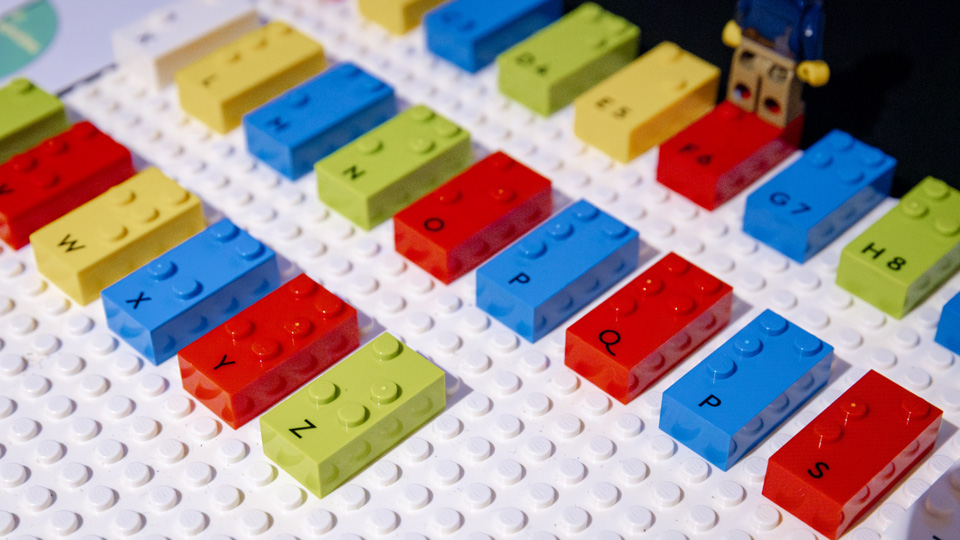
They don’t feel as scared of it. I feel like that’s something that could be quite scary to a lot of adults. But if they’re taught about it when they’re younger, and then they come across blind people later they might think, ‘Oh yes, I had a blind Rainbow leader when I was little.’ It normalises it from a really young age. The Rainbows have been really enjoying the braille Lego set I was sent, too.
Lucy, what have you got next in the pipeline?
LE: Recently, I’ve moved on from being a Pantene ambassador, and now I’m the ambassador of blind Barbie, which is super cool – the first ever Barbie doll that has a long white cane. It was developed with RNIB and the American Foundation for the Blind, and I was the face.
I’ve also just acquired funding for my first ever beauty brand, focusing on make-up, which is solely owned by me and my management team and my husband. We’re working with the seed funding from Estee Lauder and TikTok to mentor us on that journey.
I have a children's book being publishing in February. It’s named Ella Jones versus the Sun Stealer. It’s about a little girl, Ella, who has just lost her vision, and her guide dog, Miss Maisie. With her sister, Poppy, and her best friend, Finn, she tries to save the world from going completely dark.
It’s Ella’s job to rid the world of evil. Her sighted family members really do cling onto her, and it’s up to her to understand her sight loss in a way that she never has before, and be the heroine.
I wanted to write a children’s book because I didn't see any accurate representations of sight loss in a meaningful way when I was younger. Also, I get asked so many questions about blindness being a superpower. The representation of a young girl who doesn’t have superpowers, who is just an average little girl who has lost her vision, but is genuinely independent, and is having all these emotions and being vulnerable, but having vulnerability as her superpower rather than anything else, is so important.
Lead image: Lucy Edwards with other guests and her guide dog, Miss Molly, at the Braille 200 event


Comments (0)
You must be logged in to join the discussion. Log in