


12 November 2024
Hugo Fairbanks Weston, 25, from Suffolk, is highlighting the importance of sight tests in identifying underlying medical issues, after an appointment at his optometrists for migraines and visual disturbances led to a brain tumour diagnosis.
What led you to have an eye test? Before you went for a sight test, had you experienced any symptoms and how had this affected you in day-to-day life?
Hugo Fairbanks Weston (HFW), patient: I had a few headaches and some disturbed vision with those headaches, before suffering one bad migraine. I had never suffered from migraines before, so I decided to book an appointment at the opticians.
What did the optometrist find, and how did they explain the next steps to you?
HFW: The optometrist, Adrian Kite, was suspicious of my optic nerve being swollen after doing some extra scans on the back of my eyes. He referred me to the eye department at the local hospital who I saw the next day and they confirmed the same suspicions and booked an MRI for the following week.
Can you describe how you felt during the referral?
HFW: Obviously, I did what everyone does and Googled papilloedema and saw what could potentially cause this. However, I definitely didn’t take the potential of it being caused by a brain tumour seriously.
Did you have to undergo further treatment and what has the outcome been?
HFW: I had brain surgery 10 days after my optometrist appointment to fit a shunt in my head and to have a biopsy taken from the tumour to work out what it was and how it could be treated. I then had 28 sessions of radiotherapy which completely removed the brain tumour. I have had three MRI scans since my radiotherapy which have shown the tumour is still all gone.
Have your views on the importance of sight tests and eye care changed as a result of this experience?
HFW: Yes. I definitely think sight tests are much more essential than I did before, as they can unearth more medical issues that just deteriorating sight.
How has the experience affected you?
HFW: It has given me a big change of perspective in that you really never know what could happen to you at any age, so you should just do what you enjoy and spend your time with people who make you happiest.
I definitely think sight tests are much more essential than I did before, as they can unearth more medical issues that just deteriorating sight
What did you identify during the sight test and what was your reaction?
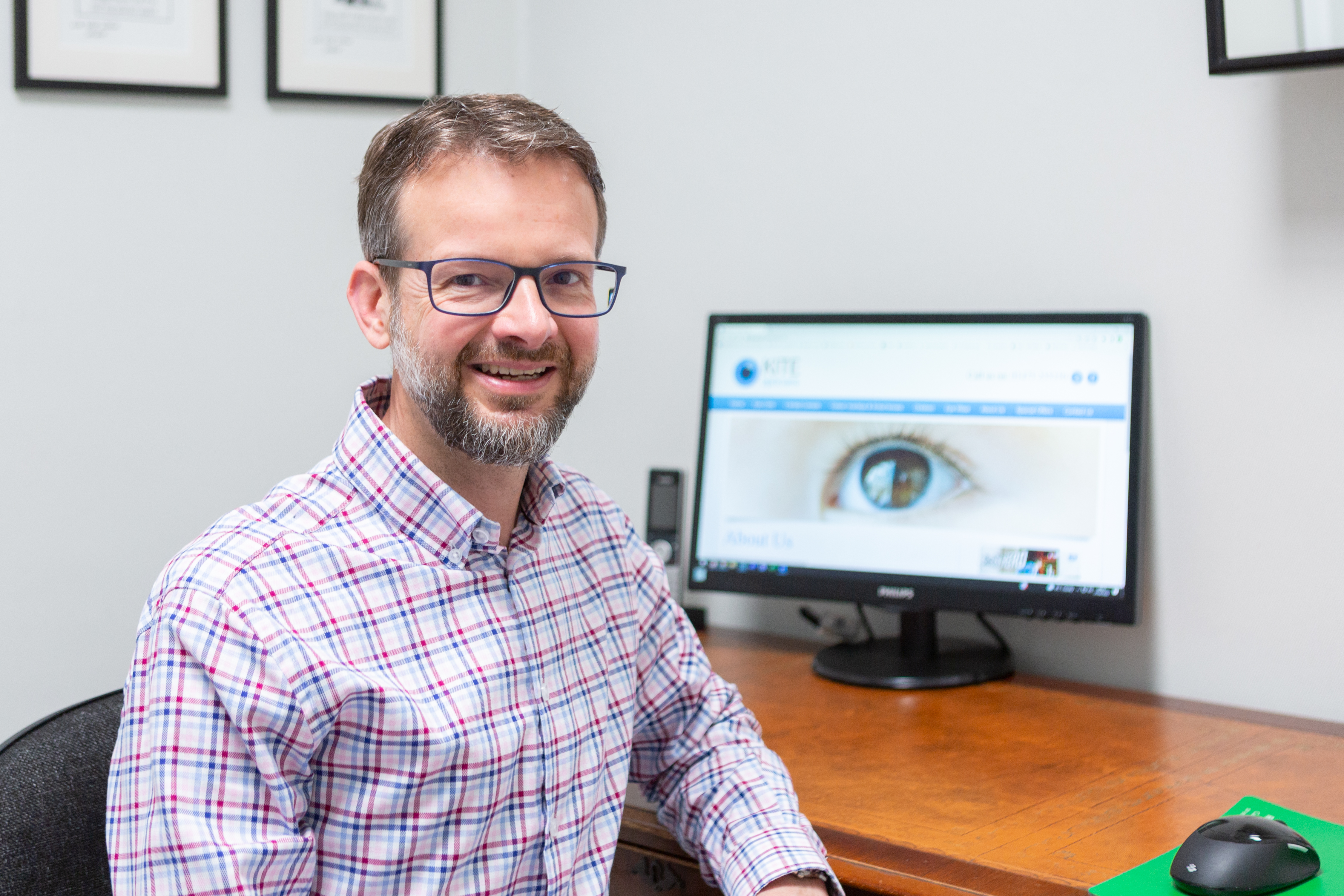
Adrian Kite (AK), optometrist and practice owner of Kite Opticians in Ipswich, Suffolk: Hugo had described symptoms of migraines with visual disturbance as well as headaches, which was something new for him.
On examining Hugo’s eyes, I quickly observed that both of his optic discs looked unusual. Hugo was attending my practice for the first time, so I didn’t have any previous record to compare with. However, the suspicious optic discs, together with the symptoms he described, made me concerned that I was looking at something serious – papilloedema caused by raised intracranial pressure, potentially due to the presence of a brain tumour.
How did you approach explaining what you had identified?
AK: I didn’t want to unnecessarily alarm Hugo, but I explained my observations of apparently swollen optic nerve heads and advised it required urgent investigation in case it was a sign of a serious problem.
What were the next steps that you took, and what was the significance of these steps to this case?
AK: I arranged to do some optical coherence tomography scans of his optic nerves, and the scan results further supported the observation of papilloedema.
I contacted the Ipswich Hospital Eye department to arrange for Hugo to be seen in the acute clinic within 24 hours. It was essential to arrange a rapid assessment in case my worst fears were confirmed, and urgent treatment was required.
I arranged to do some optical coherence tomography scans of his optic nerves, and the scan results further supported the observation of papilloedema
When did you hear about the results of your referral and how have you been involved since?
AK: I received a call from Hugo a few days later to thank me for the prompt referral – an MRI had confirmed an issue in his brain, and he had been sent to Addenbrooke’s Hospital in Cambridge for further assessment.
Hugo’s brother and father came to see me for eye examinations soon after this, so they kept me informed of Hugo’s ongoing treatment – a tumour that was treated by surgery within 10 days of my having seen him – followed by a course of radiotherapy.
What would be your three top tips to other practitioners when making a referral?
- If you observe something unusual and concerning, make use of all the technology available to assist your decision making
- If you are making an urgent referral, take time to communicate this clearly to the patient so that they understand the importance of attending for further tests
- Ensure your referral is clear and to the point – make it obvious if you are suspecting something serious and the patient needs to be seen urgently.


Comments (0)
You must be logged in to join the discussion. Log in