


Fuchs’ dystrophy is a condition that optometrists might start to see more of in practice as the population ages – whilst also being something that practitioners are not overly familiar with.
So, what is Fuchs’ dystrophy? Who might be affected, how can it be spotted, and what should eye care practitioners do if they believe they have identified a case in practice?
In a roundtable discussion, hosted in partnership with Kowa, OT delved into the subject of Fuchs’ dystrophy: from first noticing the condition in the testing room, to onward referral and how this should be handled to ensure timely and appropriate treatment.
Uncovering Fuchs’ in the testing room
Minakshi Jain, optometrist and director at Dry Eye Centre in London, remembers her first diagnosis of Fuchs’ dystrophy in community optometry clearly.
“It was a re-check patient, who was booked in with me in practice,” Jain told OT.
“She had been complaining about the glasses that had been given to her previously. She said, ‘My old glasses are much better in the evening. I go to those older glasses later on in the day.’
“I started putting two and two together, looked at the slit lamp, and I realised that this was my first Fuchs’ dystrophy patient.”
She explained: “That stuck in my head. A different time of day had really changed her prescription.”
Jain will always look at the cornea during her slit lamp examination as part of a regular eye test, and this has led to a handful of diagnoses of Fuchs’ in practice, she said.
The patients first diagnosed in practice have “grown with us as time has gone on,” Jain added.
She believes that the slit lamp is the most important tool in diagnosing the condition.
“It’s a case of knowing how to use your slit lamp, which I feel like people are losing the skill for, because we have so much technology around,” Jain said.
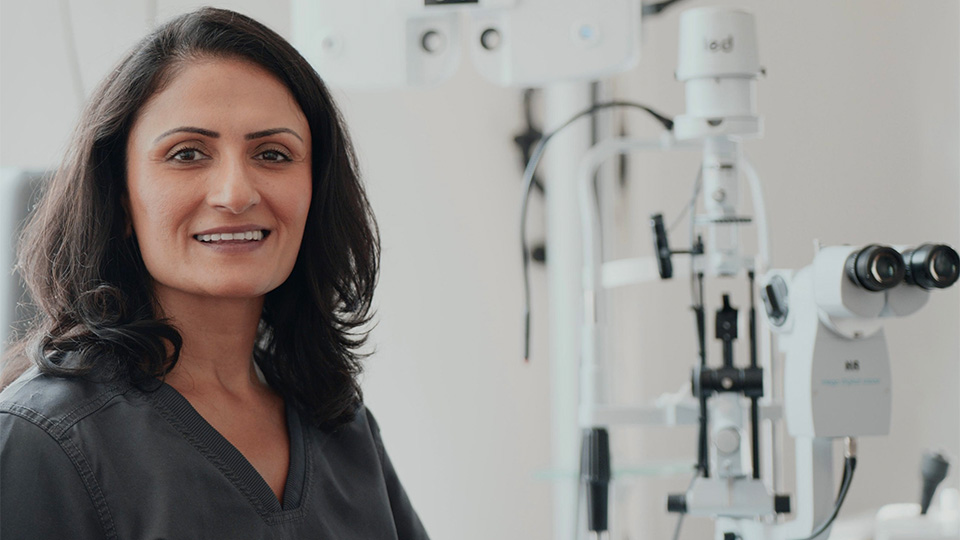
Dr Keyur Patel, optometrist and clinical director at Tompkins Knight & Son Optometrist in Northampton, has also used his usual slit lamp routine to diagnose Fuchs’ dystrophy – although he emphasises that he will not specifically look for the condition unless the patient has other symptoms.
In noticing Fuchs’, Patel said, “You see it outside the beam, and the endothelium doesn’t look quite right, for whatever reason – whether it’s a dot, or a couple of dots.”
He added: “Often I’m doing my slit lamp routine, and I catch it because something doesn’t look quite how I expect it to look. I’ll look a bit closer and detect it.
“In practice, I probably see one Fuchs’ case in a month.”
Purvi Thomson, head of optometry at OCL Vision, will look for Fuchs’ in every patient that she sees, whether they are attending for a routine eye examination or a cataract appointment. Working in a cornea clinic means that she likely sees more Fuchs’ cases than most optometrists, she acknowledged.
“Fuchs’ varies from mild and moderate to severe, but history and symptoms are really important [in diagnosis],” Thomson said.
“If any part of their history or symptoms suggest that I may need to delve a bit deeper, that definitely gives me an inclination to look a bit further.”
Thomson added: “Probably once every few weeks, I'll get a case of Fuchs’.”
Patient history is also vital for Jain. She explained: “It’s important to delve into family members, as well as previous history with glaucoma and other conditions that are interlinked.”
Patel will look more closely for Fuchs’ in cataract patients than he will for others, he explained: “You want to give the consultant a heads-up, so you can say, ‘this patient does have an endothelial issue. Is it worth doing cataract surgery earlier, to make it less problematic later?’”
When discussing monitoring over diagnosis, Patel notes that whether a diagnosis of Fuchs’ is made might depend on how often the practitioner sees the patient.
“We see our contact lens patients every six months, and our spectacle refractive patients at least once a year,” he said.
“In our ability to monitor our patients, we’re very fortunate. If I think something is not right, I can call them back in two weeks.”
Patel explained: “There are not rapid changes for those people in the early stages, in my experience.”
He added: “It’s very manageable in the community, but you will get to a stage where you do need surgical intervention.”
Thomson does not believe that high-tech equipment is required to monitor Fuchs’ in community optometry.
“In terms of monitoring progression, even if you have nothing fancy, you can look at your slit lamp, and you can describe what you’re seeing,” she said, adding: “Visual acuity will be a big clue to that.”
Jain identified anterior segment optical coherence tomography (OCT) as a tool that can be useful in monitoring of Fuchs’.
“You can see a lot more on an anterior segment OCT, so that does help give you the confidence as a practitioner that you’re not missing progression,” she said.
She also noted pain, changes in vision, halos and glare as symptoms that can suggest that the disease is progressing.
For Patel, the Pentacam allows for corneal thickness to be measured easily in the community setting.
“It allows side-by-side comparison, so you can compare your baseline to today’s findings,” he explained.
Patel added: “From a referral perspective, I think that if you can show colleagues in the hospital eye service the numbers, they’re a bit more inclined to go ahead, rather than doing their own series of checks before intervening. You can sometimes speed things up.”
Patel encourages patients to return to practice for the necessary investigations if they experience changes in their vision, he shared – noting that this is the change that patients are most likely to notice and report.
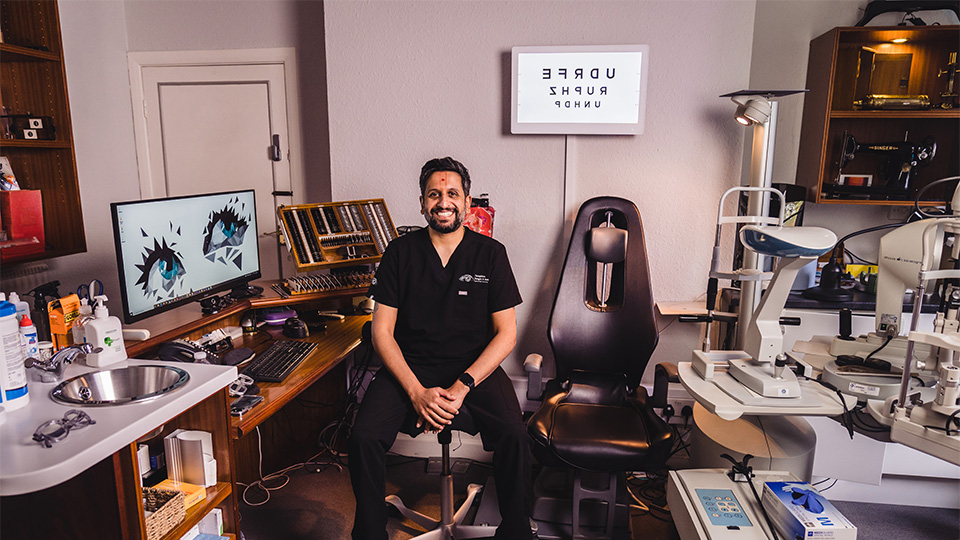
Thomson advises seeing early or mild Fuchs’ patients yearly, but notes that under the NHS there would have to be a very clear justification for why they are being seen.
That comes alongside “explaining to the patient why we need to see them sooner, without causing alarm. It’s all about managing that patient expectation,” she said.
Thomson emphasised: “We’re really well equipped to do that, as optometrists, as long as we give the patient the right education as to what they need to look for should they need to come back sooner.”
She added: “I’m a massive believer in optometrists and what our profession does as a whole. Absolutely, we’ve got all the right tools in the community. We are definitely well-equipped to monitor these patients up until a point where we think they need surgical intervention.”
“We’ve got all the right tools in the community. We are definitely well-equipped to monitor these patients up until a point where we think they need surgical intervention”
Explaining Fuchs’ dystrophy to patients
When educating patients about Fuchs’ dystrophy, Thomson starts with the basics – by explaining what a cornea is.
“I say that a cornea is the transparent front surface of your eye, and that it is a structure that delivers a lot of power to the eye, and does a lot of the seeing of the eye,” Thomson said.
She continued: “That structure has lots of different surfaces, and it’s the back surface that keeps your cornea a certain thickness and keeps it nice and clear, and it does that by pumping fluid in and out of that cornea.
“I explain to them that with their cornea, although it looks very healthy at the front, the back surface is perhaps not as structured as it should be, and that can mean that their cornea can get thicker because fluid develops, and if that happens, their vision can drop.”
Thomson is also careful to reassure patients when explaining the condition to them.
“I explain that it’s quite slow to progress, and there are treatments for it,” she said.
“We monitor this, and a lot of it is based on how they feel and how they see. At any point that they need intervention, there is intervention available.”
Patel has an even more simple explanation for patients, to ensure that they understand the basics of the condition: “There’s a pump on the back surface, and when that pump doesn’t function so well, you get swelling – and your pump is not functioning optimally.”
Jain notes that patients often want to know what has caused them to develop Fuchs’, and that if this is the case she will explain environmental or hormonal triggers.
She also emphasises that patients will react differently to the diagnosis they are given.
“You have to read the patient,” Jain said.
“Some patients want all the information you can impart to them, and they want to soak it all in there and then. Other people need a moment to catch their breath, get the diagnosis under their belt, and then understand long-term implications, or the fact that it is a slow progressive condition, but it is going to progress, and we can’t tell them how quickly.”
On the whole, she believes that most patients do absorb what the optometrist is telling them when it comes to Fuchs’.
Patel explained that he defers to the consultant when it comes to projected long-term outcomes, “because they see a lot more than I do.”
“I don’t want to over-egg it or under-egg it, because once the consultant has discharged that patient after six years, and they end up back in your chair, you end up with the potential long-term disappointment,” he shared.
“Some patients want all the information you can impart to them, and they want to soak it all in there and then. Other people need a moment to catch their breath”
Referral, education, and combatting Dr ChatGPT
The practitioners noted that their jobs have got harder in recent months in one specific regard: while patients going away and Googling their symptoms has been a challenge for a number of years, clinicians now have to consider that ChatGPT might be providing incorrect information post-consultation too.
As a practitioner in private practice, Jain explained that she is happy to spend an extra ten minutes advising patients on more reliable sources of information, “so that I know that they’ve got the right seeds” if they do choose to go away and research themselves.
She also advised bringing lifestyle triggers – smoking, UV light, excessive drinking – back to the condition, to give the patient food for thought to go away with.
Patel emphasised that some patients will always resort to the internet, to second opinions from other practitioners, or even directly to ophthalmologists if they do not believe that the initial information they are being given is correct.
“There is nothing, unfortunately, you can do to placate that kind of patient. You just have to be honest and open,” he said.
Patel added: “I’m a big advocate for, if I don’t know, just saying so. Saying, ‘I’m not an expert in this to that level, but I can guide you to someone who is.’ I think sometimes that’s reassuring for the patient, because they don’t feel that you’re winging it.”
The decision to refer is usually patient-led, Jain said, and is based on whether they report their symptoms getting worse or if they need cataract surgery.
Patel agreed: “One thing patients are very quick at, in my experience, is coming to see us without question if they feel their vision has changed,” he said.
“If that is a driving factor for referral, then you are letting the patient take ownership of it.”
Patel also noted that if a patient is nearing the vison standard where they will be unable to drive, he will pre-empt the conversation around surgery.
Thomson advised considering the waiting list for care, if the patient’s vision looks like it might fall below the standard for driving in the medium-term future.
Dr Mohammad Ahmad, consultant ophthalmologist at Royal Liverpool University Hospital Liverpool, also noted that the waiting list will vary depending on where the patient is in the country – and whether they are an NHS or private patient.
Patel agreed: “If the patient is fortunate enough to either have private cover or have savings, and we can send them privately, we know the turnaround is weeks,” he said.
“If that patients is in a situation where we have to send them to through the NHS, we know that, potentially, it could be a lot longer.”
A new treatment trial

Dr Mohammad Ahmad, consultant ophthalmologist, explains a potential new treatment for Fuchs’ dystrophy that is currently being trialled by Royal Liverpool University Hospital and Moorfields Eye Hospital
“At the moment, the most common way that we treat Fuchs’ that has decompensated is usually in the form of an endothelial transplant. This is usually for people who are more advanced,” Ahmad said.
“There are some patients who have early Fuchs’, and for those patients, before we can go on to do a transplant, there is a question of what can we do for them, especially if their vision is still better than the driving standard, and the cataract is not too bad. Can we do something for them that could potentially improve their vision?
“In this treatment, for people who have early Fuchs’, with just central guttata and a healthy peripheral endothelium, we remove the central three to four millimetres of the Descemet’s guttata, and then we combine that with rho-associated coiled-coil kinase inhibitors.”
Ahmad explained the thought process behind the new treatment: “It increases endothelial migration, leading to corneal and visual recovery. Essentially, you are stimulating patients’ own regenerative potential, rather than putting in donor tissue,” he said.
Why is that important? “At the moment, most patients will wait for their vision to drop below a driving standard, for instance. With this, if it becomes well established, you could intervene early, we could avoid doing a transplant, and then do a relatively smaller, quicker, and less invasive procedure,” he said.
“Hopefully they retain more of their own endothelium in the long-term, so there is less likelihood of rejection, and less likelihood of graft failure. If something fails, the patient can have a corneal transplant anyway,” he added.
Patel believes that “anything that stops a more complicated intervention is good for the patient.”
He added: “I’m a big believer in starting simply, and getting more complicated only when necessary. If this is a simpler procedure, and you can get any level of help to stop a more complicated endothelial procedure, which then involves six years of follow-up with a consultant, that’s great.
“If the consultants are happy to perform the surgery and to release the patient into the community, that’s potentially a couple of years’ worth of NHS appointments where they can instead see patients who do need more complicated surgical intervention.”
The Fuchs’ learning curve
OT is interested in hearing whether there are any key moments that have shaped how practitioners now approach screening for Fuchs’ in practice.
“One case that stands out to me is a patient who came after having cataract surgery elsewhere,” Thomson said.
“They brought their letter saying they’d had cataract surgery, and when I looked, they had a decompensating cornea. I looked at the untreated eye, and they had Fuchs’.”
She explained: “To me, it showed that there still is a lack of knowledge in some areas, where the patient is having cataract surgery and they don’t know they've got Fuchs’, or perhaps the consulting surgeon didn’t tell them or advise that recovery might be longer, or warn them of the risk of a decompensating cornea.
“Now, when I work in clinic or on screening for cataracts, I make sure I take a good look at the cornea, so we don’t have any unwanted surprises.”
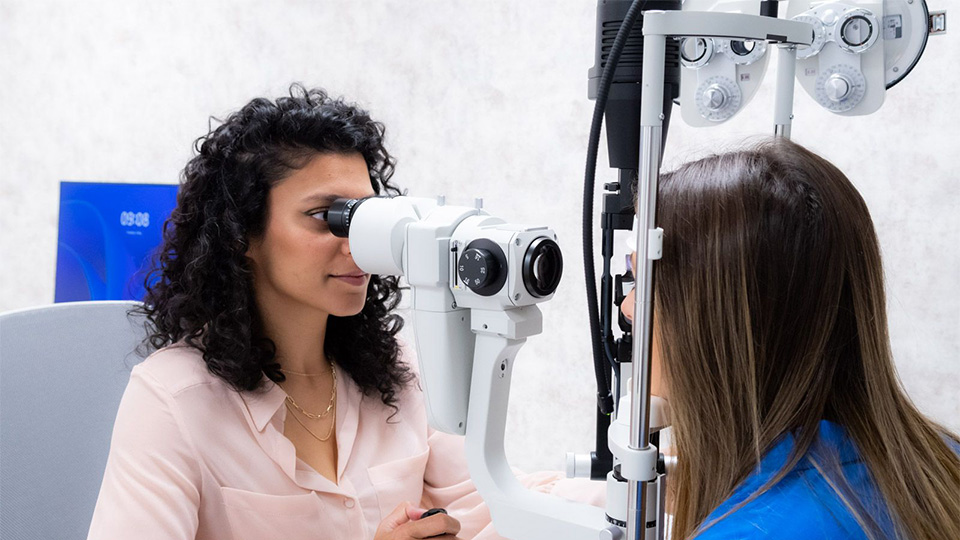
Patel noted that part of the learning curve in Fuchs’ can come from the new tools that are being incorporated into optometry practice.
“With regards to monitoring, I think the new technology does help,” he said.
“If you’ve got a Pentacam or an anterior segment OCT, it’s a lot easier to pick out where you have corneal thickness. The new tech, in that sense, is fantastic.”
“Now, when I work in clinic or on screening for cataracts, I make sure I take a good look at the cornea, so we don’t have any unwanted surprises”
“It’s very easy, with a patient complaining of visual symptoms or glasses not working properly, to go down the refractive route, and try and look at answers that way,” Jain said.
“But I think it’s also important to circle it back, and understand that there could be a number of reasons for that happening.”
She added: “It could be Fuchs’, or other conditions. It’s important that everything is always looked at every visit.”
From a patient education perspective, especially for the first practitioner to notice the condition, Patel emphasises the importance of reassurance.
He explained the language he uses in this scenario: “‘You’ve got it. It takes time to change. We’ll be monitoring you. If you have any issues, come back and see us.’”
“Based on how many we’ve seen, we know that people with a little bit of guttata are not going blind,” Patel noted.
He added: “A lot of the time, patients just want reassurance. Most of my patients work quite well with that.”
“If you’ve got a Pentacam or an anterior segment OCT, it’s a lot easier to pick out where you have corneal thickness”
Jain emphasised that optometrists should not panic if they spot one or two guttatas in a patient.
“In a world of asymptomatic patients, we shouldn’t cause alarm, but just be confident that we have observed something,” she said.
Jain also reiterated the importance of the optometrist documenting everything that has been identified, alongside confirmation that they were not concerned by it.
Finally, OT is interested in finding out whether the practitioners have one tip for making the right referral for Fuchs’, at the right time.
Patel believes that where the referral is going is key.
“Sometimes we get caught up in thinking that any consultant will do,” he said.
“But often, they have their specialities. If Fuchs’ is a consultant's specialty, they really should be the people making those key decisions with regards to what is being done, rather than sending it to a generalist or someone who has a different speciality.”
He advised considering patient lifestyle when deciding whether to refer: “use that as a guide to whether that patient is going to need referral.”
Jain also emphasised the importance of referring to the right person – and against sending “wishy-washy” letters asking for something to be done, rather than clearly stating what the next step should be.
"Don’t be afraid to refer, and be specific in your referral letter to who you want your referral to go to,” she said.
Thomson added: “Be led by the patient, and by your clinical judgment: that conversation, that history and symptoms.
“We know our patients best. They come and see us. We have that relationship with them. Be led by what they’re saying to you, and if they feel that they are struggling and their vision is dropping, then make that referral with a heavily-worded letter if you need to, even if their vision doesn’t meet the so-called requirements. Refer as you feel necessary.”
There are no drugs approved for the treatment after Descemet stripping only in patients with Fuchs’ endothelial corneal dystrophy.
Our experts
Name:Keyur Patel
Occupation:Optometrist and clinical director at Tompkins Knight & Son

Name:Minakshi Jain
Occupation:Optometrist and director at Dry Eye Centre London

Name:Purvi Thomson
Occupation:Optometrist and head of optometry at OCL Vision


Comments (2)
You must be logged in to join the discussion. Log in
Nicholas Rumney13 October 2025
Interesting.
Maybe wrongly I have always called early onset Fuchs 70 cataract cohorts.
I found no mention of contrast sensitivity and disability glare in the discussion. An aspect of frustration to me in referring patients with Fuchs's to corneal specialists is how so few have any concept of contrast. Tragic so many clinicians rely on high contrast VA which is irrelevant to assessing visual function in media opacities. Its easy to get a > 1 log unit loss of CS and retain 6/5 acuity with Fuchs, a CS loss than increases with any glare source.
If you haven't got CS measures try measuring HC VA with normal and inverted contrast. Your Fuchs patient will report better vision with inverted contrast because of the reduced scatter.
Considering measuring CS accurately and repeatedly has been around the best part of 30 years the penetration into Optometry and Ophthamology has been woeful.
ReportLike2
Nicholas Rumney13 October 2025
text got corrupted.....
Maybe wrongly; I have always called early onset Fuchs in the 70 cataract cohorts I call it degeneration.
ReportLike2