


05 February 2026
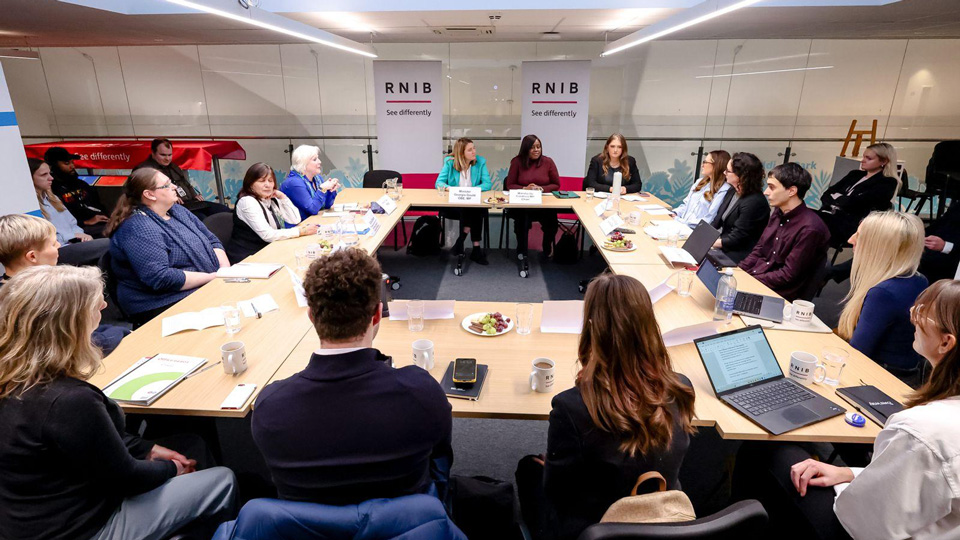
The Royal National Institute of Blind People (RNIB) hosted schools minister, Georgia Gould MP, at a roundtable to discuss improving education for children and young people with visual impairments on 22 January.
The roundtable, which took place in London, came ahead of the release of the Schools White Paper, publication of which is expected imminently.
The paper is expected to include reforms in support for children with special educational needs and disabilities (SEND).
The roundtable, chaired by Marsha de Cordova MP, focused on how education experiences and outcomes for children and young people with visual impairments can be improved.
Opening the event, Gould acknowledged that, for young people with visual impairments, “time and time again, we hear that getting support feels like a fight.”
Gould wants “schools to be truly inclusive places where pupils can thrive,” she said.

Attendees heard from three visually impaired young people about their own experiences in education, as well as from representatives from the RNIB, Guide Dogs, and the Thomas Pocklington Trust.
The charities outlined the areas that they believe need to be prioritised by the Government.
Representatives from the Thomas Pocklington Trust emphasised the “clear and urgent need” for a dedicated SEND workforce strategy.
More than six in 10 local authorities reported a decrease or freeze in the number of qualified teachers of children and young people with a vision impairment between 2023 and 2024, the charity revealed.
The three visually impaired young people at the roundtable included Zehra Yunel, who explained how access to a qualified teacher of vision impairment was a vital part of her education.
Yunel said: “Accessing specialist support during my education — including assistive technology training, working with a qualified teacher of vision impairment, and habilitation support to develop mobility and daily living skills — was a game changer.
“It transformed my experience and enabled me to become an independent and confident adult.”
She added: “I hope the new white paper guarantees these support mechanisms as a minimum national requirement, not a matter of local discretion.”
Daniel Swain told roundtable attendees that he started to lose his sight at the age of 15, and later dropped out of university after encountering problems including teaching materials not being available in accessible formats.
College student, Tom Ashforth, explained that support from his qualified teacher of vision impairment has been “paramount” in allowing him to live independently.
Importance of the Curriculum Framework for Children and Young People with Vision Impairment emphasised
Gould also heard about the value of the Curriculum Framework for Children and Young People with Vision Impairment (CFVI) during the roundtable.
The CFVI was created by the RNIB, the University of Birmingham, the Thomas Pocklington Trust, and VIEW, the professional association for the vision impairment education workforce, alongside children and young people with visual impairments and their parents and carers.
Anna Tylor, chair of the RNIB, noted that 92% of local authority vision impairment services are embedding the CFVI in their standard working practices across England.
However, she emphasised that the Department for Education must recognise the framework in its SEND policies, in order to ensure that every child with a visual impairment has access to the specialist support that the curriculum sets out.
Tylor said: “Education plays such a crucial role in a child’s development, and every child has the right to the same high standard of learning that will go onto shape their adult life.
“The fact the CFVI is already making a difference to the education of children and young people with vision impairment shows the power of the resource.”
She added: “However, the CFVI can only drive improvements if the minister acts to address critical shortages in the specialist vision impairment workforce.”


Comments (0)
You must be logged in to join the discussion. Log in