


02 October 2026
From research at Moorfields Eye Hospital to triaging for Primary Eyecare Services, via vital days in the community optometry clinic – here, three optometrist with careers spanning the breadth of the profession tell OT what they have learnt.
Was it a deliberate choice for you to have a portfolio career, or was it something that you fell into?
Josie Evans (JE): It was a bit of both. At the start, it was a deliberate effort. I was recommended by my pre-reg supervisors to do some time fully in practice, to gain more experience, which was really good advice from them. Then the opportunity came up to become a visiting clinical tutor at City University [now City, St Georges], and I took that on one day a week, which was really nice. At that point, I wanted to add some variation in from back-to-back community clinics.
Our experts
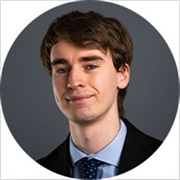
Name:Edward Ovenden
Occupation:Locum optometrist and clinical lead at Primary Eyecare Services
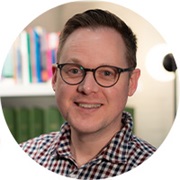
Name:Henry Leonard
Occupation:Optometrist, domiciliary business owner, and head of clinical and regulatory at the AOP
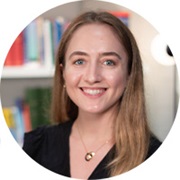
Name:Josie Evans
Occupation:independent prescribing optometrist at Linklater Warren and Moorfields Eye Hospital
During my role at City, I was introduced to somebody who did research, and that’s how my research on the side started. So, I think it was mostly a conscious effort, but by saying yes to things, I do think other things fell into place.
Henry Leonard (HL): I fell into it. I got interested when I was fairly newly qualified, going to local optical committee (LOC) meetings. It opened up a whole new world of optometry that I hadn’t known existed. I remember going to the first meeting, and it was all abbreviations and organisations I’d never heard of. I had no idea what they were talking about, but I realised there was a whole other world out there that that optometrists could get involved in.
Edward Ovenden (EO): I identified early in my career that I wanted to do something additional to routine sight testing, without ever fully leaving clinical optometry, because using the clinical skills we all develop in practice is the reason I got into the job.
I was a resident optometrist at a large multiple practice, and it went well – I did a good job and I wasn’t unhappy there. But after 18 months, I felt like I was falling into a rut. I felt that the best way to keep progressing was to change setting, which meant moving to an independent practice.
This practice could only take me on for four days and I didn’t want to lose income, so I started to locum for the fifth day, which is how I got introduced to different practices, different ways of working, and different settings. Coming out of COVID-19, I was doing more locum work than resident work. I was in a primary care clinic six days a week, without much time to do anything else.
I joined my local optical committee for Lancashire & Morecambe Bay and eventually began The Local Optical Committee Support Unit leadership course, which is a Master’s level qualification with Cardiff University and introduced me to skills and ways of working that aren’t covered at all by optometry training. This includes leadership, managing people, and personality types.
That encouraged me to do more leadership roles, including becoming a clinical lead for Primary Eyecare Services in Lancashire and South Cumbria. This role is totally different, because it mostly consists of working from home. I can choose my own days, as long as I get the required hours in. It’s compatible with a healthy, more sustainable work-life balance.
I think one big contributing factor to a lot of burnout we see in the profession, especially people leaving optometry in their 30s, is because it isn’t very compatible with a healthy work-life balance. These are the people we really want to be keeping in the profession, if we can.
I don’t feel I've necessarily lost anything from the clinical side through taking on other roles, but I feel I’ve gained a whole wealth of knowledge. It’s stimulating, and it encourages me to want to do more. It makes me really passionate about optometry as a field, about what we’re capable of. I’m hopeful for the future, and where we can drive this profession.
I don’t feel I’ve necessarily lost anything from the clinical side through taking on other roles, but I feel I’ve gained a whole wealth of knowledge
What benefits does having a flexible career and varied roles bring to you?
EO: The benefit of having multiple hats and different roles is that it keeps things sufficiently varied. My dad was a dentist, and he was in the same test room in the same practice, from when he qualified all the way to when he retired. He spent almost 14% of his life in the same one by one metre square in the same room. He started off really enjoying it, but about halfway through his career, he fell out of love with it. I was quite keen to avoid that.
If you’re in different places doing different things, it stimulates the brain in a way and it staves off boredom. I think it keeps you sharp and fresh, and it’s easier to keep that motivation to keep on learning and to keep progressing and improving. I know some optometrists who are very talented clinically, but who have waited a bit too long, and don’t have the confidence to spread their wings or to leave what’s familiar to them. I’m quite fortunate in avoiding that.
I think hybrid model I have at the moment works quite well. I do a day a week at a at a private hospital. I do one day a month of domiciliary work as well. It’s useful, because as a clinical lead, I don’t just work with people in a primary care resident setting – I work with people in domiciliary and secondary care settings as well.
Regular experience in these settings enhances the value I’m able to bring in my LOC treasurer role and my clinical lead role. On the LOC, I’m the only person with any domiciliary experience. To be able to represent that side is very important.
There’s also a mental health benefit. I now enjoy my clinical days much more, because I do fewer of them. I don’t think anything can compare with, for example, if you get a myopic child who has never been able to see properly, and you can give them their first pair of glasses, and they get that ‘wow’ moment when they can suddenly see. The community urgent eye care and minor eye conditions services, where we’re able to intervene and put a sight or a life-saving intervention in place, has huge professional satisfaction. Those are things that really stick with you throughout your career.
I have a folder in my office of important physical documents, and at the back of the folder is a collection of children’s drawings that they’ve done for me in practice, and cards. I think I’m going to keep that for a long, long time. It’s difficult to put a price on those things.
I find, at the end of my Primary Eyecare Service days, I’m really looking forward to getting back into practice: leaving the house, doing some science, testing some eyes, and interacting with people. Then, when it comes to Saturday, I’m quite glad I’m only working from home for the next two days. It means I’m always looking forward to the next thing. It’s worked out really well for me.
HL: I guess it’s just a bit more interesting. Historically, optometry hasn’t had maybe the best career progression. In the past, you might qualify at 23 years old, and you’re doing sight testing, and then 20 or 30 years later, you might be doing exactly the same thing. You could specialise in contact lenses, or you might work in the hospital, or you might own your own practice one day. But aside from that, it didn’t have the same career progression that you might have found in medicine, for example.
I think there has never been a better time to have a portfolio career, because optometrists are doing a lot more now. When I did my pre-reg, and I was in hospital once a week, what optometrists were doing was fairly basic. Now, optometrists in hospital do a whole range of things that ophthalmologists used to do. There’s a lot more interesting work going on.
JE: I think the more you put in, the more you get out, and I believe that with most things. When people think of an optometrist, they’re probably only picturing somebody in an optometric practice. That can be so rewarding – I adore community eye care, and I think there’s something really special about it. However, doing the same thing every day, five days a week, can work really well for some people, but for others, it can be hard to differentiate your days. It can feel like you’re on autopilot a little bit.
The best thing for me is that it’s added some variety, and but also that comes with interest. My days in the community I really enjoy, because I’m there two and a half days a week on average. That feels special – it feels like my dedicated time for these patients, who I’ve been seeing for coming up to nine years.
Similarly, I’ve then got the hospital and research roles, which are very different. You appreciate all your different roles more when you’ve got variation to compare with. You see the positives and the negatives.
The other nice thing is that, if I’m having a bad day, I know the next day I’m doing something different, so I haven’t got to carry that over. It’s like a complete reset. I do things in two-day chunks, and that works really well for me.
I realised there was a whole other world out there that that optometrists could get involved in
Does flexibility in work allow you more time for continuing professional development and education?
EO: Yes, it does at the moment. I think this is the right time in a career to do it: when you have free time, when you have more energy, and when your enthusiasm is hopefully at its highest.
As part of my studies, I’ve had days where I’ve needed to be in Cardiff for practical exams, or there has been an online teaching day. I would need to take annual leave if I was in a resident position, which might not be reliable if I can’t find anyone to cover. But being self-employed as a locum, I can choose not to book a clinic.
With Primary Eyecare Services, I require annual leave, but this is extremely flexible, and my LOC work is always on an ad-hoc basis. If you want to progress in this way, it’s inevitable that you will either have to accept you will need to drop clinical days, which represents lost income, or you will need to sacrifice some spare time. But it doesn’t have to be a lot. One hour every evening, three or four days a week, really does add up over time, and you can get a lot done in that. I think sometimes people underestimate, with the right motivation, how much they can get done outside of clinical hours.
JE: Yes, definitely. In my community role, I was quite keen to do the independent prescribing qualification, and that has really helped me in the community. But also, that has carried on through into the hospital work and is extremely valuable in that setting too.
Similarly, via my hospital role, I’m doing the higher certificate in glaucoma, and that’s supporting me a bit more with our glaucoma refinement in the community. I think both bleed into each other.
The more workplaces you work in, the more people you meet. I’ve really benefited from lots of inspiring mentors in lots of different settings, and that’s something that I think is more valuable above everything else. Those kinds of people encourage you to upskill in each of those different settings, which I think is so valuable.
Is there a benefit to having multiple income streams?
HL: It could give you a bit of job security. A lot of AOP members work as locums. There are benefits to that, of course, but also you don’t get the job security; you don’t get holiday pay or sick pay. If you’ve got a family, for example, you might want a bit more guaranteed income and an employed position might be better, but at the same time you maybe want the higher earning potential of a locum. Having a bit of both can be quite useful.
EO: It hedges risk, most importantly. Locuming full-time can be stressful, because there is no obligation for the practice to continue to use a specific locum. Clinics might be cancelled, or they might only book up on that week. It’s difficult to make a big purchase if income is relatively insecure.
In my case, doing more roles means I do fewer locum days, so it’s easier to fill four as opposed to five. But it also means I don’t have a primary income source: everything is a secondary income source, and they all come together to make a comfortable total amount. I could lose one role entirely, and I would still be able to pay the bills. It doesn’t keep me up at night.
The more workplaces you work in, the more people you meet. I’ve really benefited from lots of inspiring mentors in lots of different settings
As someone with different roles, how do you ensure you maintain work-life balance?
JE: It can be tricky. Booking annual leave is particularly hard. But balancing work-life balance actually works a bit better, for me at least. When I was in clinic full-time as opposed to now doing two days of research, it was quite hard to answer emails or explore ideas, because I’d be so tired after clinics and wouldn’t have any moments in between. Now the balance is a bit better, because I do have other days in the week to have that space to think of new concepts or what we want to explore next in the research avenue.
As a general rule of thumb for a work life balance, I have tried to make sure that I mark something for myself on each working day. For example, if I’m in clinic on a Monday, I make sure in the evening I do something that marks it for me, so my whole day hasn’t been just work. Whether that’s going out for dinner with friends, doing some exercise, having a phone call with somebody – something small, that says, ‘My whole day wasn’t work today. Some of my day was socialising.’
EO: There are different tiers of time away from work, and they are of different quality. It’s quite easy in clinic, because you’re either in clinic or you’re not – it’s very compartmentalised.
For the LOC and my Primary Eyecare Services role, it’s quite easy to fall into the trap of always being online, always having a phone or a laptop ready on Teams. All the clinical leads accept that there is some element of that to the job. However, if you if you take it too far and you never switch off, then you might be away from work, but you’re not resting and you don't feel recovered or prepared afterwards. If I’m able to just switch it to offline, and dedicate a relatively short amount of time to rest and family time and forgetting about work, I will recharge my battery more than if I spent twice as long, but only half relaxing and half on work.
The key is to really compartmentalise it, and have times where you're really focused on yourself. The calculation isn’t quite as simple as: if I have this many days off, or this many hours off a day, I will feel rested. It depends on how you use it: some ways are higher quality than to others.
In addition, I would say having routine is quite helpful, and trying to work exercise into that routine. For me, it’s running. I did the London Marathon in April, which was a fantastic excuse to go out and run. There’s a lot of robust clinical evidence that, especially aerobic exercise, will increase your cognitive facility and focus, and help you feel recovered, even if your body is physically exhausted. If you have that in a routine, it’s much easier to deal with and not to neglect in favour of work-related tasks.
HL: I’m very lucky, because I really like my role at the AOP. That’s my main role, and I find it really interesting. I’ve been doing it for over 10 years now, and I don’t get bored of it – it’s fascinating seeing all the different things that that optometrists get up to.
I’m fortunate in that respect, but I think it is nice to have the balance, doing a little bit of clinical work, a little bit of something different. If you’ve got a family as well, it’s nice to balance things out.
Optometry is the kind of career where you do get a bit more flexibility. It lends itself quite well to people who want to have more work-life balance. There are some careers where you’re in nine to five or longer, five days a week, and it’s very difficult to work part-time. But in optometry, you can locum or do whatever you like. It’s a good career, in that respect.


Comments (0)
You must be logged in to join the discussion. Log in