


19 November 2026
Three blind and partially sighted young people have revealed the barriers they faced getting into work in light of the Milburn Review.
The Milburn Review into UK youth unemployment was published on Tuesday 17 November.
The review, entitled From a Welfare State to a Working State: a new settlement for the next generation, aims to see 440,000 more young people in work by 2036. Currently, nearly one million young people (aged 16– 24) in the UK are classed as NEET – not in education, employment or training.
The report advises that businesses pay lower taxes for employing young people, and that those aged under 25 should not receive the health entitlement currently available through Universal Credit.
However, three young people with visual impairments have explained how inaccessible systems and incorrect assumptions have stopped them from working when they want to, and in some cases have caused them to leave roles after employers failed to make adjustments for their conditions.
Aarifah Karim: “I received feedback telling me to smile more and stop squinting”
Aarifah Karim shared her story with the Royal National Institute of Blind People (RNIB), alongside Aminah Aslam, aged 28 and from Hounslow, and Delanie Lever, 24, from the North West of England.
Karim, a 22-year-old graduate from Coventry, said inaccessible recruitment processes and incorrect assumptions made it difficult to secure work post-university.
Karim has experience in HR and charity work and has spent time volunteering, but explained that the graduate recruitment processes have often prevented her from demonstrating her skills.
On one occasion she was reprimanded for squinting at her screen whilst struggling to see screen controls during a video interview, she revealed.
She said: “I sometimes had to move close to the camera just to find the controls. Then I received feedback telling me to smile more and stop squinting, even though I was squinting because of my visual impairment.”

Karim also explained that psychometric, numeracy and timed assessments proved challenging, and that she was simply offered more time to complete the assessments rather than accessible software or changes to the tasks themselves.
She said: “I had worked hard to build my experience, but I kept coming up against recruitment processes that weren’t accessible to me. Giving me extra time didn’t solve the problem if I still couldn’t use the system properly.
“It meant I wasn’t getting a fair opportunity to show employers my skills or what I could bring to the role.”
Karim added: “Employers should not assume that sight loss indicates reduced intelligence, slower work or lower capability.”
Employers need to “understand the support that is available and stop making assumptions about sight loss,” Karim said.
She added: “It doesn’t mean someone is less intelligent, less capable or unable to do the job.
“When you regularly have to find different ways around everyday barriers, you develop problem-solving skills. That is something employers should recognise and value.”
Young people seeking work need equal opportunities, rather than assumptions, Karim believes.
“There are young people working hard to find jobs and build their experience, but the opportunities aren’t always there. Describing them as lazy ignores the barriers they face,” she said.
She added: “For young people with sight loss, employers can make a real difference by removing unnecessary tests, making recruitment accessible and giving us a fair chance to show what we can do.”
Delanie Lever: “Many employers see the disability before the ability”
Lever, who has degenerative retinitis pigmentosa, which can cause her vision to fade in and out, told the RNIB that three separate businesses had failed to provide her with extra equipment for her condition between the ages of 19 and 23.
She described the experience as “disheartening.”
Lever explained: “Too often, employers start by asking what I can’t do, rather than looking at my abilities, experience and strengths.”
She emphasised: “Reasonable adjustments enable me to do a job as well as fully sighted people.’’
Employers calling themselves accessible is not enough, Lever said.
She noted: “The people interviewing, training and managing staff need to understand what accessibility means in practice to enable change.”
There are “unnecessary barriers” to Access to Work, Lever said, making the scheme difficult to navigate.
She also explained that the formal support she received whilst she was in education, including a dedicated member of staff who would ensure that her equipment was accessible and that her adjustments were in place, “fell away” as she moved into employment.
Lever took part in the Milburn Review focus group in Birmingham, and found it “upsetting to hear how opportunities had been closed off because many employers see the disability before the ability,” she said.
Aminah Aslam: “The school where I worked simply didn’t understand what I needed to succeed”
Aslam lives with sight loss, and had planned to become an English teacher after graduating from Kingston University.
However, she explained how inaccessible systems and misunderstandings quickly led to barriers in this ambition.
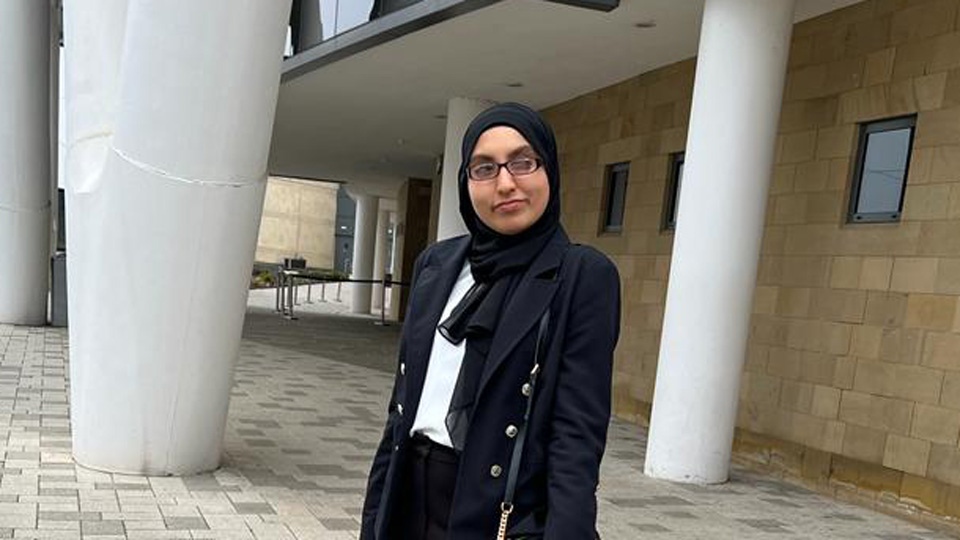
On starting a training placement in a school, Aslam found that she was unable to use a more accessible desktop computer rather than a laptop and was not able to spend the 10 minutes required setting up her classroom or her equipment, despite these things being agreed before her placement began. Eventually, she left the placement entirely.
Aslam said: “When I started my training placement, it became clear very quickly that the school where I worked simply didn’t understand what I needed to succeed in this role.”
She explained: “In the end my health was suffering, and I had to leave before it got worse.”
An inaccessible recruitment process followed, where Aslam spent 18 months looking for work before she was introduced to the Access to Work scheme and other aligned support by an RNIB employment adviser. The RNIB was able to then support her with a 10-week public affairs assistant placement.
The placement “helped me find a new career direction in policy and public affairs, and it shows how an accessible, supportive working environment can make the world of difference to someone’s career ambitions,” Aslam said.
Simon Antrobus: “A once-in-a-generation opportunity to get it right”
Simon Antrobus, chief executive of the RNIB, emphasised that “young people with visual impairment are twice as likely to be NEET than their peers. “
“These reforms are ambitious for disabled young people and recognise that they need tailored, intensive support to get the jobs they want,” Antrobus said.
“However, we know that some of the biggest barriers to employment for young people with vision impairment are people’s attitudes.”
“Research revealed a quarter of employers would not be willing to make workplace adaptations and adjustments in order to employ a blind or partially sighted person,” Antrobus noted.
He shared: “We know that the right support can be transformational, allowing young people with visual vision impairment to thrive in work, but employers need to understand the skills they can offer.
“Legal guarantees and incentives will go some of the way, but to reach the full potential of these reforms, we must work together to transform the way we view disabled young people in this country.”
Lead image: Delanie Lever


Comments (0)
You must be logged in to join the discussion. Log in