


04 November 2026
The University of Bradford’s myopia management clinic is marking its 10th anniversary.
The clinic, founded by Kathryn Webber, clinical teaching fellow and myopia management clinic lead at the University of Bradford, opened in 2016 as one of the first dedicated myopia management clinics in the UK.
Webber said: “When we established the clinic 10 years ago, myopia management was still a relatively new area of clinical practice in the UK.
“We were among the early adopters, helping to build awareness of approaches that could slow the progression of myopia in children and young people.”
The clinic now has over 100 patients, who range from four years old to their mid-20s.
Evidence-based treatment options available at the clinic include specialist contact lenses, spectacle lenses, and low-dose atropine eye drops.
Webber noted: “What has been remarkable is the pace of change. 10 years ago, there were relatively few treatment options available. Today, we have a range of evidence-based interventions, including specialist spectacle lenses, contact lenses and, most recently, low-dose atropine eye drops that have recently become available in the UK.
“The aim is not simply to correct a child’s vision today, but to help protect their eye health for decades to come. That’s why early intervention is so important.”
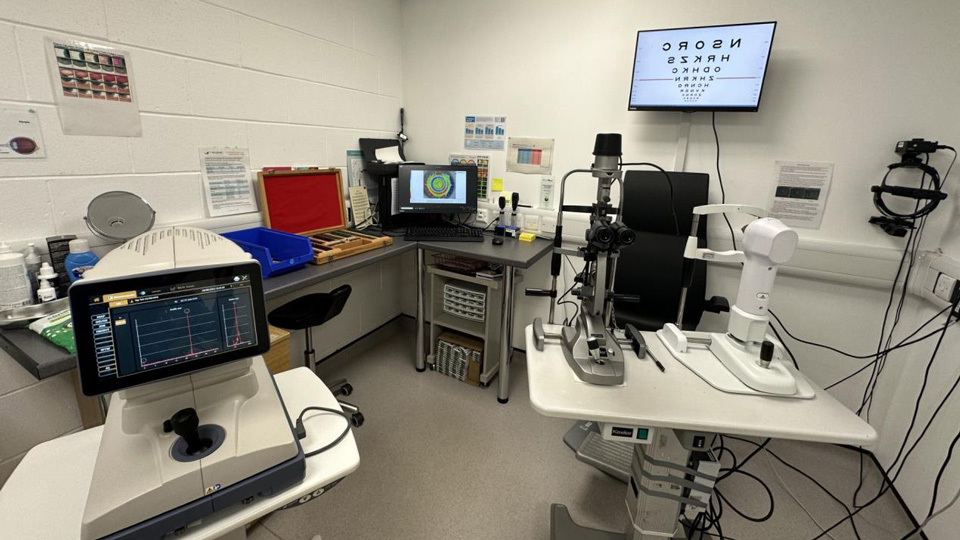
The myopia management clinic is part of the University of Bradford’s School of Optometry and Vision Science, which will celebrate its centenary in 2027.
Webber founded the clinic after developing an interest in myopia management early in her career. Her interest developed after a conversation with the parent of a young child with myopia.
Webber said: “What started as curiosity about some emerging research became a passion that has shaped my clinical and research career.
“That first patient became the beginning of a journey that eventually led to the creation of the clinic and many years of supporting children and their families.”
Alongside clinical work, the myopia management clinic also supports education of optometrists in training and helps to advance research into myopia management.
Webber explained: “The clinic sits at the intersection of patient care, teaching and research. Our students gain experience in an area of practice that is expanding rapidly, while patients benefit from some of the latest evidence-based approaches to myopia management.”
She added: “10 years ago, we were only beginning to understand how we might slow myopia progression. Today, we have multiple effective treatment options and an exciting research pipeline.
“It has been incredibly rewarding to see the difference this can make to young people’s lives and I’m excited to see what the next decade brings.”


Comments (0)
You must be logged in to join the discussion. Log in