


11 June 2026
Tips for managing the next generation of optical professionals and the hidden benefits of smart glasses were discussed at the first of four regional roadshows organised by the Hakim Group.
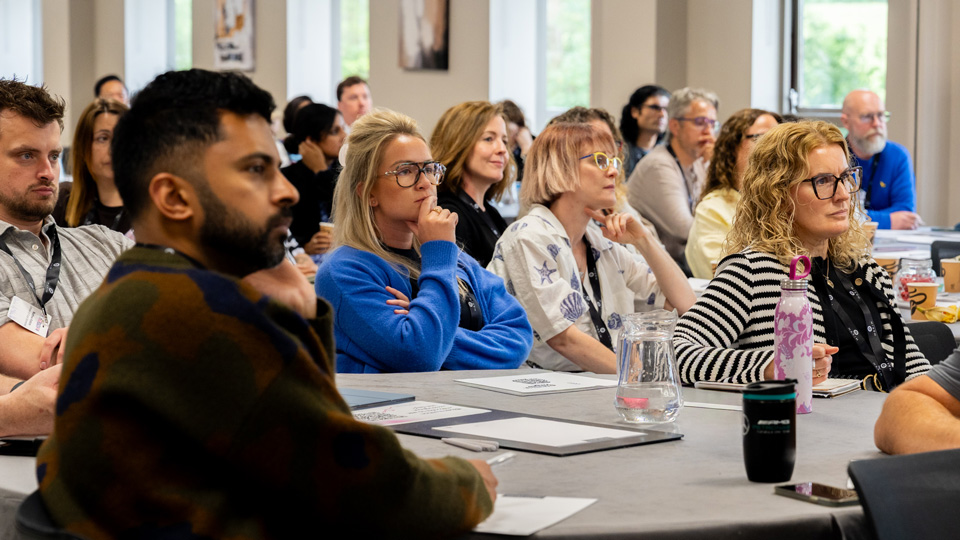
More than 100 delegates travelled to the De Vere Beaumont Estate in Old Windsor for a day of presentations and networking, Here, OT summarises a selection of insights from the event.
1 Lazy or mislabeled? Digging into assumptions about the Gen Z workforce
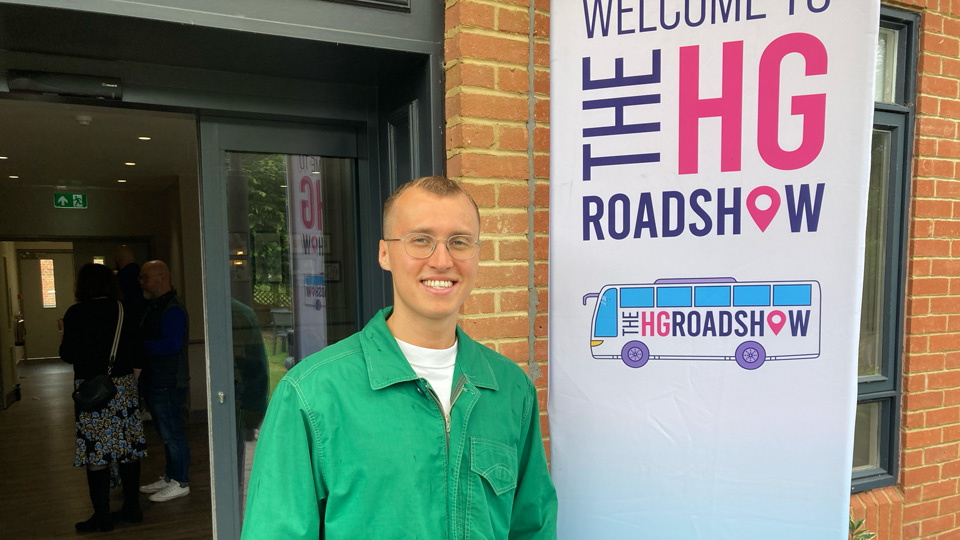
Zavier Coyne, co-founder of Gen Z Coach, provided delegates with insight on the factors shaping the next generation of customer, patient and optical employees.
He highlighted that Gen Z – individuals born between 1997 and 2012 – now make up 27% of the international labour market.
“Gen Z are the fastest growing portion of the global workforce,” he noted.
Coyne, who is himself Gen Z, shared with delegates that Gen Z employees are less likely to want a leadership position in the organisation they currently work within.
Gen Z are also less engaged and leave their jobs faster than previous generations of early career professionals.
“Some people might be thinking ‘Gen Z – they’re just lazy, entitled and want to do hot yoga classes, drink matcha lattes and become TikTok influencers.’ What I’m here to tell you, the Gen Z are inherently none of those things. We’re very often misunderstood and increasingly mismanaged,” Coyne emphasised.
The way we’re consuming information, the way we’re understanding ourselves and where we’re communicating with people is fundamentally so different to any other generation before
Coyne noted that a key factor shaping the development of Gen Z is that this generation is the first digitally native generation in the history of humankind.
“A digital native is a person whose cognitive and social development was shaped by being born into a digital world,” he explained.
Coyne observed that over time digital natives will make up the entire workforce, but for now, digital natives and digital adopters are working side by side.
“We are at this very interesting point where there is a mix,” he said.
Coyne noted that the commercialisation of the internet in 1996 catalysed an increasingly digital world.
“We’re part of the largest uncontrolled social experiment in history – which is what happens when you combine these rapidly evolving digital technologies with young adolescent minds,” he said.
Coyne observed that while there is nothing inherently wrong with digital tools, they have resulted in some increasingly significant behavioural side effects.
He shared that Gen Z spends on average 10 hours each day on a screen, including 5.1 hours each day spend on social media.
“The way we’re consuming information, the way we’re understanding ourselves and where we’re communicating with people is fundamentally so different to any other generation before,” Coyne highlighted.
In terms of how this shapes the behaviour and preferences of Gen Z, Coyne told delegates that this generation is accustomed to regular feedback.
“If we come into a workplace where feedback is slowed down, rather than creating a sense of contentment, it can often create disengagement and sometimes anxiety,” Coyne shared.
2 Tips for harnessing the potential of the next generation of professionals
Reflecting on his tips for managing Gen Z employees, Coyne highlighted the importance of the relationship between an employee and their direct manager.
“That is the variable that is most predictive of their level of engagement and ultimately their retention,” he said.
“Who is leading your early career team and how equipped they are to understand their team is vital,” Coyne emphasised.
Coyne noted that values-driven organisations and ones that provide growth opportunities to their early career professionals have an advantage when it comes to retaining a Gen Z workforce.
“When it comes to our generation, we’re often asking ourselves, subconsciously or consciously, ‘Am I growing in this role? Am I growing in what I'm doing?’,” he said.
Coyne noted that one of the quickest and most effective ways of getting feedback on how to manage Gen Z employees is to ask them directly.
He encouraged managers to ask their employees if there are any actions that they can take as managers to create the conditions where an employee wants to stay with the business long-term.
“It can be so beneficial – it takes the guesswork out of it,” Coyne said.
The personal development coach noted the value of ‘micro-feedback’ when it comes to managing Gen Z professionals – rather than saving feedback for quarterly or annual performance reviews.
“If you can start to create the culture where there’s that more fluid communication that keeps people engaged,” Coyne observed.
3 The many applications of smart eyewear and AI glasses
Charlotte Timbury, director of medical and professional affairs for EssilorLuxottica, outlined the diverse ways that smart eyewear can enhance the daily lives of people who come through optometry practices.
“These are wearable spectacles that will allow the patient to combine their traditional eyewear solutions with advanced digital technology to enhance their vision, their interaction, and their connectivity,” Timbury shared.
Timbury noted that smart eyewear can also help people who is trying to communicate in a country where they do not speak the language.
“AI and smart eyewear can help you – whether that is through live translation, or taking a photograph of a piece of text or a document, and the eyewear translating it for you,” she said.
Timbury encouraged optical professionals to broaden their perspective on who smart eyewear may be useful for – and not just recommending it to people who are particularly tech-focused.
For example, it may be useful for people who travel frequently, who would benefit from hands-free technology due to childcare responsibilities or who would like to compare High Street prices with online prices when shopping.
“What I'm trying to do here is to open up people’s perspectives as to who you think of when you hear the word wearables or smart eyewear,” Timbury said.
Damien Klevgé, director of wearable technology for North Europe, shared that the advent of AI has changed the capability of wearable technology, such as glasses.
“They’re no longer entertainment devices. They are personal assistants. This will unleash an awful lot of possibilities,” he said.
Sharing his tips on communicating with consumers about AI glasses, Klevgé shared that connecting the benefits of the technology to an individual’s lifestyle is often more important than discussing the technical capabilities.
“What is important is to understand your patient’s needs. Don’t prejudge someone – they may not tick the box of a tech-savvy individual, but they might be flying to Italy next week and need live translation,” he said.


Comments (0)
You must be logged in to join the discussion. Log in