


03 August 2026
This year marks a major milestone for Millmead Optical Group as the manufacturer celebrates 80 years of business.
The company was founded in 1946 by Walter Conway and Herbert Thorn.
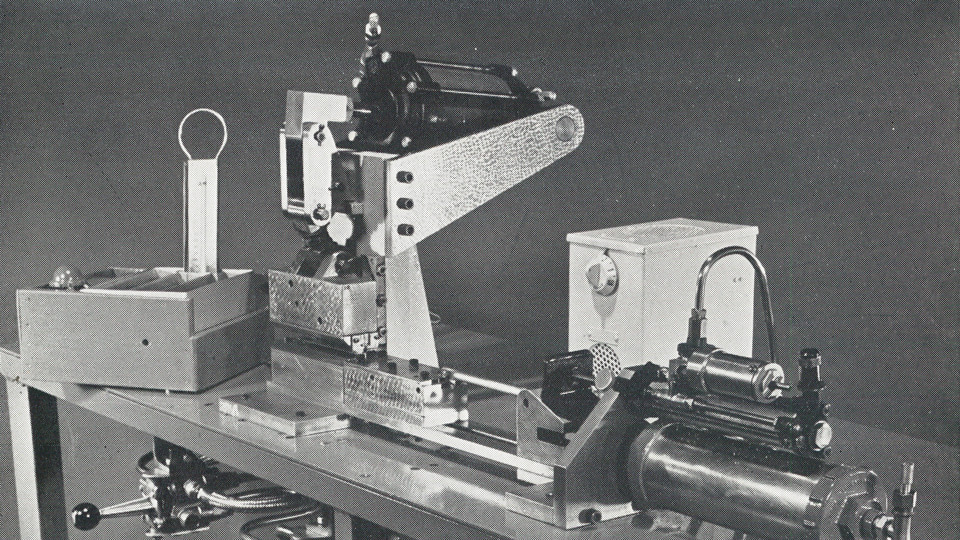
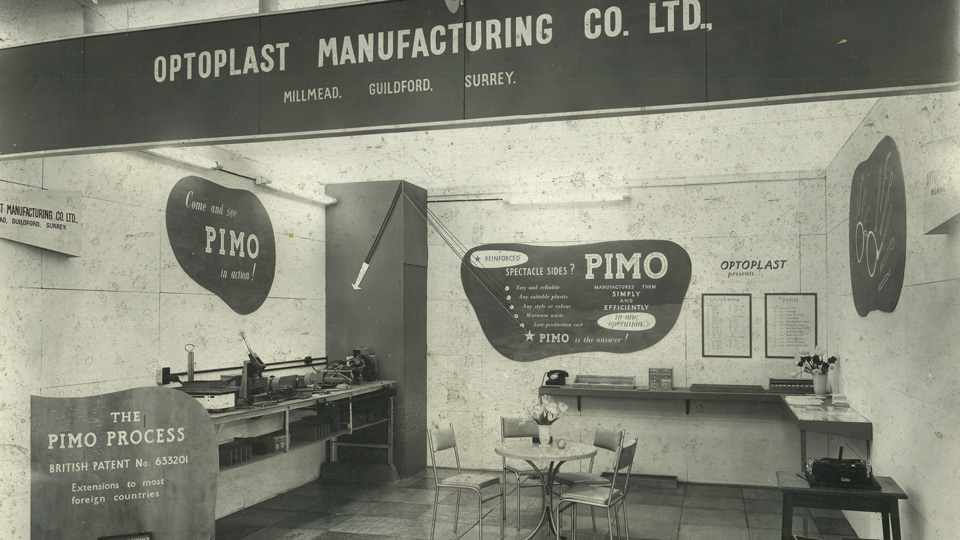
A background in engineering led Walter Conway to develop the PIMO machine, a process that the company suggests “transformed the manufacturing of spectacle temples.”
James Conway, CEO of Millmead Optical Group, reflected: “It’s fascinating to see that 80 years later, the machine my grandfather invented continues to be used worldwide to put the cores into the temples of frames.”
OT asked James Conway to reflect on the biggest changes that have shaped the trajectory of the business over the past eight decades.
Diversified product base
The deregulation of National Health frames in the 1980s marked a “major shift” for the optical market, Conway emphasised, giving patients greater choice yet removing the “guaranteed NHS frame volume that much of the UK optical manufacturing sector had depended on, with many frame manufacturers not surviving the transition.”
A diversified manufacturing base provided stability for Millmead through this time, built around case production through the acquisition of Opticrafts.
Case manufacturing went on to supply a range of optical and consumer brands. Operations expanded into the North West of England, establishing a long-term manufacturing presence in Liverpool.
By the late 1990s, the business began to shift its focus back towards eyewear, with Conway sharing: “The industry was changing and it was vital that we diversified from a sole focus on cases. Having a wider portfolio of products to offer our customers was the best way to future-proof our business.”
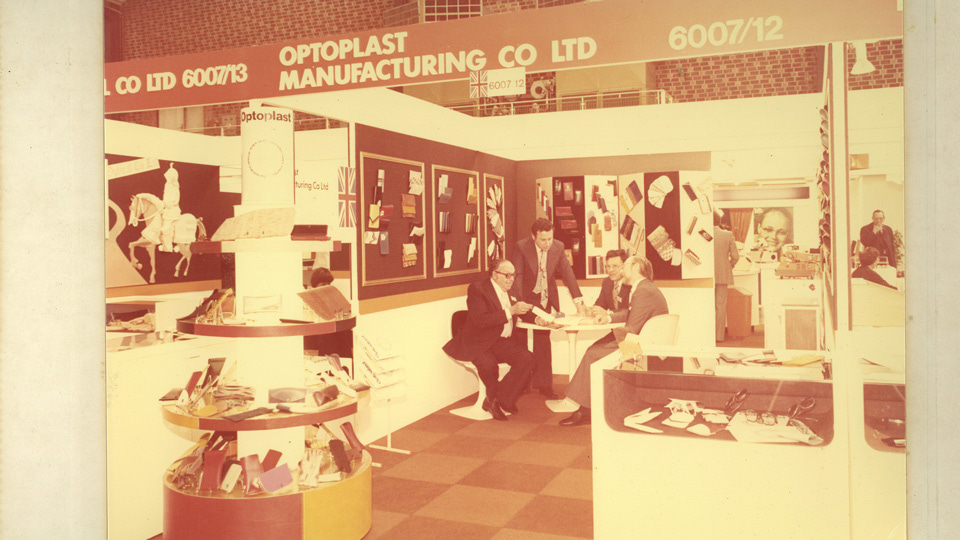
A journey through time


Growth and expansion into lenses
A series of mergers and acquisitions with Andrew Actman’s business and Continental Eyewear over the following 30 years strengthened Millmead’s frame volumes, relationships with independent practices, and presence in the optical market.
The 2016 acquisition of Jai Kudo saw the business make a strategic shift into ophthalmic lenses.
Conway reflected on the difference in market expectations: “Frames are driven by design and quality, cases by efficiency and price. Lenses are different again, where service and turnaround are critical. If you don’t meet those expectations, it very quickly becomes a problem.”
This required investment in infrastructure, systems and customer support, but established Millmead in multiple categories in the optical sector.
Innovation and investment
Millmead currently produces around one million spectacle cases per month from its UK facilities and has a view to re-establish frame manufacturing in the next few years.
Conway said: “We’re continuing to invest in UK manufacturing, in both materials and production capability. The technology now allows us to do things here that simply weren’t viable in the past.”
“New developments in lens manufacturing are also beginning to change what is possible,” he added.
The company noted that the investment in domestic production sits alongside a commitment to robotics and automation.
Looking back at the 80 years of Millmead, Conway emphasised the importance of a willingness to invest, embrace new technology and evolve ahead of change – a mindset he feels will be just as important in the future.
“You can never stand still. The industry keeps changing, technology continually evolves and we have to keep moving with it. That means continuing to innovate, continuing to invest and always looking at what comes next,” he said.
Looking ahead into the company’s ninth decade he suggested its future would continue to be shaped by the same values: “innovation, investment and the people who turn new ideas into reality.”
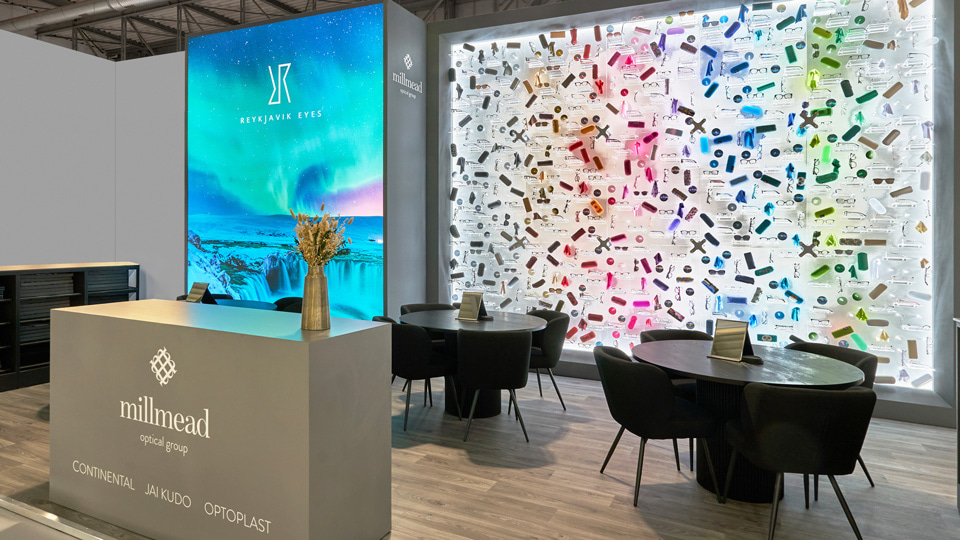
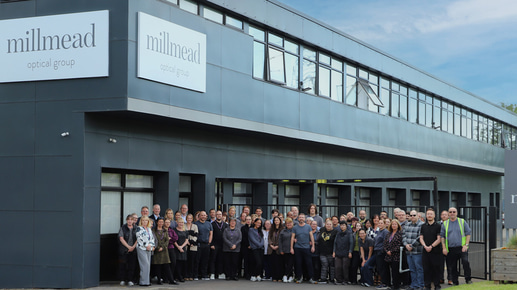
Millmead Optical Group in 2026


Four shifts for the future
With 80 years of learning behind the business, OT asked Conway to identify four developments that could shape the future of optometry and the optical sector.
1 Connected care through standardised imaging
Alongside his role at Millmead, Conway chairs the Optical Suppliers Association, and he explained that this gives him a broader view on the sector.
He noted a particular OSA initiative as having the potential to shape the direction of the profession – the first being the potential to create pathways to ensure eye care imaging systems “talk to each other.”
Conway said: “If you have an eye test in Guildford and are referred to an ophthalmologist for glaucoma in Birmingham, they may not be able to view your eye images. There is no interoperability, so if one site uses one brand of equipment and the other uses another, the images may not be compatible.”
There has been a push to address this, and the OSA has been working with the Royal College of Ophthalmologists, The College of Optometrists, stakeholders from the NHS and with support from the Department of Health and Social Care, on a shared interoperability standard for DICOM.
Conway noted that radiology adopted a similar approach so that scans and images can move between systems and practices without getting “lost in translation,” meaning faster referrals, less repeat testing, and better continuity of care between the community and hospital eye departments.
2 Sustainability as a core expectation
Sustainability is another key factor shaping the sector, with Conway emphasising that it is built into how decisions are made across Millmead, which is B Corp certified, and increasingly shapes procurement across the optical sector.
This is seen in material choices, packaging design and production efficiency, while UK manufacturing means shorter supply chains and improved responsiveness.
Conway has championed the OSA’s Green Charter, a sustainability framework for the optical supply chain with levels of accreditation that seek to provide practices and suppliers a standard measure of progress.
“Sustainability only really works if everyone’s pulling in the same direction. The Green Charter gives the industry a shared benchmark, enabling it to move forward together,” he said.
3 Greater personalisation in lens design
The one thing that has changed the most in lens manufacturing over the past decade, according to Conway, is personalisation – driven by the capabilities of freeform technology.
He noted that progressive lenses are designed using prescription data, fitting measurements, frame parameters and visual requirements.
This improves visual performance across everyday tasks, he said, as patients move between digital devices or driving and outdoor environments.
Millmead introduced Kudos and Signature technologies in response to the demand for more personalised lens design.
4 Artificial intelligence
Artificial intelligence (AI) is already creating a shift in the sector.
Conway shared: “We’re embedding AI in product development, in marketing content, photography and related areas. There is a significant amount happening across our systems already, but the key is ensuring we continue to adopt and apply it effectively.”
He noted that regulators are paying close attention to the topic, while national bodies have been reviewing how the tools should be rolled out and what standards need to be in place.
Conway emphasised the role of AI in supporting and informing the decisions made by practitioners.


Comments (0)
You must be logged in to join the discussion. Log in