


27 August 2026
Across England, there are 6000 optometry practices where optical professionals work each day to look after the eye health of their communities.
In doing so, they deliver £2 billion in social and economic benefits each year. This means that for every £1 spent on General Ophthalmic Services, optometry practices deliver just under £4 of value for the NHS.
While this analysis, produced by PA Consulting, provides a persuasive picture of how optometrists in England are contributing to neighbourhood healthcare, there is scope for the profession to do more.
The AOP’s Eye care everywhere campaign is calling for change to make enhanced services available to all – no matter what their postcode is.
In this feature series, OT puts a spotlight on how enhanced services are benefitting patients, practitioners and the broader health service through a series of regional case studies.
First up, OT explores how the Community Urgent Eyecare Service (CUES) in Staffordshire is providing timely, convenient treatment to patients close to home.
The view from practice
Data from Primary Eyecare Services shows that 20,430 patients were seen through CUES in Staffordshire between 2025 and 2026.
Eight in 10 patients were fully reviewed managed and discharged from the service – reducing the pressure on GP practices and hospital eye services within Staffordshire.
Independent prescribing (IP) optometrist, Waaiz Nazir, has offered CUES at Burton Eyecare in Burton-on-Trent for the past two years.
“I started offering CUES after becoming IP qualified because I wanted to use those additional clinical skills to provide an accessible urgent eye care service within the community,” he told OT.
“It seemed a natural extension of what I wanted to achieve as an IP optometrist – providing patients with appropriate assessment and treatment closer to home,” Nazir added.
The IP optometrist noted that Burton Eyecare sees between 20 and 30 CUES patients each month.
“The conditions are quite varied. We see common anterior eye conditions such as conjunctivitis and blepharitis, but we also see more complex presentations including anterior uveitis, and shingles involving the eye region,” he said.
“We have also managed very young children presenting with conditions such as preseptal cellulitis, where appropriate assessment and timely referral are particularly important,” Nazir highlighted.
As well as self-presentations, Burton Eyecare receives CUES referrals from other optometry practices and a central CUES hub.
“We have developed an excellent relationship with local GP practices in Burton-on-Trent. They recognise the service we provide and the additional clinical role of an IP optometrist, and we receive referrals from GP surgeries for patients presenting with eye-related problems,” Nazir said.
Eight in 10
CUES patients reviewed, managed and discharged within primary care in Staffordshire
Reflecting on the benefits of CUES for patients, Nazir observed that one of the greatest advantages is that patients can often be assessed and managed closer to home rather than being sent to hospital unnecessarily.
“For the patient, this can mean a much quicker assessment, appropriate treatment and a clear management plan,” the IP optometrist highlighted.
“It can also avoid patients being passed from one service to another or spending hours in accident and emergency waiting to be seen for an eye condition that could potentially be managed safely within primary care,” Nazir said.
He added that there is continuity of care through a CUES appointment.
“The patient knows who has assessed them, what the diagnosis is, what treatment they need and what they should do if the condition does not improve,” Nazir shared.
This is the type of optometry I always wanted to practise
Providing complete care through IP
Nazir shared with OT that one of his main motivations for becoming IP-qualified was to provide a more complete service to his patients.
“The major difference is the ability to provide a more complete, end-to-end episode of care,” he explained.
“As an IP optometrist, I can assess the patient, make a clinical diagnosis, determine whether treatment is appropriate, prescribe medication where indicated, and arrange appropriate referral or follow-up,” Nazir said.
He added that he has always believed optometry should not be limited to prescribing spectacles.
“We are highly trained clinicians who are often the first healthcare professional to see patients with eye problems, so it makes sense that we should also be able to manage disease where clinically appropriate,” he reflected.
Nazir described offering CUES to patients as “extremely professionally satisfying.”
“This is the type of optometry I always wanted to practise,” he said.
Through the service, the IP optometrist has developed his clinical knowledge and decision-making.
“Every patient is different, and urgent eye care requires you to be confident in recognising the difference between something that can be safely managed in primary care and something that requires urgent ophthalmology input,” he said.
Differences between regions
As well as working at his own practice in Staffordshire, Nazir works as an IP optometrist at Ultimate Spex Opticians in Derby.
“Although there is an urgent eye care service in Derby, there currently isn’t the same commissioned IP provision,” he explained.
“In practice, this means that I am able to provide a much more comprehensive IP service in Staffordshire than I can within the commissioned pathway in Derby,” Nazir said.
The optometrist shared that Burton Eyecare has “benefited enormously” from the support of Staffordshire LOC.
“In particular, access to FP10 prescribing has made a significant difference to the ability of IP optometrists to manage patients effectively within primary care. To my knowledge, we are currently the only practice in Burton-on-Trent with access to this facility,” he said.
Reflecting on the potential for improvements to CUES, Nazir highlighted the importance of sufficient funding for commissioned IP services to make them sustainable.
“Ultimately, I would love to see a viable, properly supported IP service that can be maintained for the long term. I think the clinical potential is enormous, but for it to work properly, the commissioning and remuneration need to reflect the level of responsibility and expertise that IP optometrists are providing,” Nazir emphasised.
Convenient, timely assessment
Optometrist and director of Specsavers Newcastle-under-Lyme, Koyas Ali, told OT that offering CUES at his North Staffordshire practice fits with his vision of putting patients at the centre of everything the practice does.
“My responsibility as an optometrist is to help patients and our community,” he said.
Between June last year and July this year, the practice has seen around 800 patients through CUES.
Ali has seen patients with potentially sight-threatening conditions through the CUES service.
“Over the past three months, we have seen an average of around 20 patients a month with flashes and floaters suggesting a possible retinal tear or hole,” he shared.
When Ali became a director at Specsavers Newcastle-under-Lyme in 2024, he decided to reintroduce CUES to the practice after the appointments were paused during the pandemic.
Explaining his reasoning, Ali highlighted that the practice serves around 26,000 patients each year.
“A small proportion were going elsewhere when they needed a CUES appointment. For me, that situation was a disservice to our patients,” he said.
Reflecting on the practicalities of introducing CUES in practice, Ali explained that all CUES appointments are initially triaged over the phone with practice team members going through a standard set of questions.
The responses are then presented to an optometrist who decides how urgently the patient needs to be seen.
“If they need to be seen the same day, we always find a slot. We do block out a couple of CUES slots each day,” Ali shared.
Ali shared that it is professionally rewarding to be able to provide patients with convenient and timely care.
“A lot of patients are quite anxious, so to be able to explain things in a way where the patient walks out calm is very satisfying. They know that they have this condition, but they know it is being dealt with,” he said.
Ali shared that CUES has increased his clinical skills and confidence – experience he has passed on to trainee optometrists.
“I’ve already started talking about the benefits of CUES with my Clinical Learning in Practice students,” he said.
“This is what the future of optometry is going to look like – so let’s get ready now,” Ali added.
The patient perspective
In April this year, Newcastle-under-Lyme resident, Clare Michelson, 53, woke up with a scattering of floaters across her vision.
“I’ve always had floaters, but these ones were different. They looked like little black Os with a white centre,” she said.
Because Michelson was accustomed to having floaters, she continued about her day, but the floaters continued to multiply.
“On the third day that I was walking outside, and I noticed my whole vision was covered in these circles,” she shared with OT.
Michelson phoned a series of optometry practices but was unsuccessful in trying to secure a same-day appointment.
She then walked into Newcastle-under-Lyme Specsavers and spoke to manager, Roxanne Walker.
“She recognised the symptoms, so she asked me to wait while she spoke to the optician. He said he would see me in his lunchbreak,” Michelson recalled.
After Ali saw Michelson for a CUES appointment, he identified signs of a retinal tear and made an urgent referral to the hospital eye service – informing her that she should hear from the service within 24 hours.
When her vision deteriorated further, Michelson went to the accident and emergency department.
“There was a six-hour wait, but when I told the triage nurse that I had a tear in my retina, she was able to wake up the on-call ophthalmologist,” she said.
Michelson had surgery to repair the tear in her retina the following morning.
“They said if I didn’t have that surgery there and then that I would have lost my sight,” she said.
Michelson believes that if she had simply presented at accident and emergency with vision loss, she may have faced a six-hour wait and potentially had a worse outcome.
“They might have assumed it was a migraine or something neurological rather than to do with my eyes,” she said.
She praised the approach of the staff at Newcastle-under-Lyme Specsavers.
“Roxanne was amazing. She recognised the symptoms straight away. If she hadn’t, I would have walked off, gone home and waited until I lost my eyesight, not knowing what it was,” Michelson said.
“Koyas gave up his lunchbreak to see me. He did all the tests, told me how serious it was and explained the next steps. He told me what to do if it got worse,” she said.
The right care at the right time
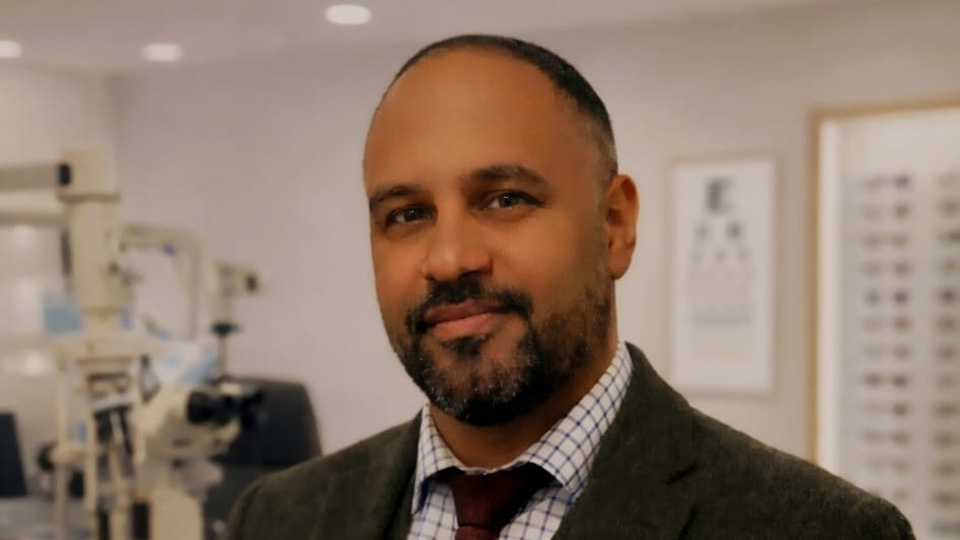
Optometrist, Haris Iqbal, is the owner of Nvision Eyecare in Wolverhampton and Penkridge Eyecare by Nvision in Staffordshire.
Iqbal estimated that he would receive between 15 to 25 CUES appointments each month at his Staffordshire practice.
“It has been a great benefit for patients. They can be seen by someone in the community. They receive an assessment and care in the right place at the right time rather than sitting in hospital for hours,” he said.
Iqbal noted that it can be an anxious time for patients when they have something wrong with their vision, such as flashes and floaters.
“They can pick up the phone to Primary Eyecare Services or any CUES practice, and get themselves into an appointment very quickly and very efficiently,” he shared.
“It reduces the barriers to care,” Iqbal highlighted.
Reflecting on the demographics of CUES patients at his practice, Iqbal noted that they are often elderly or young children.
“The other week there was a child with chickenpox who developed some mild redness of the eye, but there were no other concerning findings or red flags. We were able to monitor him locally and he recovered without requiring a hospital visit,” Iqbal recalled.
Iqbal share that patients are often very grateful for the service that is provided through CUES.
“It can be alarming for people when they have something wrong with their eyes. They come in thinking the worst and then you are able to explain what has happened and reassure them. I think that is very rewarding,” he said.
Reflecting on how he would like CUES to develop in the future, Iqbal would like to see a focus on promoting the service.
“It would be good if we could get the message out to the general public, to GPs and pharmacies,” he said.
“At the moment some patients just don’t know about it,” Iqbal shared.

Insight from Primary Eyecare Services
Primary Eyecare Services primary care services clinical lead for Staffordshire and Stoke-on-Trent, Gurraj Jabbal, shared that his focus is on ensuring that CUES remains a sustainable service that meets local need and helps reduce demand on secondary care.
He added that this is achieved through responsible management of activity and strong working relationships with the local optical committee (LOC), local practices, practitioners, and integrated care board commissioners.
“In Staffordshire, we are also supported by a Primary Eyecare Services centralised telemedicine team, who are able support with service capacity locally to clinically triage patients, complete virtual CUES episodes, and appropriately refer into optical practices where face-to-face assessment or further investigations such as OCT or independent prescribing may be indicated,” Jabbal explained.
“By working together, we can maintain the accuracy and quality of the service while making sure patients are seen in the right place, by the right professional, at the right time,” he said.
Across England, Primary Eyecare Services supports the delivery of extended services at more than 2400 optometry practices.
Roxanne was amazing. She recognised the symptoms [of a retinal tear] straight away. If she hadn’t, I would have walked off, gone home and waited until I lost my eyesight
An ophthalmologist on CUES
Royal Stoke University Hospital ophthalmologist, Andrew Brown, has collaborated with optometrists in Staffordshire on CUES for the past five years in his capacity as clinical lead.
“From our perspective, there is a lot of unrealised potential in CUES,” he shared with OT.
Brown would like to see more optometrists become IP qualified so that conditions requiring prescriptions can be managed in primary care.
He estimated that around one in three patients presenting at eye casualty require a prescription.
“As a department, we have been keen supporters of optometrists getting IP qualifications so that if a patient attends a CUES appointment the optometrist can write a prescription if needed rather than referring on,” he said.
A recent analysis of CUES presentations in Greater Manchester found that 40% of CUES referrals to secondary care could have been retained within primary care if an IP optometrist had been available.
Brown is enthusiastic about upcoming introduction of a managed clinical network for urgent eye care in Staffordshire – which will see optometrists and secondary care clinicians meet regularly to discuss urgent eye care cases.
“This has already been introduced very successfully for glaucoma, and I think it will give people more confidence to manage cases when in the past they might have referred in,” he said.
The ophthalmologist observed that sharing learning through the managed care network can help to solidify the knowledge that is gained through an independent prescribing qualification.
“Qualifications are good, but in my view they are a gateway. Once you have your qualification, that is when you begin to learn through feedback,” he said.
Brown noted that the managed care network can help to bridge some of the gaps between the level of feedback a practitioner receives in secondary care compared to a primary care optometry practice.
“In medicine, you’re working around a lot of people, so if you see something you are unsure of, there’s usually someone next door who you can ask,” Brown shared.
“In optometry that can be more difficult because you might be working on your own,” he said.
The clinical lead highlighted that CUES has the potential to take pressure off emergency eye clinic.
“At the moment, you walk through the emergency eye clinic, and the waiting room is full. There are quite a few patients who could quite happily be managed in the community but there’s also likely to be someone who has something serious,” Brown shared.
“If you put yourself in the shoes of the doctor doing the emergency eye clinic, we are under quite a bit of pressure here, and fewer referrals could give us that bit of breathing space,” he said.
The LOC view
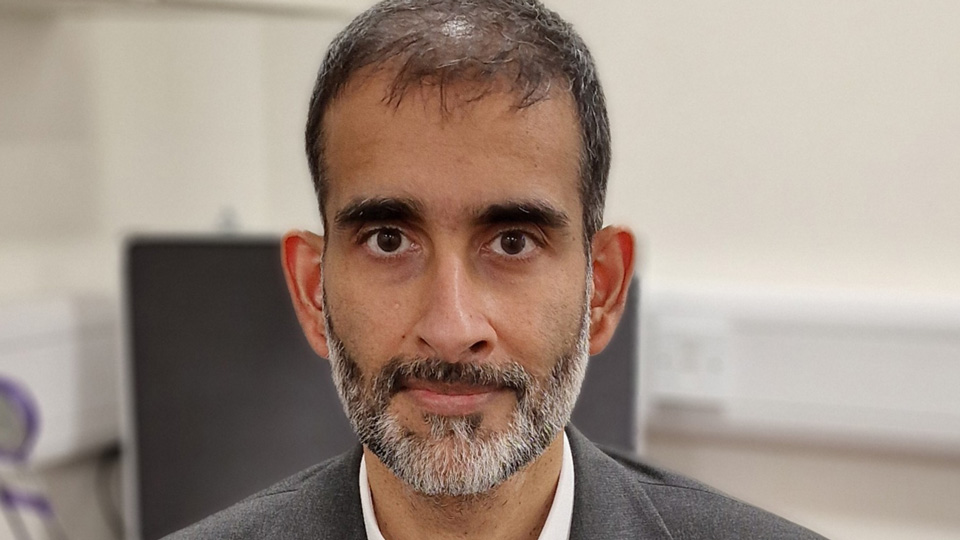
For the past 14 years, Staffordshire LOC chair, Irfan Razvi, has worked closely on the development of CUES alongside IP optometrist – and LOC CUES/IP lead – Mark McCracken.
“Over the years, Mark’s passion and energy for CUES and IP have been instrumental in getting the service established across Staffordshire,” Razvi reflected.
The optometrist shared with OT that before CUES was commissioned in Staffordshire in 2020, the region already had a history of offering urgent and acute eye care services within the community that can be traced back to a pilot in 2001. A Minor Eye Conditions Service (MECS) was commissioned across Staffordshire in 2018.
“When COVID-19 broke out in 2020, NHS commissioners could easily see the benefits of migrating the existing MECS service across to the LOCSU COVID-19 Urgent Eyecare Service pathway,” he highlighted.
A telemedicine service was introduced for clinically vulnerable patients as well as low risk eye conditions, while IP and OCT ‘bolt on’ services were introduced for enhanced patient management.
Razvi shared that since 2024 CUES has been known as the Community Urgent Eyecare Service, with a focus on acute and sub-acute eye conditions.
“Patient uptake of CUES has been increasing over time due to increasing public awareness of the service,” he said.
He added that more patients are being signposted to CUES through a range of avenues, including GPs, pharmacists, care navigators and NHS 111.
“It is also worth mentioning that since COVID-19, there has been a trend of heightened health vigilance which has also played its part in increased service uptake,” Razvi observed.
We are under quite a bit of pressure here, and fewer referrals could give us that bit of breathing space
Reflections on the successful implementation of CUES
Razvi highlighted the value of good working relationships between community optometry and NHS commissioners, acute trusts and primary care colleagues in successfully rolling out CUES.
“It does take time to build up trust and to educate fellow eye health stakeholders about the value of the CUES service to patients and to the local eye health economy,” he said.
A local eye health network within Staffordshire meets regularly to discuss eye care needs and solutions.
“The clinical consensus is then fed to the integrated care board,” Razvi said.
He highlighted the value of high-quality data in service commissioning – including by presenting service audit outcomes
“Primary Eyecare Services has been a great partner over the years with this endeavour. LOCSU support with case studies has also been invaluable,” Razvi shared.
The optometrist noted that success of community services such as CUES depend on a good spread across the region.
“It is mission-critical for LOCs to get their local optical profession on board,” he said.
He added that regular communications and events that include local CPD with real case discussions are pivotal.
“In addition, we try to remind practitioners about the excellent resources that are available to support – such as the clinical management guidelines produced by the College of Optometrists,” Razvi said.
“This enhances clinical confidence while also ensuring practitioners realise the benefits of CUES for their patients and practice,” the optometrist and practice owner shared.
Challenges and the future of the service
Razvi acknowledged that there have been some challenges in implementing CUES, including raising awareness of the service among patients and ensuring the service is integrated within primary and secondary care.
“Negotiating appropriate tariffs is a continuous challenge in the current financial climate,” Razvi shared.
Reflecting on the future of CUES in Staffordshire, Razvi shared that there is a focus on a culture of audit, reflection and improvement.
“The recent introduction of FP10 pads for all IP CUES practices and an update on the Staffordshire IP formulary will play an increasingly important role in patient management within the community,” he said.
Plans are also being finalised for a managed clinical network with a focus on urgent eye care.
“When launched, this will serve as a two-way educational network that allow closer working relationships and build trust between primary care optometry and acute trust ophthalmology colleagues,” Razvi explained.
He added that Staffordshire LOC is steadily building up the network of CUES practices in the region.
“We want to ensure that it continues to be a sustainable and essential enhanced service – contributing to the shift of services from the hospital to the community as outlined in the NHS 10-Year Health Plan,” Razvi noted
As an optometrist and practice owner, Razvi offers CUES from Razvi Opticians in Stoke-on-Trent.
“I have been privileged to provide my patients with all iterations of this service from 2011 onwards. While glaucoma is my special interest, there is something deeply satisfying in managing the unexpected and variable clinical conditions as well as the patient,” he said.
OT asks...
If you are an optometrist who offers CUES, do you have an independent prescribing qualification?


Comments (0)
You must be logged in to join the discussion. Log in