


25 October 2026
The career opportunities available to optometrists are continually expanding.
Rather than working in the same location with the same colleagues each day of the week, many practitioners are choosing to build a diverse portfolio of roles.
However, many early career professionals are not aware of the range of roles that a career in optometry can offer.
In this feature, OT approaches experienced practitioners for their insight on the rewards of a portfolio career – and receives tips on how newly qualified optometrists can increase the variety of their working week.

Develop a strong foundation
Sharing her tips for building a diverse career, independent prescribing (IP) optometrist and founder of Enka Eyewear, Mandeep Kaur-Bains, encouraged early career professionals to focus on mastering fundamental skills.
“Breadth is credible when it rests on strong core skills,” she observed.
Kaur-Bains also recommended continuing to learn through higher qualifications.
“Say yes to varied experiences, such as shadowing hospital clinics,” she said.
The hospital optometrist noted that practitioners can look beyond clinical work to build new skills – they might consider teaching, research or leadership opportunities.
“Network deliberately at conferences and through professional bodies – it may open doors to rooms you haven’t even considered,” Kaur-Bains said.
Reflecting on the benefits of exploring multiple professional avenues, the IP optometrist highlighted that this approach builds a well-rounded skillset.
“What you learn in one area informs the others,” Kaur-Bains said.
She added that varied clinical experience can also help to improve patient care.
“Understanding different pathways helps you refer appropriately and spot what others might miss,” Kaur-Bains observed.
She shared that a diverse career can also enhance job satisfaction and give practitioners a clearer sense of direction.
“Exploring different roles helps you identify where your strengths and passions really lie, so you can specialise with confidence,” Kaur-Bains said.
Breadth is credible when it rests on strong core skills
The value of incremental progress
IP optometrist and optometric adviser, Hannah Thomas, told OT that her advice for early career professionals is to build a strong clinical foundation, stay curious and be open to opportunities.
“One of the great things about a career in optometry is the variety of opportunities available, many of which you may not even be aware of when you first qualify,” she said.
She added that newly qualified optometrists do not need to have their whole career mapped out from the beginning.
Thomas observed that her own career has developed gradually over time.
“Alongside clinical practice, owning and running two practices and studying for higher qualifications, I became involved with my local Regional Optical Committee and took on a clinical teaching role at Cardiff University,” the IP optometrist shared.
“These experiences helped me develop new skills and perspectives, ultimately leading to my role as an optometric adviser,” Thomas highlighted.
She observed that different roles often complement one another within a portfolio career – keeping work interesting and providing opportunities for further learning.
“My advice is to get involved, build relationships and embrace opportunities. You never know where they might lead,” Thomas shared.

Building resilience within your career
Locum optometrist and founder of The Eye Care Advocate, Jason Searle, observed that a portfolio career helps to keep daily work dynamic – avoiding the repetitiveness that may come with being confined to a single testing room.
“The greatest benefit is developing a holistic view of the profession. Stepping into different arenas helps you understand new research, see various industry perspectives, and ultimately serve your patients better,” he shared.
“It also provides peace of mind by giving you multiple strings to your bow and a solid backup plan,” Searle said.
The optometrist highlighted the value of networking as an early career professional.
“Attend conferences, engage on LinkedIn to spot industry trends, and connect with peers or groups,” he advised.
Searle also recommended that practitioners keep an open mind when considering new roles.
“Don’t dismiss opportunities because you lack experience. I learned to run a community platform on the job. The profession thrives when we bring diverse experiences to the table,” he reflected.
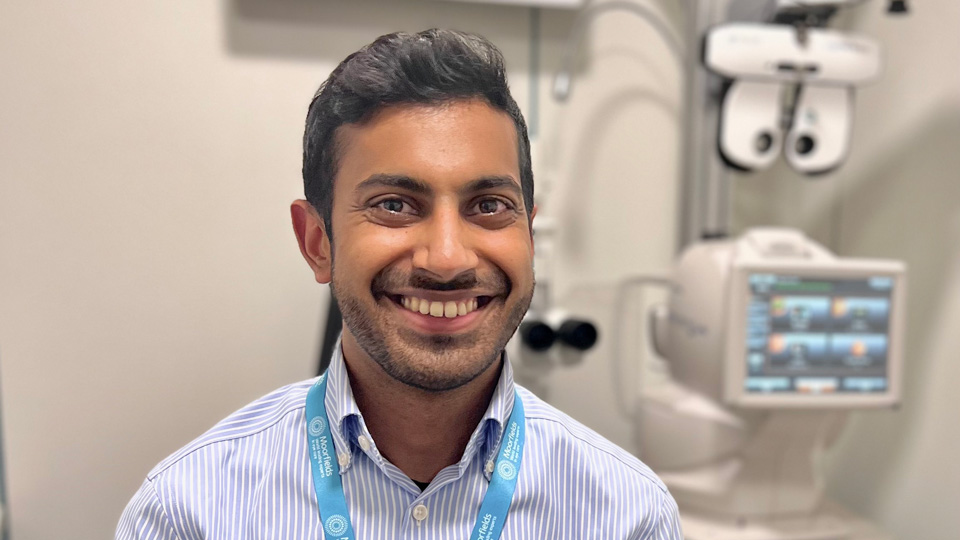
The many possibilities of an optometry degree
Resident optometrist at Moorfields Eye Hospital and director of Avenue Eyewear, Akshay Shah, encouraged early career practitioners to take up any opportunity where they are able to learn something new.
“Step outside your comfort zone. I’d also say don’t underestimate the value of networking. Optics is a small world after all and just having a chat with people in the profession, you can learn about different career routes, some you may not have even been aware of,” Shah recommended.
He highlighted that one of the great things about optometry is that the degree “doesn’t limit you to just doing eye tests.”
“There are so many different paths you can explore, from research and education to working with manufacturers or exploring different areas of clinical practice,” he said.
“Trying different things helps you discover what you enjoy, develop new skills and you will never get bored of your work,” Shah observed.


Comments (0)
You must be logged in to join the discussion. Log in