


26 September 2026
What are the ingredients that give a practice its special touch? How do teams go about curating the particular atmosphere that makes a patient feel a certain way when they step through the doors?
OT asked practices to describe the environment they aim to create, how they achieve this, and how they respond if a patient’s experience does not go as expected.
Curating a relaxed and personal approach
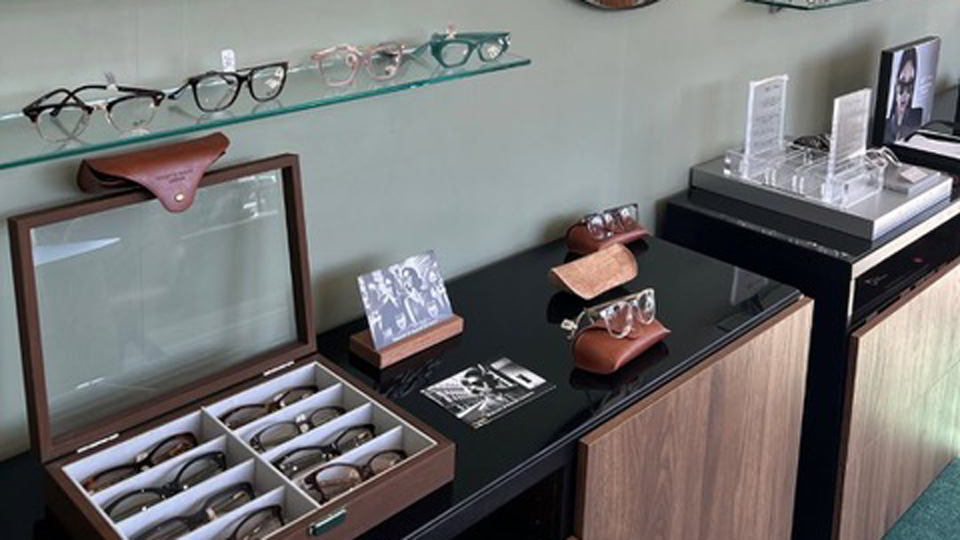
Yorkshire Eyewear, which has two practices in Knaresborough and Howden, aims to create a welcoming, friendly and professional atmosphere.
Garrey Haase, owner of Yorkshire Eyewear, painted a picture for OT: “Everyone who walks through our doors is greeted with a warm smile and made to feel relaxed, whether they are booking an appointment, having their eyes tested, choosing new glasses or simply visiting the practice.”
The team aims to cultivate interactions that feel “personal and unhurried,” with Haase sharing: “I feel this is important because it can transform something that may simply have been another item on a patient’s to-do list, such as having their eyes tested, into an enjoyable and positive experience.”
For some, eye care can feel clinical or daunting, but creating a relaxed and welcoming environment helps patients to feel more comfortable and confident in the team, the practice shared.
“It also encourages them to be more open about their needs, allowing us to understand them better and ultimately help them achieve the best possible outcome,” he added
This approach plays a key part in building strong, long-term relationships with patients and fostering a loyal customer base.
A shared accountability
Patients are actively encouraged to provide feedback – both positive and negative – and to share any areas where they feel the practice could improve.
Haase said: “We aim for every patient to have a positive experience with us, but we recognise that sometimes mistakes happen and things don’t go to plan.”
“If something has gone wrong, we want to know about it so that we have the opportunity to put it right,” he continued.
The whole practice team has a role to play in the patient experience. Haase said: “Every member of our team understands that we have a responsibility to take accountability when something needs fixing. We do our very best to rectify any negative experience and ensure the patient feels listened to and valued.”
Responsibility for the day-to-day running of the practice is shared across the team, with the practice sharing: “We believe that responsibility for putting things right should be shared too.”
“It is about supporting one another and making sure that, ultimately, the patient is looked after,” Haase emphasised.
These small, familiar interactions make people feel remembered and valued
The family-feel
The relationship amongst the practice team is one of the key factors that shapes the experience patients and customers feel in practice – and is what gives Yorkshire Eyewear its extra-special touch, Haase suggested.
Haase said: “We’re not just colleagues, we’re family. In fact, some of us actually are family – with a husband and wife, sisters-in-law, and a son and daughter-in-law all working within the business.”
This means members of the practice team are aware of each other’s strengths and can play to them to help the practice run efficiently – while maintaining a personal feeling.
This family feeling extends to customers and patients, Haase shared: “We genuinely get to know the people who come through our doors and remember the little things they have told us during previous visits, whether that’s a family holiday, a child starting school or something else that is important to them.”
Reflecting on the importance of this, Haase said: “These small, familiar interactions make people feel remembered and valued.”
Ensuring patients feel expected
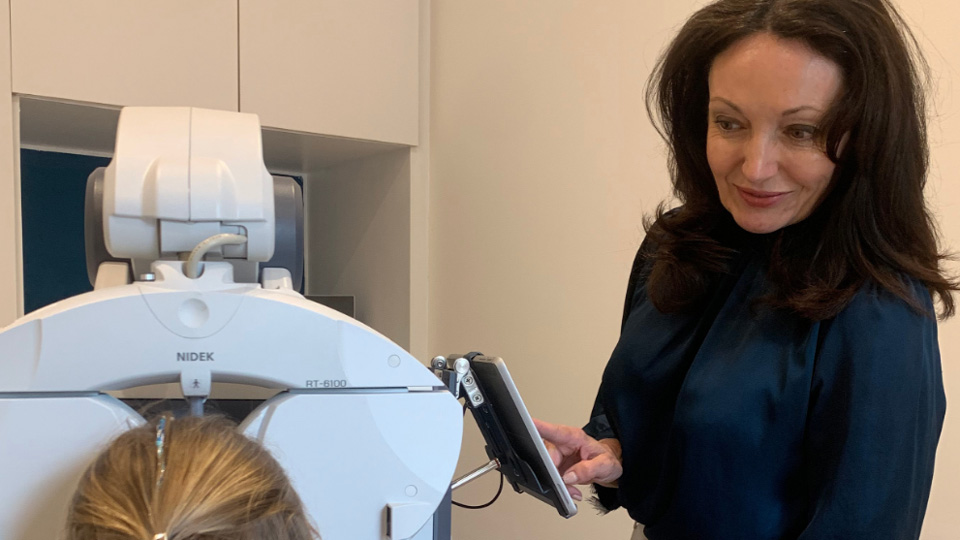
Claire Hayden, dispensing optician, co-founder and director of Haydenswan Eyecare in West Sussex, explained: “We want people to feel expected. Not processed, not squeezed in; expected.”
The practice is based in a village, and this influences the approach so that, when somebody arrives for an appointment, the team already know who they are and why they are there.
Hayden said: “There is a conversation, usually with a cup of something, and a member of the team who has already read the notes.”
The practice is designed to offer an experience “closer to a good hotel than a clinic,” Hayden suggested, but emphasised: “Without losing an ounce of the clinical credibility underneath it.”
This experience has been built intentionally to combine warmth and advanced diagnostics, because Hayden emphasised: “The two are usually presented as alternatives. You either get the nice environment or you get the serious clinical work. We think that is a false choice, and our patients seem to agree.”
Taking this approach is important for building the patient relationship – and encouraging them to act on advice.
Hayden shared: “Trust is what makes clinical advice land. Most of what we do in this profession is advisory. We can identify a dry eye picture, a myopia progression pattern, a binocular vision issue, and we can explain what happens if nothing changes. But the patient decides.”
Eye care is also a long-term relationship and should be treated as one, the practice team believe.
“Myopia management runs over years. Dry eye management is ongoing rather than a one-off fix. A child we see at seven, we hope to see at 17. None of that works on a transactional footing,” Hayden said.
Reflecting on the commercial aspect as an independent business, Hayden also pointed out: “Experience is what independent practice actually competes on. We are never going to be the cheapest, but we can be the practice people trust and come back to.”
Trust is what makes clinical advice land
The three ingredients
The key factors in the Haydenswan Eyecare experience are “time, people and language – in that order,” the practice owner explained.
Time matters most, Hayden argued, sharing: “Every element of the experience we are describing costs minutes in the diary, and minutes in the diary cost money in an independent practice.”
“We have made the decision to protect that time rather than fill it, and that is a commercial decision made every single week,” she added.
The members of the practice team are critical to the approach and patient experience – with Hayden highlighting: “We recruit for warmth as hard as we recruit for technical ability, because the technical side can be taught and the other largely cannot.”
“Our clinical team is genuinely strong, and none of that reaches the patient if the person on the front of house team is having a bad day and shows it,” she emphasised.
Finally, the team is careful in the language and words used – from “reserving appointments” rather than booking, to talking about what clients are “investing” in a service rather than what it costs.
“The candles and the coffee are the easy bit. Everybody can buy those,” Hayden pointed out.
Speaking up in the moment
If things do not go to plan, Hayden is clear: “You name it in the room, at the time.”
The team is trained to “say something at the moment they can see it on someone’s face,” Hayden explained. This can sound like asking a patient: ‘You have gone quiet, have I explained that badly?’ or ‘Is this not what you were hoping for?’
“Most of the time the answer is small and fixable, and the person is relieved to be asked,” she said.
Hayden told OT: “The single biggest mistake practices make is waiting. Waiting for the patient to complain, waiting for the review to appear, waiting for the complaint letter. By then you are defending a position rather than fixing a problem.”
If an order is delayed or a dispense has not worked out, the team will pick up the phone and speak to the patient directly and “without defence attached to it.”
The practice team are also given authority, Hayden said: “My team can put things right without coming to me first, within sensible limits. A recovery process that requires the owner to approve it is not a recovery process, it is a delay. The moment matters more than the money.”
After this kind of interaction, it is useful to ask the patient what should or could have been done differently.
“Half of what we have changed operationally in the last year came out of that conversation,” Hayden said.
Creating a design studio experience
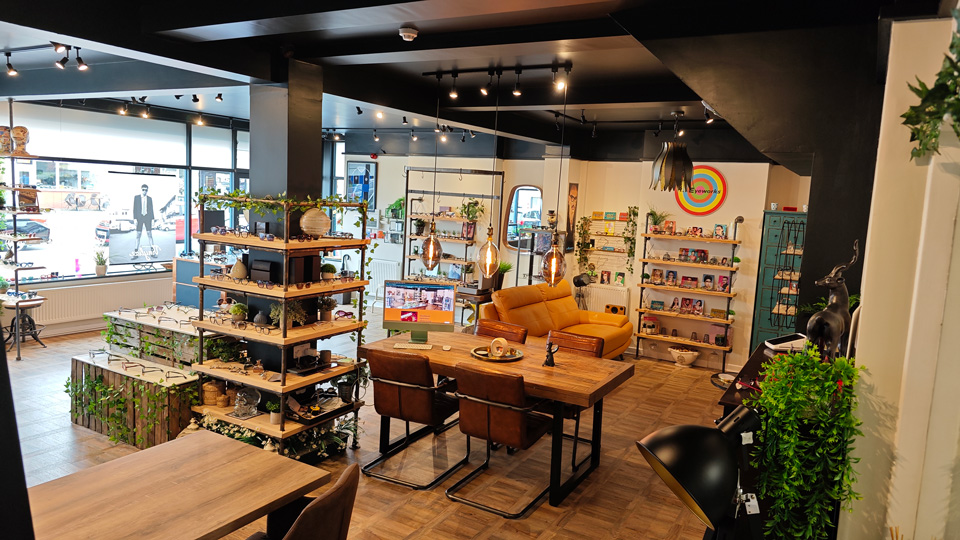
Billy Brown, co-owner of The Focal Rooms in Southport, Merseyside, described the experience the team aims to create as “completely personal, unhurried, and genuinely exciting.”
“When someone walks through our doors, we want them to feel like they’ve stepped straight into a warm, welcoming design studio rather than a cold clinical clinic,” he said.
Brown explained: “We’ve built an atmosphere that balances high-end boutique design with a friendly, grounded vibe where people can relax, have a real conversation, and actually enjoy discovering eyewear that showcases who they are.”
This is crucial, Brown highlighted, because of the huge role that glasses can play in an individual’s identity.
He shared: “If someone feels rushed or nudged toward a generic, cookie-cutter pair, the magic is completely lost.”
“By focusing on honest advice, true enthusiasm, and personal connection, our clients don’t just pop in for a prescription update – they come back because they love the experience and know we’re genuinely invested in getting it right for them,” he said.
We take full personal ownership until they walk out with a massive smile
Passion for precision and zero pressure
A few ingredients make up the distinct atmosphere of The Focal Rooms. The first is a curated collection celebrating independent boutique design.
Secondly, Brown said: “It’s our shared passion – from precision optometry to styling and bench-side craftsmanship, everything flows together seamlessly.”
“Most importantly, there’s zero pressure here,” he said, “We’re all about great conversations, expert guidance, and celebrating unique design rather than pushing sales.”
Taking ownership
Reflecting on how the team approaches unexpected bumps in the road, Brown explained that the practice runs its own on-site glazing laboratory, giving the team the “unique freedom to pop behind the bench, tweak a fit, adjust lenses, or rebuild a frame without keeping anyone waiting for weeks.”
He added: “We take full personal ownership until they walk out with a massive smile.”

Five steps to dealing with... a patient complaint
The AOP’s Henry Leonard shares his five steps for practices to follow if they receive a complaint


Comments (0)
You must be logged in to join the discussion. Log in