


28 March 2025
Many optical professionals across the UK are preparing for Eid Al-Fitr this weekend, a celebration that marks the end of the month-long dawn to dusk fasting of Ramadan.
In the UK, Ramadan began on 28 February and is expected to conclude on 30 March (dependent of the first moon sighting).
Ahead of festivities this weekend, OT spoke to five optometrists who practise in different settings to find out what Ramadan means to them, and how they will be celebrating Eid Al-Fitr.
What Ramadan means to me
For optometrist Zetun Arif, Ramadan “is a time of intense spiritual focus.” She describes is as “a time of togetherness and counting the many blessings we have to be close to family and to not go hungry.”
As the ophthalmic director of Specsavers Formby, it is important to Arif that she can support colleagues who are also observing Ramadan, and she ensures flexibility across the team during the month.
Arif explained that prior to the start of Ramadan, she and her team planned ahead to ensure this flexibility was possible without impacting patients.
She told OT: “As a director at Specsavers, we have the flexibility with managing our days. We changed our clinic times to accommodate a shorter lunch and a slightly earlier finish so we could be home in time for breaking our fast.”
For Optical Express optometrist, Amir Afzal, Ramadan means a time for reflection.
He uses the month to “think about the year that has passed from last Ramadan to this,” and consider whether he has strengthened his Iman (faith/belief).
Afzal shared: “During this month there is an increased focus on prayers and recitation of the Quran.”
He added that family time is a priority too. “One of the most important things during Ramadan is time for family. It is a time of closeness and that feeling of everyone looking out for one another,” he told OT.
As a resident optometrist, Afzal has appreciated how colleagues have checked in and asked how he is feeling through the day during Ramadan.
He shared: “Where required they will perform further pre-screening tests or ask patients if they would like a warm drink to allow me to pray on time.”
He added: “Colleagues will inquire what time fast opens to ensure I can get home in time for Iftar [the meal eaten after sunset during Ramadan].”
The practice where he works also has a spare room that during Ramadan has been set up as a prayer room, providing him and colleagues a space to use for worship.
Optometrist and director at Alan Miller Optometrists, Sohail Hakim, describes Ramadan to OT as the month in the Islamic calendar that he uses to “charge the batteries.”
It offers him “a time for self-reflection, self-control, self-development, self-discipline, charity, and tuning of my spiritual compass.”
Understanding how important his schedule is to him during Ramadan, Hakim noted that his team gifted him a prayer mat and Quran that he can use while observing prayer times during working hours.
“They also ensure the hours of working are adjusted so I am adequately rested as well as a bag of fruit and nuts to break my fast,” he shared.
For optometrist Nadirah Talati, Ramadan is both a spiritual time and a month in which she can “detach from the usual routine of work and other events by carving out time to strengthen my connection with my faith.”
Talati told OT: “As I have gotten older it’s also a time for me to reflect on the privileges I have and remember those who are less fortunate.”
She shared that ahead of Ramadan, “they often ask me if I want to adjust my working hours, and they understand that I may take more time off during the month more so around the last few fasts and Eid.”
She observed: “It’s nice that my regular patients often remember it’s Ramadan and ask me how fasting is going.”
For locum optometrist, Shamina Asif, Ramadan is “a time to connect with the community and to try and rush to do many good deeds.”
She describes the month-long period as “a time for deep reflection,” and uses it to prioritise worship and studying the Quran.
Over the last month as she observes Ramadan, Asif said that as a locum optometrist, she has been able to limit her work to allow her time for worship.
However, Asif notes that for some optometry students, the Objective Structured Clinical Exams have been run during Ramadan.
As co-founder of the Optom Academy, an organisation that provides support for pre-registration optometrists, Asif said it has been important for her to support students ahead of their qualifying exams.
She highlighted: “It would be great if organisations could plan dates of exams for students outside of Ramadan and other key religious festivals.”
Celebrating Eid Al-Fitr
This weekend, the optometrists OT has spoken to, along with many others across the profession, will be celebrating Eid Al-Fitr, marking the end of Ramadan. OT heard about what celebrations they have planned.
Talati shared how she will start the day with Eid prayers at the mosque, followed by a family lunch.“We’ll enjoy traditional home cooked dishes and desserts, exchange gifts and spend quality time with nieces and nephews and enjoy watching them make memories of Eid,” she said.
Asif will also start celebrations with prayers at the mosque with her family. “We will all then meet at my parent’s house for food.”
Asif described how her family will then exchange gifts and “usually organise some party games too.”
“Relatives and friends will spontaneously come onEidday, so it’s great to have a catch-up. My dress is sorted, I just need to find some good Henna (god willing),” she added.
Arif said as she is fortunate to live so close to family, they will start the day with cakes for breakfast because “why not?”.
She shared: “This will be followed by prayers and then we will visit my aunt who has poor health before congregating with my siblings and their families at my parents for a feast and exchanging of gifts. It is always a noisy, fun affair where we have the opportunity to catch up with family members who drop in to see us.”
Afzal shared that his Eid celebrations are “fairly consistent each year.”
He described: “I wake up early in the morning, put on new clothing and my favourite fragrance of course, before heading to the local mosque for prayers. Following this, the remainder of the day is spent largely with family and some close friends too.”
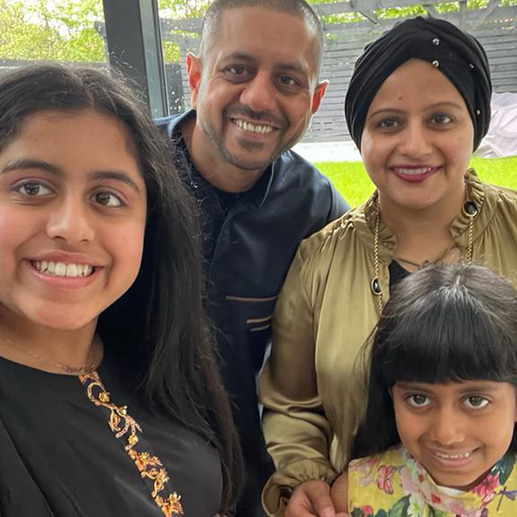
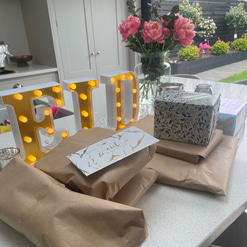
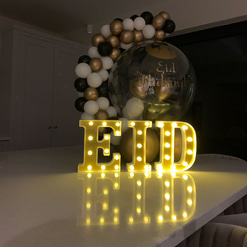
Providing a glimpse into his family’s Eid celebrations, Hakim shared: “The long day starts with the dawn congregational prayer dressed in one’s best, and then descending upon friends and family for meals, meeting, greeting and connecting home to home. Much like any other faith-related event or celebration, it is very much a family affair.”


Comments (1)
You must be logged in to join the discussion. Log in
Anonymous03 April 2025
Could we have articles on how members of other religious faiths are celebrating their significant religious festivals please.
ReportLike3