


In a roundtable discussion, co-hosted by Essilor and OT, eye care practitioners discussed the importance of personalisation in dispensing, how they educate patients about the changes that will come with presbyopia – and how the Varilux® XR seriesTM is helping them with the transition.
Educating patients about presbyopia and anticipating change
OT is interested in the age that practitioners start discussing presbyopia with patients – including covering the basics of what the condition is, and how it might impact their vision.
Our experts

Name:Dipesh Chhatralia
Occupation:Optometrist and practice owner at Brian D Suttie Opticians and Drage & Tozer Opticians

Name:Dr Debarun Dutta
Occupation:Senior lecturer at Aston University Optometry School

Name:Emma Harris
Occupation:Patient experience manager and dispensing optician at Brignall Opticians
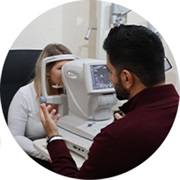
Name:Keval Sejpar
Occupation:Optometrist and practice owner at McAusland Optometrists
Often discussing presbyopia will be triggered by a prior dispensing decision, if the patient reports trouble seeing close-up, or if they talk about eye strain, Sejpar said.
He explained his framing to OT: “Often we’re having those conversations quite early to say, ‘look, this isn’t presbyopia. We’re going to help you with this in the short-term, but in the fullness of time, this is something you may need to get used to. There will be things we can do to help you with that as it goes along.’”
Sejpar added: “Often, as that discussion happens, questions get asked, and it’s a good opportunity to give people a bit of early warning about what they might expect in three or four years’ time.”
Concerns about worrying people mean he is cautious about bringing the condition up too soon, Sejpar said.
He added: “It’s much more about educating – near enough to the time that they feel forewarned.”
Sejpar also noted that presbyopia might represent the first material change in the way an optometrist looks after a long-standing patient, even if they have been wearing glasses for years.
“It’s possibly the first visible sign of ageing they’ve noticed,” he said.
It is about “getting the timing right – making sure you’re building and retaining the trust that you’ve hopefully got with them already,” Sejpar believes.
He added: “If you can flag this before the patient struggles, they know you’re in control: you know how to help them, because you saw it coming. That’s critical.”
Dr Debarun Dutta, senior lecturer at Aston University’s School of Optometry, noted that raising the issue before symptoms arise helps to alleviate any emotional shock, and to build up their readiness – “to build up to the next journey, and hold their hands.”
Dutta also emphasised that the late 30s is an important period, because 80% of patients in this age group will experience presbyopia as visual fatigue. Similarly, 80% report blurred vision around digital screen time.
The average age of the UK population is 40, Dutta noted – so “if you are a new optometrist coming into practice, or an experienced one, this is the average patient that you will see.”
Emma Harris, dispensing optician and patient experience manager at Brignall Opticians in Chippenham, emphasised the importance of reassuring the patient that presbyopia is normal.
“We know how to help and will help them, so it’s catching it before it causes them any worry,” Harris said.
Dipesh Chhatralia, optometrist and practice owner at Brian D Suttie Opticians in Little Chalfont and Drage & Tozer Opticians in Sudbury, noted that patients who are long-term glasses wearers are often more in tune with their vision than those without spectacles, and for this reason might already have had conversations with their optometrist about how it might change.
If you can flag this before the patient struggles, they know you’re in control: you know how to help them, because you saw it coming. That’s critical
Chhatralia will bring up presbyopia with patients in their 30s who are getting glasses for the first time, and who might have heard that their vision could deteriorate through wearing them, he said.
“It’s not a deterioration in their vison – it’s just a change in focus that we want to help with,” is how he describes the condition, he explained.
Chhatralia also emphasised that patients do not necessarily know what is going to happen – and might delay eye appointments whilst they try to ignore symptoms.
“They might think that their eyesight could be failing, and they may lose their visual sharpness,” he said.
“It’s important to have those discussions early on, so they know what to expect, so those fears are alleviated, and they do get help when they are having problems – and they don't need to prolong it.”
Modern patients also want as much information as possible about their health and explaining fully can help build trust in the practice, Chhatralia believes.
Sejpar also noted the business benefits that can come with empowering patients with as much information as possible.
“If they become the person in the know, because they had the chat with their optometrist, it shines light on us,” he said.
“That can really reinforce that trust and professional reputation.”
Which patients are suitable for the Varilux® XR seriesTM?
OT is interested in hearing about which patients practitioners select for the Varilux® XR seriesTM, and how this decision is made.
Sejpar noted the importance of discussing daily activities with patients who might be suitable, “and how we can alter the lens we offer to make their life easier when it comes to wearing these glasses.”
“Helping people feel empowered early, having them do their own research, and opening up conversations about these things, can only lead to better outcomes in terms of what they end up wearing,” he believes.
Likewise, Dutta emphasised the importance of personalised varifocal lenses, in a world where patients are moving “between phone, laptop, driving, indoor, outdoor, and meetings – switching constantly between different worlds, from morning to night.”
Harris agreed, noting that the XR seriesTM is her go-to, “particularly for people who are spending all day in front of a computer, or needing to check things on phones, laptops and tablets.”
“It is going to give the most natural experience and the most flexibility in the lens,” she said.
For early presbyopes, Harris tends to start with a recommendation for an EyeZen Boost lens, before discussing the Varliux® XR seriesTM further down the line.
“When it gets to a point of needing a full varifocal, we can then discuss the XR seriesTM,” she explained: “They’ve already got used to having that progressional change throughout the lens, so I find that the adaptation is going to be easier and more comfortable for the patient.”
She added: “It’s a natural progression. If we’re able to offer our patients the best that’s out there, in terms of the technology used to create the lenses, we want to be able to offer that to our patients.”
A patient who is likely to benefit from the XR seriesTM is one who is living a “really busy, dynamic, active life – constantly having to check things on the go, for example checking notifications on their phone,” Harris said.
She explained: “If they are having to change their focus all the time, it is going to give them the most natural experience. They can then also have a lens that’s created for them, rather than them having to adapt in order to have a lens work.”
Sejpar, who has been offering the Varliux® XR seriesTM in practice since its launch, agreed that progression is helpful when moving patients into the lens.
Having had a good experience with the previous iteration of the lens, “It was a really easy switch-over, to take all of our patients who had been used to wearing their X seriesTM and moving them straight across into the XR series when they next needed something,” he said.
Sejpar added: “The XR seriesTM is our weapon of choice. It’s designed for people who need good, dynamic vision through the day. The reality is, who wouldn’t benefit from that?”
He added: “It is our first-choice option. Rather than looking for the bare minimum that someone needs, we tend to look at the best thing that someone would benefit from. There are very few occasions where the XR Pro doesn’t tick that box.”
Chhatralia agreed: “We work on the basis that we want to offer our patients the best, and the best technologies. That’s where we offer the XR Pro as the lens of choice.”
In bringing the option into practice, Chhatralia said, “this was a natural progression, with the newer technology and the enhanced vision that those lenses can provide.”
We work on the basis that we want to offer our patients the best, and the best technologies. That’s where we offer the XR Pro as the lens of choice
Feedback from patients is that the ‘swim’ significantly reduced when patients are wearing the Varilux® XR seriesTM, Chhatralia said.
“The natural vision that patients experience is really high,” he said.
“The technology in the lens makes it more dynamic. When it takes the personalisation measurements in, when people are moving around, it really gives them that dynamic, clear vision that we hope to give patients.”
Harris noted that the technology used “helps reduce the natural swim effect sensation that people can very much experience through a traditional or a non-personalised varifocal – so when they're having to change their focus, it keeps their vision more stable.”
Sejpar agreed: “The feedback we get from patients is that transitioning from close vision to far and back again, and doing so in motion, feels really natural.
“If someone puts them on and barely notices there’s an issue, clearly the dynamic vision stability is achieving what we want it to by virtue of that personalisation.”
He added: “That always feels like a real success for us, and that’s feedback we get quite routinely.”
Chhatralia added: “Everyone’s days revolve around digital devices. Having lenses that take that into account, as well as the frame that the patient has chosen – these individualised parameters can really enhance the experience that patients get from their lenses.
“It’s really exciting, on the dispensing side, that there are so many innovations that have taken place.”
Personalisation, satisfaction, and practice loyalty
When working in sync with the Visioffice, the Varilux XRTM offers a high level of personalisation to patients – and this is something that they quickly recognise, Chhatralia believes.
Chhatralia explained that his practice offers the Visioffice to almost every dispensing patient, from those requiring single vision lenses to those requiring varifocals.
“It elevates the experience of the patient, that they feel that the lens is being designed for them,” he told OT.
Harris believes that the Visioffice allows the high level, technology-driven experience that the patient has had in the consulting room to be carried through into the dispensing space.
“Sometimes, we’re sat there with a pen and a ruler, and we’re going to do a traditional dispense,” she shared.
“In terms of personalisation, the Visioffice adds an extra level of continuing care from the consulting room.”
The Visioffice takes centre stage in the dispensing area and is often a talking point for patients when they enter the practice, Harris told OT.
Chhatralia agreed that the product allows the dispensing experience to match that of the consulting room.
“During the eye test, they go through so much tech and advancement. It’s important that this carries through all parts of the practice,” he said.
“That’s where the Visioffice is really powerful. It is showcasing the latest technology. We are able to take measurements that we wouldn’t be able to otherwise.”
He added: “It has some unique features, such as measuring the central rotation of the eye to help personalise the lenses, which is unique.”
Personalisation “stops it [the lens] feeling like an off-the-shelf product,” Sejpar noted.
He added: “When you can show patients that you’re producing a completely custom product, which factors in their lifestyle, posture and behaviour, it massively increases confidence.
“If you can show someone that you understand how they live and how they work, in ways perhaps they don’t understand themselves, and that you can reflect that in the lens you’re going to put into their glasses – confidence and trust-wise, that’s a massive win.”
He added: “Inevitably, people won’t go anywhere else, because they know you’re the person that can do that for them.
“When patients have confidence in the experience, it gives them confidence in the product that they’re buying. The Visioffice definitely enhances that process for our patients.”
In terms of personalisation, the Visioffice adds an extra level of continuing care from the consulting room
Sejpar called the Visioffice “an absolutely critical part of the practice infrastructure,” which “reflects, at dispensing, all the great things we've done in the consulting room.”
“It is a critical differentiator. It really helps us stand out as people that do things differently,” he said.
In terms of adaptation time, Sejpar notes: “We’re finding that most patients will be very comfortable as soon as they put it on.
“Even some of those patients who we know have often been slower to adapt to change have got there more quickly than they might have with simpler designs.”
He added: “There’s clearly some magic in there that works, and it is being reflected in patient outcomes.”
Chhatralia added: “The feedback from our teams who are dispensing these products has been really positive. We very rarely get patients who have difficultly adapting to their varifocal lenses. Initial wearer comfort is really good. I have only positive things to say about the XR.”
Harris reported that her patients “almost forget that they’ve got their glasses on, because they’re instantly comfortable, and they’re adapting really quickly.”
She shared: “They put their glasses on, go about their day, and don’t have to think about them.”
Sejpar shared that dispensing conversations have been made easier, because a lot of the discussion required with other products is removed when it comes to the XR seriesTM.
“A lot of the challenges we come up against with first time wearers or with more particular wearers have disappeared,” he said.
“We’re spending a lot more time getting compliments and dispensing second pairs than we are dealing with people struggling with what they’re wearing.”
There’s clearly some magic in there that works, and it is being reflected in patient outcomes
Visioffice and the future of personalised dispensing
Sejpar believes that personalisation is “the future of independent practice” – but also that it is the present reality of good independent practice.
“I think it’s a no brainer,” he told OT.
Harris agreed that personalisation is “shaping the future.”
Dispensing is going to continue to get more personalised, she believes.
Harris noted: “It is our present. We are already here. We are doing it – keeping up with the latest technology and being able to offer our clients the best. But I think it’s going to be, one day, a standard way of doing things.”
Sejpar emphasised that that personalisation has been standard in other areas of people’s lives for a long time, using ski boots and running shoes as examples.
“To me, this is the future. Technology, hopefully, will only continue to improve,” he said.
He added: “The current generation of the Visioffice is very clever. I’m excited to see what comes next, as the technology continues to develop.
“This is how we stay current, how we stay relevant, and how we keep delivering excellence.”
Harris told OT that, “without the Visioffice, a pair of spectacles would be missing the cherry on top of the cake.”
Chhatralia added: “As independents, we want to offer the best to our patients. To offer an individualised, bespoke lens, without the VisiOffice, is a little bit more difficult.”


Comments (0)
You must be logged in to join the discussion. Log in