


09 September 2026
International media were given a preview of the latest technological developments across the EssilorLuxottica portfolio at Shamir’s Beyond Performance event in Milan (1 September, Tortona Experience Center).
The latest updates in smart eyewear and artificial intelligence-powered software solutions for enhanced clinical decision making were on display during a tour of EssilorLuxottica’s immersive exhibition space.
“From frames, to lenses, instruments and software, this place is all about experiencing what the group is offering to the market,” Shamir chief marketing officer, Bruno Decreton, told delegates.
During a panel discussion joined by BWT Alpine Formula One racing driver, Pierre Gasly, delegates learned how innovations in lens technology are assisting both drivers and engineers to perform at their best. Here, OT presents six insights from the event.
1 A visual and hearing solution in one device
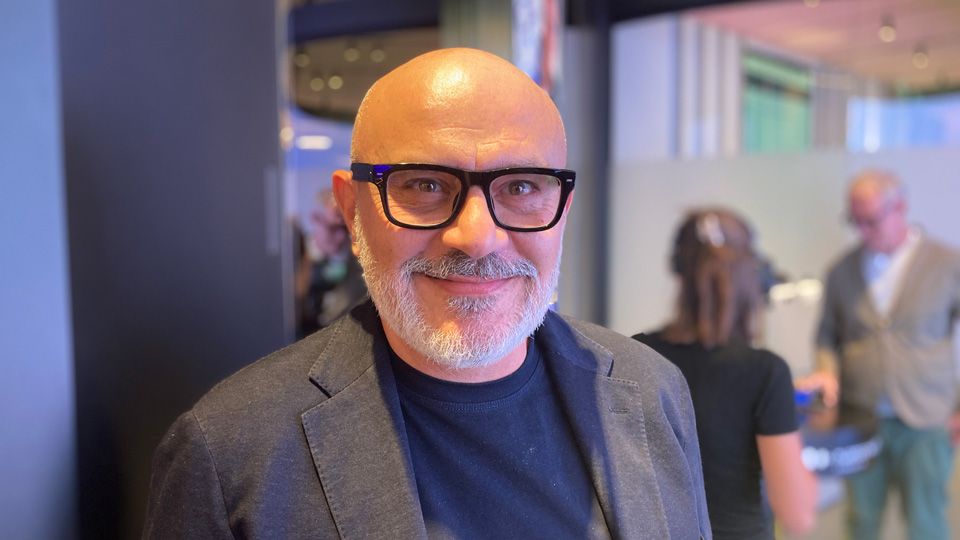
EssilorLuxottica’s Raffaello Infantino outlined developments in frames with an integrated hearing solution at the event.
The director of system and delivery integration for Nuance Audio shared with delegates that the eyewear is intended for wearers with mild to moderate hearing loss.
“With one device, you can provide vision and hearing support. The technology is invisible – no one will notice that it is not a normal pair of glasses,” he said.
2 The latest in AI glasses
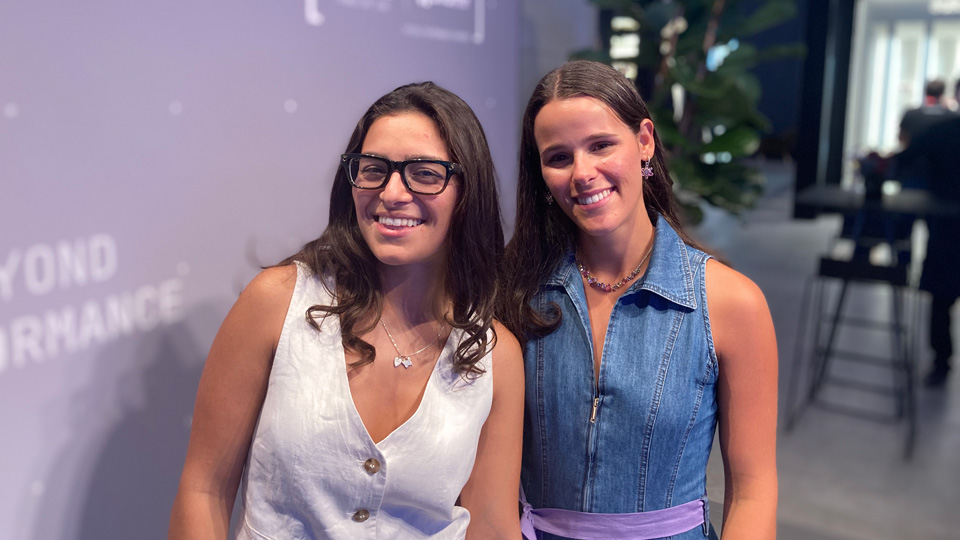
EssilorLuxottica AI glasses brand manager, Elena Canali, told delegates that the number of smart eyewear brands within the group is expanding with enhanced demand.
Canali highlighted that the smart eyewear category has continued to expand since 2023 – with seven billion units sold in 2025.
“The response from the market has been great and now it is up to us to create the best products – both in terms of hardware and lenses,” she said.
Canali shared that Oakley Meta Vanguard glasses – which are waterproof – are the first AI glasses that have been developed for sport.
“They can be used for any sport – for running, for golf, for football,” she said.
Canali added that Meta Ray-Ban Display involves a pair of glasses and a wristband, which analyses the movement of a wearer’s fingers.
This input is fed directly to the glasses which enables the wearer to control the glasses display.
Canali clarified that the technology is currently available in the US but not in Europe.
“We are targeting a limited distribution in Europe this year,” she said.
Ray-Ban Meta global junior brand manager, Letizia Statari, noted that it has been three years since the first generation of Ray-Ban Meta glasses were launched.
Following the launch of the second generation last year, the company has released a range that is focused on prescription wearers.
“We did this because we really think AI glasses could be used every day in many different environments by a range of consumers,” she said.
Statari added that this generation of glasses has features that allow for everyday wear – including adjustable temple tips, the ability to change the nose pads, and a battery life of over eight hours.
3 An AI-powered tool to support clinical decision making
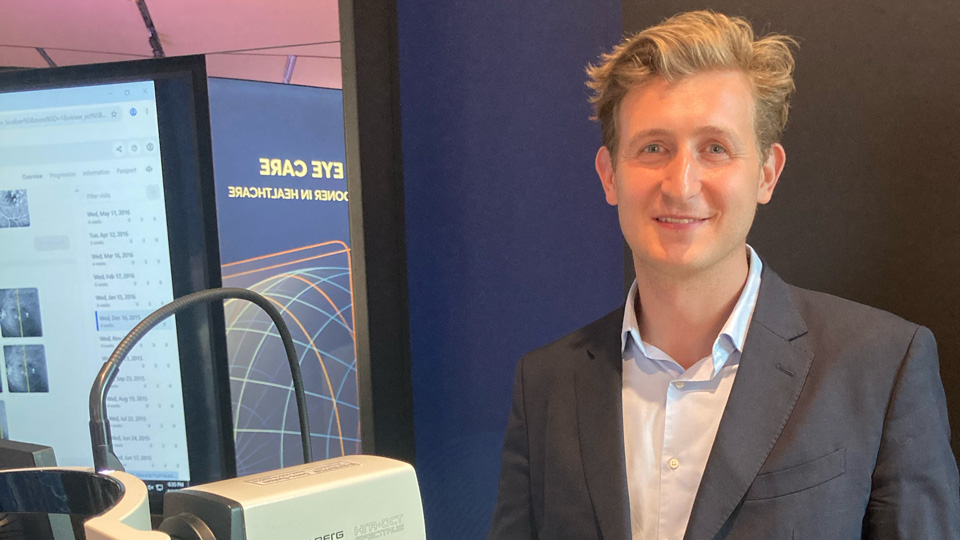
Lead data scientist for RetinAI, Dr Joseph Blair, told delegates that the company utilises technology to support clinicians in making the right decisions faster within healthcare.
“We enable, through our regulatory-approved platform, the management of imaging data,” he explained.
After images of the eye are uploaded to the RetinAI platform, Blair shared that an AI algorithm can be deployed to support the clinician in making a decision about how the patient should be managed.
Blair shared that the field of oculomics is opening up new possibilities.
“This is the idea that the eye is a window to the rest of the body. The eye is a very sensitive organ. You are able to detect early changes in the heart, in the brain, and many other systemic diseases through the eye,” he said.
Blair added that developments in oculomics combined with the use of RetinAI technology in primary care could provide a broader view of patient health.
“Patients will be provided with a better awareness of their systemic health and not just their eye health,” he said.
4 From space to the ocular surface
Espansione Group global retina product specialist, Gabriele Piccoli, outlined technology that uses a light-emitting mask to treat a range of conditions, including rosacea and acne.
He shared that the technology was originally developed by NASA to treat the wounds of astronauts in space.
“Now we are using the mask to treat ocular surface diseases,” Piccoli explained.
“The aim is to reduce the signs and the symptoms of dry eye to provide patients with relief,” he said.
Piccoli noted that the product is underpinned by research showing that light can be used to increase the production of energy by cells – activating specific biological effects at a cellular level.
Milliseconds can mean the difference between making pole position or not
5 Behind the wheel
Speaking as part of a panel at the Beyond Performance event, Decreton shared that Shamir aims to improve people’s performance by enhancing the quality of the visual data that informs their reactions.
“We know that 80% of the information we get comes from the eyes. This means that vision is at the very beginning of many decisions that we make,” he observed.
He added that this idea applies in extreme scenarios, such as racing.
“Working closely with race drivers, we understood that it takes a holistic approach to improve performance,” Decreton said.
Shamir Driving Intelligence lenses have been developed using visual behaviour research, eye-tracking analysis and insights from BWT Alpine Formula One team drivers.
Executive technical development director of the BWT Alpine Formula One team, David Sanchez, described how Shamir Driving Intelligence lenses have helped him.
“Days in the office are pretty long in Formula One, so often I have to drive home at night in the dark. In the UK, it can be foggy,” he said.
“Since I have switched lenses, it has made the driving easier,” Sanchez shared.
6 A new lens for a digital age
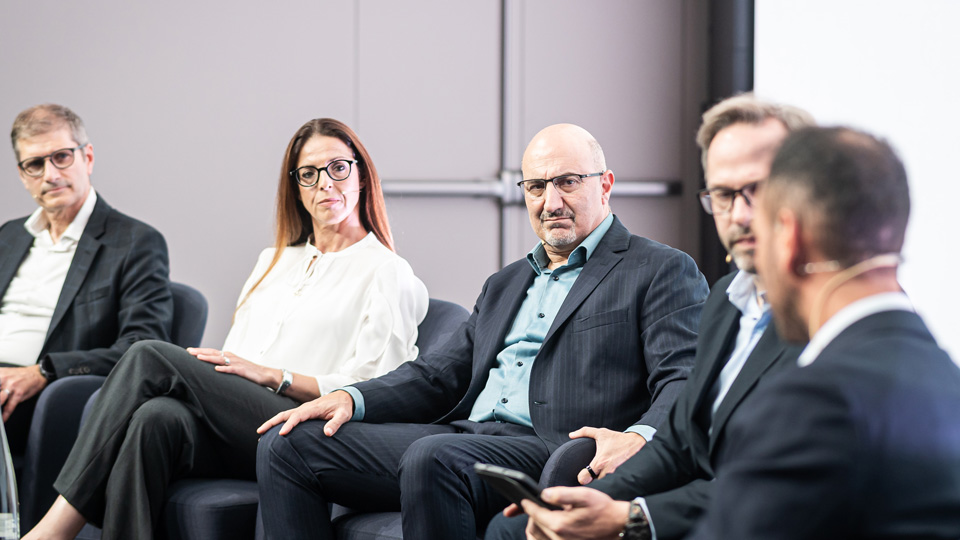
Shamir provided a preview of a new lens design, Shamir Digital Intelligence, at the Beyond Performance event.
The development of the technology has been informed by data and insights gathered from BWT Alpine Formula One engineers.
Decreton shared that there has been a change in the way that people interact with digital devices.
“We have laptops, smartphones, tablets and desktop devices. We spend a lot of time switching from one screen to the other,” he said.
The chief marketing officer shared that the approach that Shamir took to coming up with a visual solution for these demands was similar to that taken for driving.
Shamir tested the product within the engineering teams that support Formula One drivers.
“We decided to work on the most extreme situations and take inspiration from that,” Decreton said.
“We wanted to develop a solution that helps people to be more efficient working with screens and facing the unique challenges that people have when working digitally,” he said.
Sanchez shared that on a race weekend the engineering team is analysing a constant flow of data.
“It’s all about using that data to optimise the car and the strategy. Engineers will spend the whole weekend facing screens looking at data. What we need from them is to be able to focus and make the right decisions at the right time,” he highlighted.
Gasly shared that the work of the engineers is essential in supporting his performance as a Formula One driver.
“Milliseconds can mean the difference between making pole position or not,” he said.
The launch of Shamir Digital Intelligence is scheduled for early 2027.


Comments (0)
You must be logged in to join the discussion. Log in