


18 June 2026
A & A Stevens Opticians optometrist, Nkosi Yearwood, illustrated the increasing role of extended clinical services in Welsh optometric practice by guiding delegates through a typical day in practice during his presentation at Optometry Tomorrow (14–15 June, Harrogate Convention Centre).
Yearwood observed that widespread reforms to primary care optometry were introduced through the Welsh General Ophthalmic Services (WGOS) contract in October 2023.
“We’re almost three years in. It’s still changing and evolving. WGOS set a baseline that we are building on,” Yearwood reflected.
“It’s a wonderful problem to have – but sometimes I forget how many different things we are allowed to do now,” he added.
He noted that later this year there are plans for electronic patient records to be rolled out across Wales.
“The ambition is that all practitioners within primary and secondary care would be using the same electronic patient records system,” Yearwood said.
“Just before WGOS we were still faxing quite a few things, so there has been a lot of change in a relatively short amount of time,” he shared.
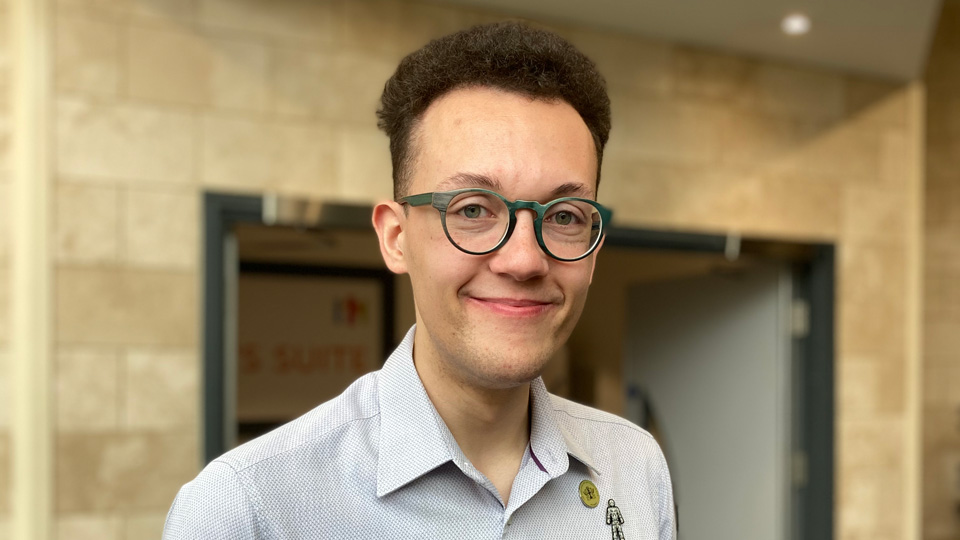
Yearwood guided delegates through the five categories of WGOS care by presenting hypothetical patient case studies over a typical day in practice.
Describing routine eye examinations in Wales, Yearwood noted that WGOS1 examinations are not limited by residency – so someone who is visiting Wales is eligible for a WGOS1 eye examination.
The independent prescribing optometrist shared that the skills optometrists learn as part of their Making Every Contact Count (MECC) training are used within routine eye examinations.
Yearwood noted that MECC conversations move beyond what would have traditionally been considered primary care optometry.
“This is about having small interventional conversations to change people's minds on a holistic scale. At the minute, we've been talking about things like smoking cessation, vaping cessation, diabetic risk factors, and also encouraging young kids to spend time outside,” he said.
Yearwood noted that while the WGOS1 fee is more generous than within England – at £46 – there has been a reduction in voucher values.
Talking through a suspect glaucoma case, Yearwood outlined the additional tests that WGOS2.2 enables optometrists to perform, including additional optical coherence tomography scans, threshold visual fields, gonioscopy if appropriate and a dilated eye examination.
The optometrist would then make a decision about whether this is a patient who they can monitor within the scope of their experience or if they should refer the patient on to a specialist optometrist who offers WGOS4. For this service, the optometrist would be paid a £55 refinement fee in addition to the WGOS1 fee.
“The idea of WGOS is really to empower the optometrist in the room,” Yearwood highlighted.
Outlining the role of acute eye care within the Welsh system, Yearwood shared that WGOS2.1 enables optometrists to assess a broad range of urgent eye conditions within primary care for a fee of £72.
He noted that optometrists without an independent prescribing (IP) qualification can prescribe a certain range of medications.
“It doesn’t have to be limited to a given presentation,” he said.
“You can prescribe a medication because you feel there is the need,” Yearwood highlighted.
The optometrist shared with delegates that in 2024–2025 primary care optometrists in Wales delivered 865,000 sight tests, 280,000 urgent eye examinations and 26,000 IP appointments.
“We are really beginning to see things ramp up in terms of how many patients are being seen within these services and the impact on secondary care,” Yearwood reflected.
He highlighted that the provision of extended clinical services by optometrists in Wales has also resulted in an uplift in the proportion of optometrists undertaking higher qualifications.
For example, 27% of Welsh optometrists have a glaucoma qualification (compared to 13% across the UK), 35% have a medical retina qualification (12% UK-wide) and 27% have a low vision qualification (4% UK-wide).
Yearwood noted offering advanced clinical services in practice has strengthened patient loyalty.
“Some people will say ‘It’s great to offer all of these things, but is it viable as a business model?’ Well, actually yes. We are properly remunerated and these patients are patients for life,” he said.


Comments (0)
You must be logged in to join the discussion. Log in