


07 February 2025
Following a multi-million pound investment programme, Seiko opened a new spectacle lens production facility and training academy in the UK this year.
The Wrexham-based company said that moving production to the UK would provide faster delivery for practices, while the training centre would support eye care professionals.
OT heard from Jonathan Cohen, commercial manager for Seiko, about these latest developments, and future ambitions for the business.
What makes Seiko and its approach or products unique?
I’d say it’s a true combination of several factors. First, we’re the only lens supplier that combines a strong true consumer brand, high quality products, excellent services, and competitive terms. This combination gives our customers a unique competitive advantage, helping them achieve their goals.
Moreover, while we can deliver products and services that rival the biggest names in the market, we still maintain a culture of agility and closeness to our customers, much like a smaller company. If you’re into rugby, think of Seiko as Antoine Dupont – strong, fast, and agile, but always delivering with precision and a touch of character.
What is the latest update from Seiko?
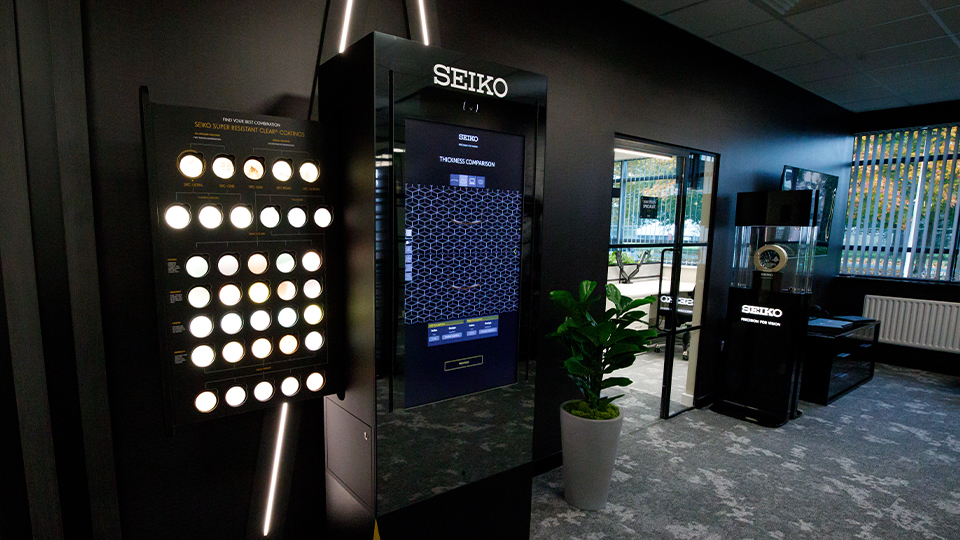
The latest standout offering from Seiko is the Seiko Vision Xperience Centre, which brings Seiko’s innovative lens technologies to life in an interactive, immersive environment. This device allows patients to engage with the products first-hand, showcasing advanced lenses like Brilliance, polarised options, and Sensity lenses.
What sets it apart is the hands-on experience that not only demonstrates the performance and comfort of Seiko lenses, but also educates users about their benefits. The centre exemplifies Seiko’s commitment to blending cutting-edge technology with personalised customer service, creating a unique experience that enhances customer understanding and satisfaction.
What did it mean for Seiko to move manufacturing to the UK?
A key focus of our strategy is relevance. For us, relevance means doing what’s right for our customers, ensuring long-term success. Our customers are in a highly competitive market, where they need to excel in both product and service to maintain their edge. One of the best ways we can support them is by building a strong, predictable, and reliable supply chain. If we deliver on time, they can deliver to their patients.
While we already had a robust supply chain, this move allows us to support independent opticians even more. Being part of the larger Hoya Vision Care organisation enables us to tap into an incredibly reliable supply chain. From decision to the first UK-produced lens, it only took a few months.
Like Antoine Dupont’s agility on the rugby field, being part of a larger group gives us the strength to reassure our customers that we’ll deliver while maintain out close connection and agility with them.
Could you tell us about the intentions for the Seiko Training Academy?
Our intention is two-fold. First and foremost, we have hundreds of customers and their staff eager for education and development. While we continually train our customers nationwide through our business development managers and channels like webinars, we realised that creating a dedicated facility to invite our customers would provide the ideal environment to play our role in continuously educating the market.
Education would cover everything from lenses and manufacturing to personal development, business acumen, sales, and dispensing techniques – the possibilities are endless. We’re partnering with several industry experts, such as Conor Heaney, who leads the Optical Success Academy. Our simple belief is that the more we invest in our customers’ development, the more we will gain in return. This is a matter of mathematics.
The second part of our strategy is to invite potential future customers, those considering other lens suppliers. By showcasing our lab introducing them to the people behind the phone at our customer service office, and offering them a glimpse into Seiko’s culture, we hope to inspire them to see us as a strategic partner.
We realised that creating a dedicated facility to invite our customers would provide the ideal environment to play our role in continuously educating the market
What are the company’s main ambitions for the next 12 months?
We’re ambitious and aim to double our presence in the independent market over the next five years. We believe our value proposition is unique and offers a clear differentiation for customers and prospects who want to partner with us. However, we stay focused on the numbers, and the most important metric for us is our net promoter score, which measures customer satisfaction. This is our top priority because we know that happy customers will recommend us to their peers, leading to organic growth through word-of-mouth. The optics industry is small, and everyone knows each other. We’re confident that by staying customer-focused and delivering consistently, the positive word will spread, helping us reach our goals.
Are there any new projects in development to be aware of?
We definitely have exciting new projects coming up in 2025, but I’ll keep them under wraps for now. Stay tuned!
Beyond the brand
Are there any trends you expect to see in the months ahead in the lens market?
Structurally, if we focus on the more predictable trends over the next few months, the one that stands out to us is the ongoing consolidation trend. We’ve seen historical manufacturers enter the retail market, and within retail, consolidation continues. We’re also seeing this within the independent sector. Consolidation doesn’t seem to be going away; it’s a trend everyone needs to recognise and decide how to respond to. My advice to the customers I work with is to be crystal clear on their differentiation strategy. Now more than ever, they need to think about how to stand out across every aspect of their business, from frame choices and eye exams to lens supply. It’s about ensuring differentiation is considered at every touchpoint of the patient journey.
On the product front, in the coming months, the lens market will likely see increased demand for personalised lenses tailored to specific lifestyles, activities, and digital use.
Digital lenses designed to reduce eye strain will remain popular as screen time grows. Sustainability will be a key focus, with eco-friendly materials and production methods gaining traction. Advanced lens technologies combining multiple features, like blue light filtering and UV protection, will continue to rise in popularity.
What are some of the external or market challenges you see facing the lens sector?
Beyond traditional competition, a weak macroeconomy can present challenges for the optical market. When interest rates are high and inflation, though possibly under control, has remained elevated for months, it directly affects disposable income for many. As a result, some patients may opt to delay eye exams, postpone purchases, or downgrade products. This heightened price sensitivity and cost-consciousness could become more pronounced even if we feel the worst might be behind us. Additionally, businesses without a robust supply chain and contingency plans could struggle in a globally interconnected market, especially with current political uncertainties.
That said, the optical market has shown resilience. While we’ve never seen strong, consistent double digit market growth, aside from the COVID-19 period, we also haven’t witnessed one year with a decline. The ongoing need for vision correction and eye health, combined with an ageing and growing population, presents long-term opportunities, even in uncertain economic times.
When we look at the percentage of children with myopia who are receiving treatment, we’ve barely scratched the surface
What are the biggest opportunities that you see currently in lens technology?
There is a lot we could discuss, but I would like to focus on one key area: myopia management. We’re fortunate to work in an industry where we’re making a real difference for people across the country. As an industry, we serve approximately 110,000 patients with prescription glasses a day. With technologies like Miyosmart, backed by years of proven clinical evidence, we can positively impact the next generation.
However, when we look at the percentage of children with myopia who are receiving treatment, we’ve barely scratched the surface. While we should be proud of what has been achieved, the numbers remain too small. I urge the industry to unite and find a sustainable way to provide clinically proven products to as many children as possible, ensuring they benefit from well-controlled myopia throughout their lives. I emphasise the importance of clinical evidence because we cannot risk children’s vision with unproven products. We all share a collective responsibility to take myopia management to the next level.
Seiko Optical UK in numbers
2004
The years Seiko lenses have been available in the UK
2004
The UK commercial entity was established
2024
The first UK-produced Seiko lens was made.


Comments (0)
You must be logged in to join the discussion. Log in