


01 October 2026
The achievements of organisations across the sight loss sector have been recognised at the Visionary Annual Awards 2026.
The awards were presented during the Visionary Annual Conference on 23 September, which brought together more than 200 people from the sight loss sector.
Across five categories, the awards recognise “innovation, impact, partnership and leadership” in Visionary’s UK network of member and partner organisations.
Visionary, the national membership organisation for local sight loss charities, commented on the awards: “Congratulations to all of our winners and shortlisted nominees for helping to create positive change and improve opportunities for blind and partially sighted people across the UK.”
West Sussex charity, 4Sight Vision Support, received the Eye Health Award, sponsored by Specsavers.
Working in partnership with NHS Sussex, the charity incorporated patients’ lived experiences into the development of its awareness programme. This helped to identify how everyday processes, communication and environments could create barriers to eye healthcare and shaped practical training for NHS staff.
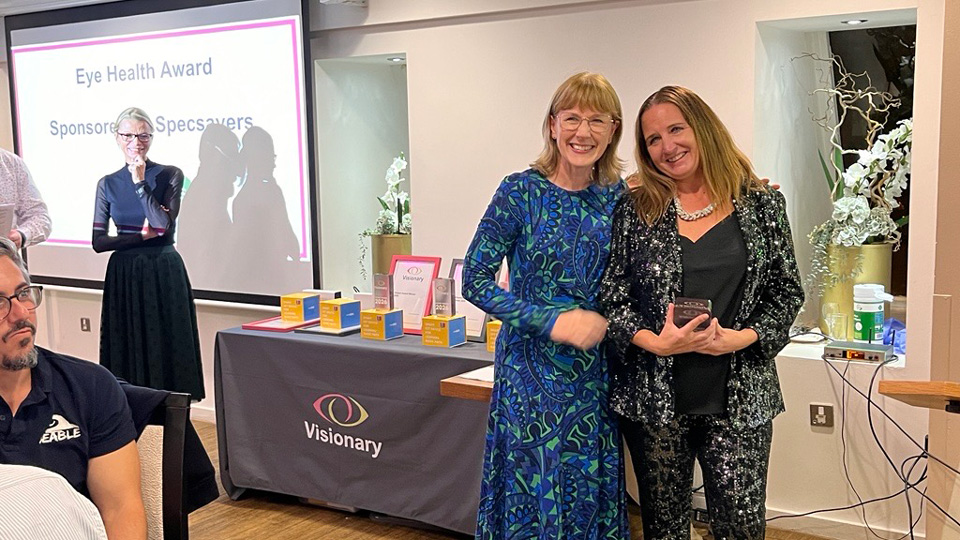
Kirstie Thomas, chief executive officer of 4Sight Vision Support, commented: “This award means a great deal to us. It recognises the incredible contribution of people with lived experience whose voices have helped shape better services for others. We’re proud to work alongside NHS Sussex to make a real difference to patients and their families.”
Presenting the award, Philippa Simkiss, head of industry engagement at Specsavers, shared: “4Sight and NHS Sussex have turned lived experience into practical improvements for patients, giving NHS staff the skills to make care more accessible.”
“The programme offers valuable learning for services across eye health and healthcare,” she continued.
The Digital and Technology Award, sponsored by Guide Dogs, was presented to MyVision Oxfordshire.
The Impact Award, sponsored by Fight for Sight, recognised Wakefield District Sight Aid.
Hayley Grocock, CEO of Wakefield District Sight Aid, told OT: “We are absolutely delighted to have been recognised by our peers for the Visionary Impact Award. There is so much wonderful work going on in the sector, and for us to win this award in such a competitive field means the world.”
The charity is “comparatively tiny,” she explained, with three part-time members of staff.
In partnership with A1 Football Factory, the organisation runs a football programme for visually impaired youth called VI Vipers.
“Our young footballers tell us that they feel seen in sport for the first time, and every week they are smashing down barriers and proving that their disability is their superpower, so this award feels really special,” Grocock shared.
The Partnership Award, sponsored by Thomas Pocklington Trust, went to Look UK.
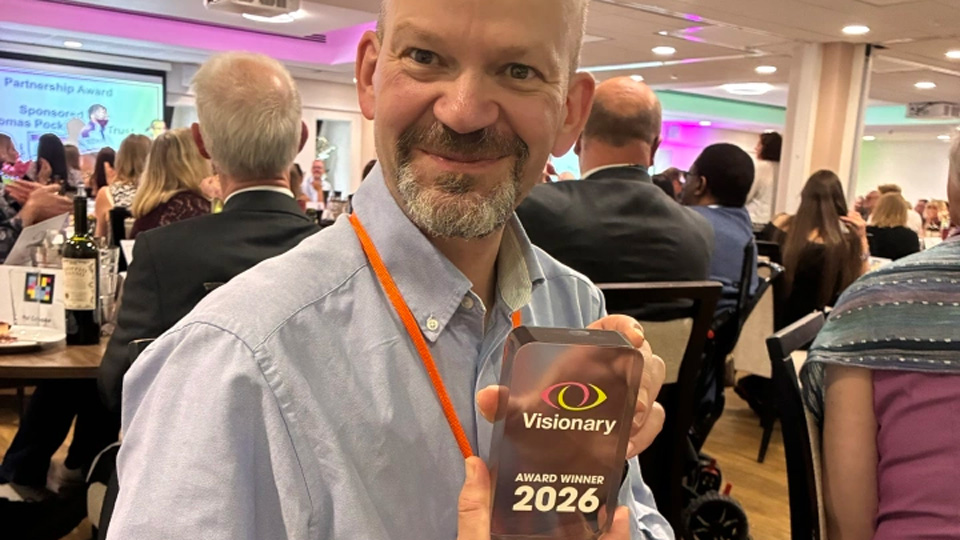
Sight Scotland and Sight Scotland Veterans were presented with the Influencing Award, sponsored by RNIB.
Nicoletta Primo, lived experience policy and engagement manager at Sight Scotland and Sight Scotland Veterans, said: “Winning this award is a huge honour and recognition of the power of lived experience in driving change.”
The organisation received recognition for its Fair Rail campaign, which highlighted that for many severely sight impaired or blind people, the cost of a companion rail ticket was a barrier to travelling safely and independently.
Primo said of the award: “This recognition belongs to the veterans who first raised the issue, the blind and partially sighted people who shared their experiences, and everyone who supported the campaign for over four years.”
“What began as a simple call for fairness and equality became a campaign that secured permanent free companion rail travel for severely visually impaired people across Scotland, helping remove barriers to travel,” she said.
This is about more than saving money, Primo pointed out, but “independence, confidence and making train travel accessible.”
“It’s a powerful example of what can happen when people with lived experience are heard and when charities, policymakers and partners work together to create lasting change. I’m incredibly proud of what we’ve achieved together,” she continued.
More News
-
 New eye clinic liaison officer suite opens at Sunderland Specialist Eye Hospital
 -
 Eye care leaders call on sector to unite behind global compact
 -
 Half of people experiencing homelessness have worsening eyesight or hearing, Specsavers says
 -
 Specsavers practice partners join Thames Path Ultra Challenge in memory of colleague
Comments (0)
You must be logged in to join the discussion. Log in