


03 March 2025
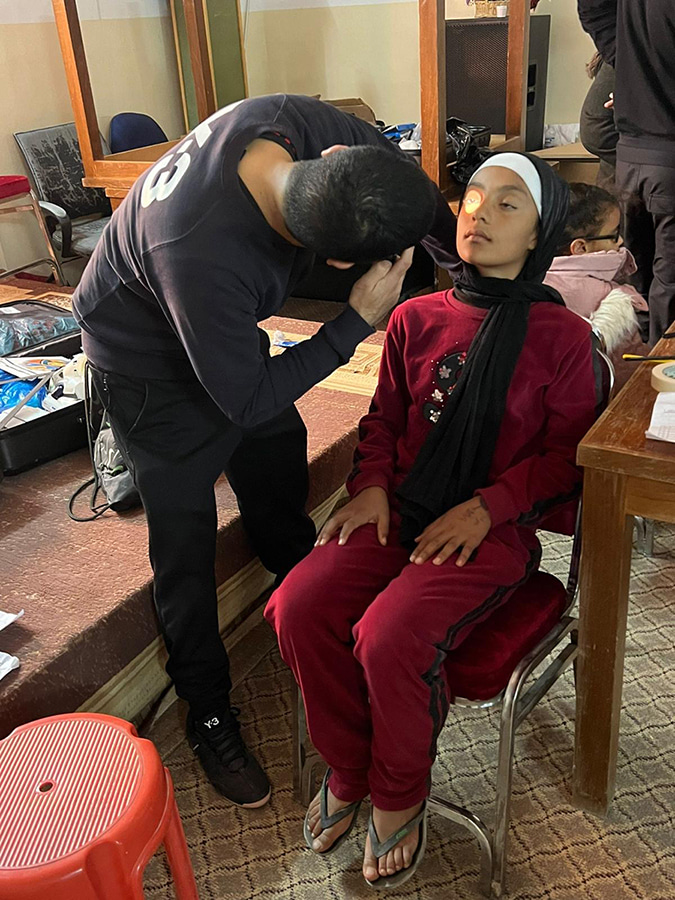
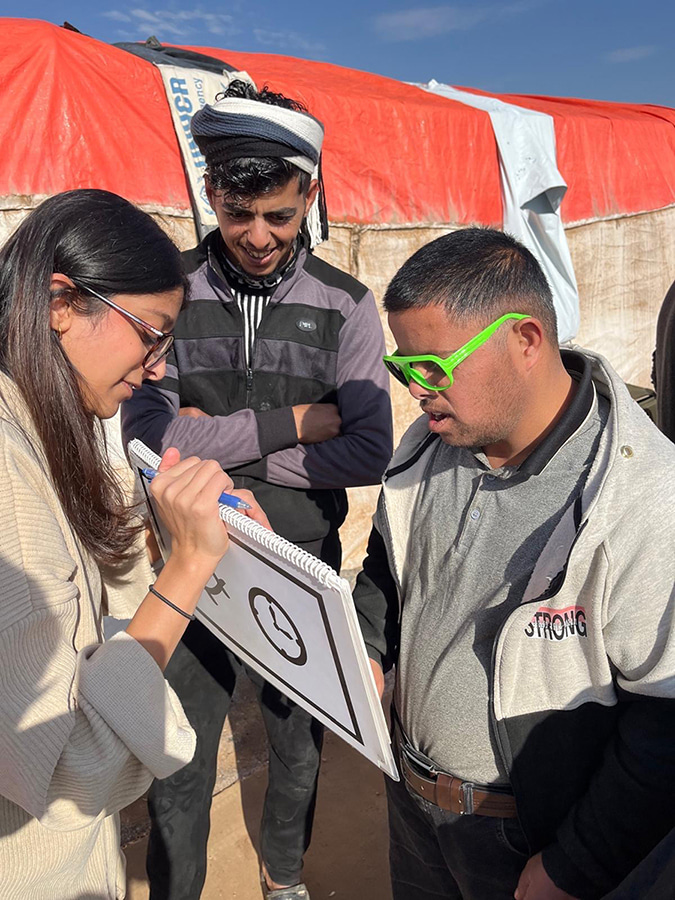
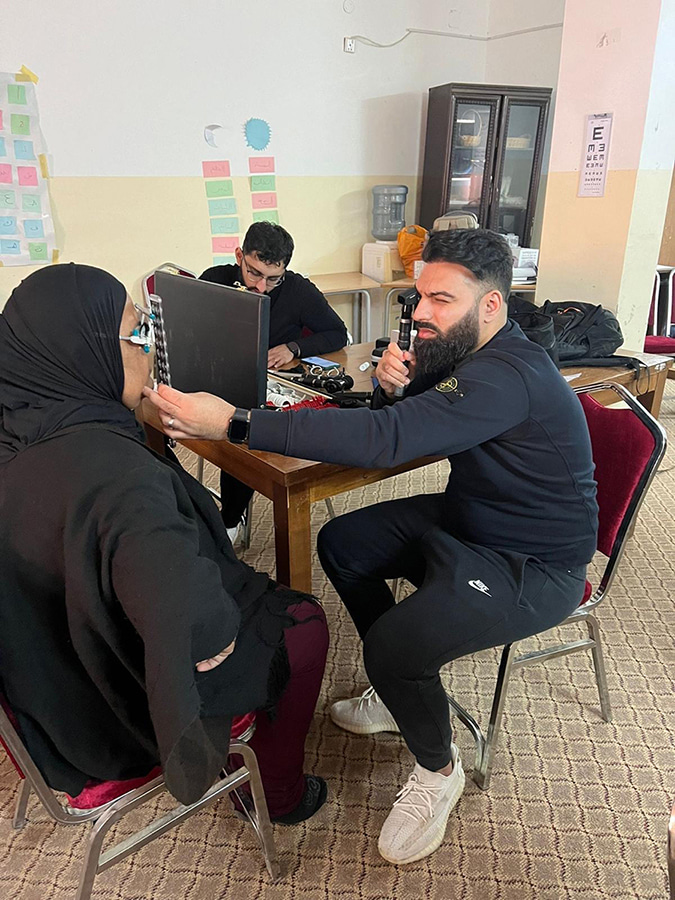
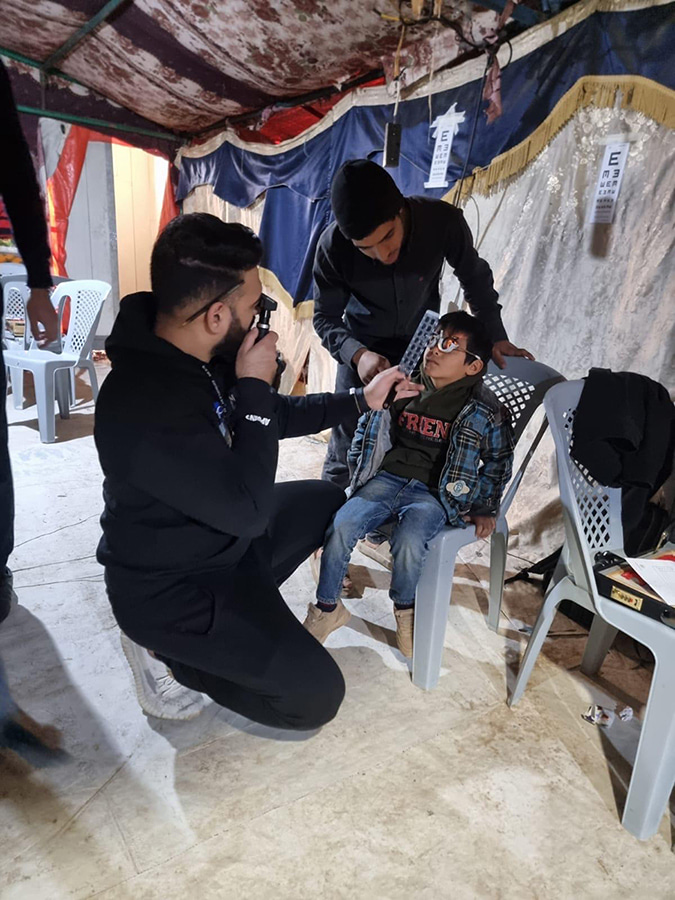
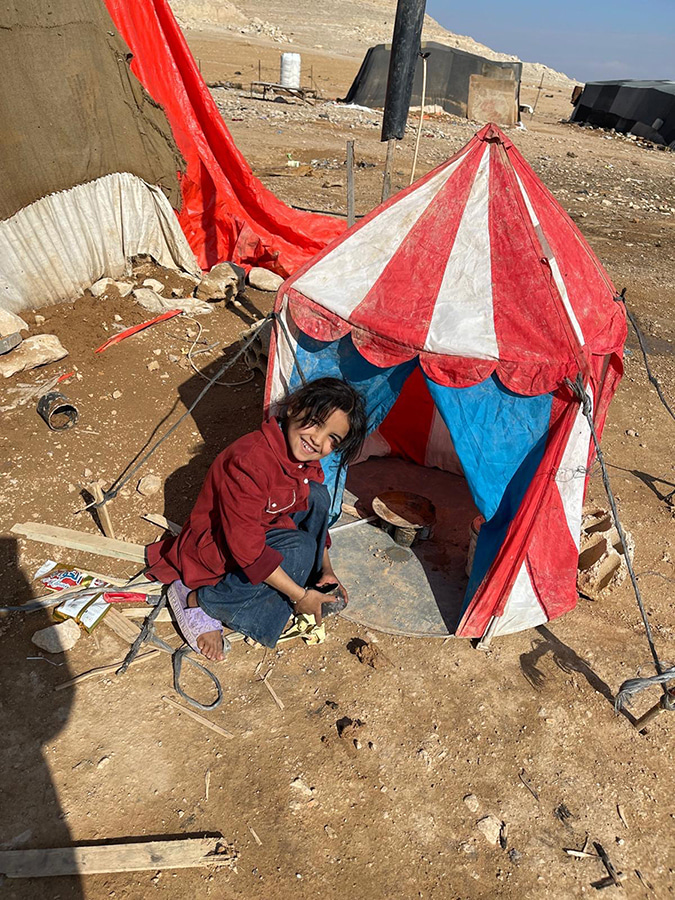
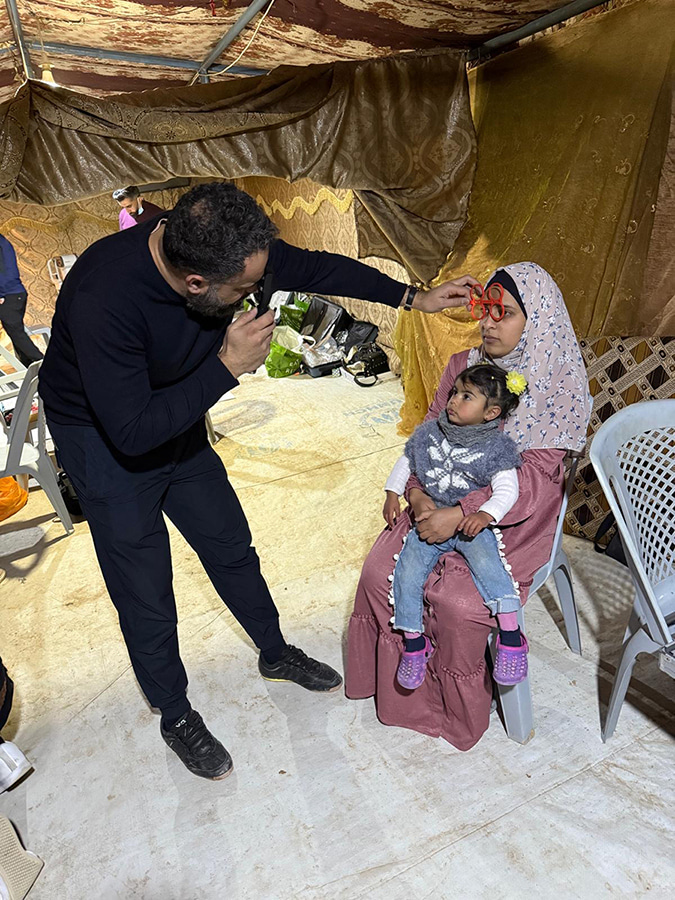
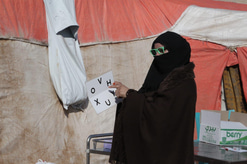
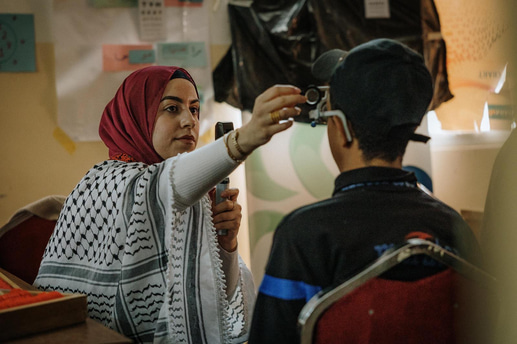
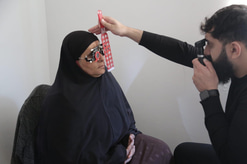
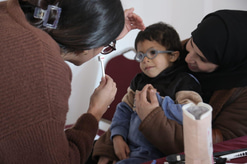
January 2025 saw a group of optometrists, bolstered by other medical and non-medical volunteers, set out to provide eye care in refugee camps in Jordan.
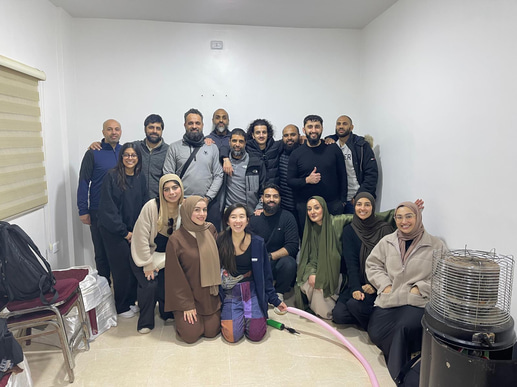
From 1–8 January, East London locum optometrist, Hammad Mansoor, led a team of 12 optometrists, two orthoptists and two dispensing opticians in providing care to those displaced from Jordan’s westerly and northern neighbours.
It was a trip that was nine months in the planning – and was almost derailed when the Syrian government fell three weeks before the team was due to set off.
“In Jordan, there had been security issues when the border opened up, and they were worried about that – let alone letting a team of medics from another country come in,” Mansoor said.
The team managed to gain access to the country due to well-established local contacts.
Mansoor explained to OT that he has taken part in a number of volunteering trips in the past, both with Vision Action (formerly Vision Aid Overseas) and under his own volition, to countries including Gambia.
His ambition was to organise a multidisciplinary trip that could see dentists, GPs and pharmacists travelling with optometrists to provide care – something that he was able to achieve with his recent trip to Jordan.
The aim was to take a “multi-health approach,” Mansoor said, adding that refugees are often without the medication that they need.
“The doctors were seeing patients with blood pressure through the roof, who in this country you would send to casualty,” he said.
“We saw undiagnosed diabetics and there was also malnourishment, so it wasn’t just about the glasses, but getting them to see everyone – that one stop approach, where they could come and see all of us.”
The team comprised 42 medics and non-medical volunteers, including the eye care team.
Mansoor explained: “Initially, we were supposed to go to Lebanon, but we didn’t go ahead with that because of the political situation there.”
Jordan, which is currently home to a large number of refugees from both Syria and Gaza, was then settled on as a suitable alternative option.
On the first day of the trip, Mansoor and his team spent time with cancer patients from Gaza who are being treated in a specialist cancer hospital and housed in a local hotel.
During the trip, volunteers encountered confusion from Syrian refugees, who were living in refugee camps – despite not technically knowing if they were still classed as refugees.
The Syrian government fell on 8 December 2024, a few weeks before the team set out to Jordan.
“Their problems were the same, it was just the technicalities and the legalities. There was all sorts of confusion,” Mansoor said.
Providing eye care to refugees in Jordan
The challenge of aftercare
OT is interested in hearing whether there were recurring problems that the optometry team encountered in the refugee camps.
The biggest challenge was the lack of aftercare that could be provided, Mansoor explained: “If we see glaucoma, we can’t give them follow-up care. The doctors can prescribe medicine for a certain period, say six or 12 months, but what is the situation after that?”
He added: “Every medical charity wants to provide continuous care. We don't just want to go there with a sticking plaster solution. But it’s the hardest thing to achieve, to be honest.”
Mansoor noted that lack of access to diagnostic equipment such as optical coherence tomography in the rural camps was also a challenge.
The trip was paid for via fundraising, and Mansoor is quick to thank those who made the work possible.
“People were very generous. We raised over £100,000 between the teams. The eye care team, on its own, raised more than £60,000,” he revealed.
Materials and supplies for the trip were provided by a range of companies, including SpaMedica, Mayfair Vision, Scope, Visufarma, Three Sixty Optical, Hilton Eyewear, Bondeye Optical, Max Eyewear, and Edward Marcus.
An ambition for continuous care
In organising this trip, Mansoor worked with Global Ehsan Relief and Al-Imdaad Foundation.
He is also in the process of setting up his own organisation, Humanitarian Medical Relief, which will be the official channel through which his charity work is carried out.
He plans to organise at least one trip every year through Humanitarian Medical Relief, after the strong level of interest he received when organising this one.
“In the optometry team, I could easily have taken three or four times the amount of volunteers,” Mansoor said.
“There has been a lot of interest from doctors. We had exposure on medical platforms on social media, with a lot of people inquiring and saying they wanted to go. Obviously, a lot of people want to help the refugees.”
In the future, he would like to take his multidisciplinary team directly into post-conflict zones.
“We’d love to go into Syria, if it opens up, because there is going to be a massive need there,” he said.
“A lot of the refugees are going to go back to Syria, but the infrastructure has all been destroyed, so they’re going to be in camps.”
He added: “It’s the same with Gaza, although that is going to be a harder one to get into, because of the political situation.”
At the same time, Mansoor hopes to continue working in the places that he has visited in the past, including Gambia and Malawi.
“We’d like to spread as far and wide as we can, but at the same time, try to continue doing continuous work,” he said.
Those who are interested in joining future trips should contact Humanitarian Medical Relief via email.


Comments (0)
You must be logged in to join the discussion. Log in