
GOC consultation on the proposed update to the testing of sight statement and proposed revisions to supervision and delegation standards: our response
Our submission in full to the GOC’s consultation, October 2026

We welcome the opportunity to respond to the GOC’s proposals for revision of the 2013 statement on the testing of sight. The AOP represents around 20,000 eyecare practitioners.
In preparing our response we have consulted our Policy Committee, Council and carried out a survey which attracted 661 responses. The survey was advertised widely and open to non-members as well as AOP members. We will be happy to share the full report of the survey with the GOC.
We recognise the reasons that have led to the proposal to amend the 2013 statement. It is true that new technology has facilitated changes in practice, so that people other than the responsible optometrist carry out elements of the diagnostic testing, gathering information that the optometrist uses during the eye examination.
However, our survey shows that registrants are dubious about separating the sight test by time, person and/or place. And, crucially, we believe that the GOC is significantly underestimating the risk involved if the proposal is taken to its logical conclusion.
Additionally, as the GOC is already aware, we disagree with their interpretation of the legislation and that we have sought legal advice on this matter. Our understanding is and has consistently been that separation of the sight test is not routinely permitted in law, but limited clinically justified separation is permissible in certain circumstances. The wider public protection function of the Opticians Act and established case law require the GOC to assess the reasonably foreseeable risks associated with new models of care and to take reasonable steps to identify and mitigate them. Therefore, the absence of the evidence of harm is unlikely to be sufficient to discharge the statutory responsibilities of the GOC. In the absence of mandatory business registration, the proposed statement places too great a burden on individual practitioners and too little on the regulator.
Separating by person only, by place only or by time only carry lower risks, although even these are not risk-free. Separating by time and place, by time and person and by place and person each carry different risks. Separating by time, person and place carries further extra risks. We do not believe that the GOC has investigated these fully, nor that sufficient safeguards have been proposed to address these risks.
We believe that ethical optical practice owners understand this already and will take their responsibilities seriously. However, particularly in the absence of compulsory business registration, the GOC must consider the worst-case scenario. It is necessary for the statement to be worded with the, albeit rare, unethical business in mind. Without that, the GOC is giving away any power to influence the optical industry in patients’ interests, reserving little power to itself to discharge what is its basic regulatory duty.
Our response to the GOC’s survey questions follows:
Q1. How might sight testing continue to evolve in the future?
We expect the fundamental components of the sight test to remain the same as defined in the 1989 Act: examining the eye, identifying disease, performing refraction and prescribing corrective eyewear. Technology has already developed significantly to aid with this process, the most notable recent example being the increasingly widespread availability of OCT. Future changes include the use of AI algorithms to help with diagnosis, for example of AMD. Further advances in areas such as oculomics may mean that existing technology can be repurposed to detect systemic disease from retinal scans and photos either in the moment, or potentially before the disease is symptomatic.
Considering what this means for the profession, we are very clear that technological advances have to be understood in relation to the whole experience for both patients and the practitioners who conduct the eye examination. Our members are already expert interpreters of what the technological tools are conveying and, crucially, explainers to the patients who are being tested. This will become more crucial in circumstances where the optometrist needs to explain the implications for the patient of the increasingly definitive diagnostic information that the technology will provide.
This aspect of their role is significantly under-estimated because, of course, the majority of eye examinations result simply in a prescription of eyewear. However, this is changing as optics becomes a more crucial part of NHS eyecare and care moves into the community more generally. As is already further advanced in Scotland and Wales, optometrists will increasingly manage community-based eyecare, including pre-and post-surgery support, and management of lower-risk conditions. This will require ever-more sophisticated communication skills, including the ability to convey complex or potentially upsetting information.
Q2. What do you see as the main benefits of sight tests involving separation by time, person and/or place?
First, as we have explained to the GOC, grouping separation by time, person and/or place into a single concept does not allow the risks associated with each form of separation to be conveyed accurately. Each dimension, and the risks attached to it, should be considered and consulted on separately and in every relevant combination. As set out in the introduction, our understanding is that separation by time, person and/or place is not routinely legally permitted. The GOC is also required to take reasonable steps to identify and address foreseeable risks, a responsibility that is not adequately reflected in the current proposals.
There are several potential models of separation, and the range of these is not fully explored in the GOC consultation document. There is a significant difference between the currently widespread model of other practice team members undertaking some diagnostic tests that contribute to the examination and a model involving, for example, online refraction taking place without optometrist involvement, followed up by a practice visit sometime later, at which the other elements of the sight test are conducted. We are not convinced that the potential range of models and the differential risks have been fully explored in the GOC’s consultation, nor that they have taken suitable steps to both consider and then to mitigate the risks that innovative models may bring.
Despite our own well documented and previously voiced concerns, we conducted a survey of our members and non-members to understand their views, which yielded 661 responses (over 95% of which were members), and provides a rich source of free text comments, which we have used AI (Claude) to analyse but which we have verified by human intelligence. The overall tone is strongly opposed to the proposals, and much of the opposition is heated and concerned by the motivation for any such changes.
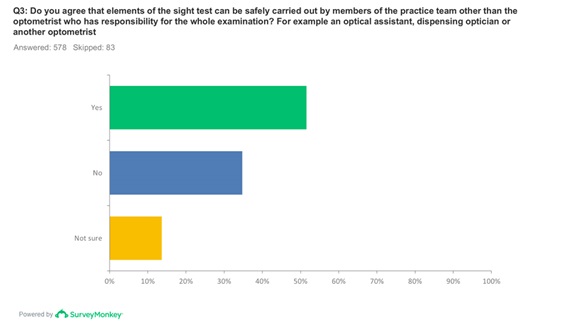
| Answer Choices | Responses | |
| Yes | 51.56% | 298 |
| No |
34.78% |
201 |
|
Not sure |
13.67% |
79 |
|
Total |
578 |
The main potential benefit that was identified for this lowest-risk separation is that it frees the time of the optometrist to devote to the eye examination and crucially, to be able to spend more time in offering advice, explanation and counsel to patients. The economics of running optical practices require that the time of the optometrist be preserved in this way. However, our members who said they feel negatively about the proposals think this benefit will not be realised. Their view is that commercial pressures will predominate and that the impact will be simply to reduce the time that the optometrist spends with each patient.
The other benefit of splitting some elements of the sight test is a clinical one. It is long-standing practice to separate some elements in time, such as cycloplegia. However, this is a special case, and agreeing with that practice is not to endorse routine separation by time.
The AI summary of responses is included below:
The AI prompt used “Please pick out some examples of the more positive responses”
Positive responses were rare, and most were conditional. Here are the clearest examples, grouped by type, with the response number from the PDF so you can find each one. Quotes are verbatim, including the respondents' spelling, and some are trimmed.
Welcoming technology and change
- #87: "Technology can't be ignored, it should be embraced and that would allow for better access to care..."
- #173: "I feel we need to adapt to the changing times, with the patient as the centre of the decision we are being asked to provide a service more efficiently and remain as clinical as possible this where technology can help and should be embraced"
- #190: "Some loosening of the regulations would be welcome, but who will police and maintain the standard."
Delegation as a benefit to the optometrist
- #35: "Certain tasks such as NCT and fields get checked by an optom anyway, delegating them gives the optom more time on the main parts of the eyetest"
- #122 is the longest and most enthusiastic response. It comes from an optometrist at a town-centre Specsavers who is "thrilled that the GOC is recognising the hard work of Optical Assistants." They say they "couldn't do my job effectively without delegating tasks to OAs." They also note that OAs have "saved me on more than one occasion by picking up on things that I've missed," and they suggest GOC registration for OAs, similar to dental nurses. This respondent still strongly opposes the telemedicine element.
Open to restructuring roles
- #34: "Perhaps optoms checking the ocular health only is sensible. Get all optoms to be IP trained and give others the prescription responsibility. I cannot see a big problem with it being separated. Maybe this is better for optoms in the long run."
Comfortable with remote working in practice
- #113, a tele-optometrist: "I work remotely from home as a Tele optometrist and feel comfortable that the tests I carry out are thorough. I always delegate to an in-store colleague if there are tests I require that are inappropriate for the remote set up"
- #125 gives a real example of a remote IOP check for a post-cataract patient living on an island over 100 miles away, and adds "I welcome new technology but within high quality professionalism."
Supportive with conditions
- #30: "Provided proper safeguarding is in place, and training is if a standard of excellence and CPD for those who are delegated to, then I think remote supervision can work in some practices"
- #19: "Delegation and review of tests performed at a time and location different to the sight test does not concern me." This respondent's concern is that businesses would implement it poorly.
- #144: "...remote acceptable in some circumstances I think the safeguard to review the changes are good but think a 2 year trial would be safer."
- #205: "I am very positive about advances in technology and the opportunities they provide to modernise optometry... I do not necessarily object to an optometrist remotely interpreting results," with clear accountability for each optometrist involved.
- #154: Takes a neutral, matter-of-fact view: "What is proposed largely mirrors what is already done, save for different premises."
Even the most positive comments usually qualify their support. The most common conditions are training standards, accountability, auditing, and limiting remote options to specific circumstances.
Q3. What do you see as the main risks of sight tests involving separation by time, person and/or place?
As we have outlined in response to question 2, we think grouping time, person and/or place as one concept is unhelpful and that separation by time, person and/or place is not routinely permitted. Despite that and in order to answer the consultation question, our concerns and those of our members can be grouped as follows:
Patient safety and the integrity of the sight test
It is our view supported by the survey of our members that the sight test is a holistic, interlinked process that shouldn't be fragmented across times, places or people. Doing so introduces risk for the patient and the practitioner, risk that signs or symptoms of disease may change in presentation, or that the separation of information means that key clinical signs are missed. That is why the GOC must take proactive steps to consider and risk assess new and emerging models of care.
Turning to the specific clinical examples that were provided:
- IOP could change between a pre-test and the examination
- Autorefraction difficulties can reveal cataract
- Optometrists can tailor OCT scans or field tests to the patient's history
- Observing a patient in person reveals things like body language, head posture, and signs of dementia, abuse or mental health issues.
A few cited the Honey Rose case as a warning about relying on images taken by someone else. That case has also been mentioned many times in our discussion of these proposals, for example by our Policy Committee.
Variable quality of support staff
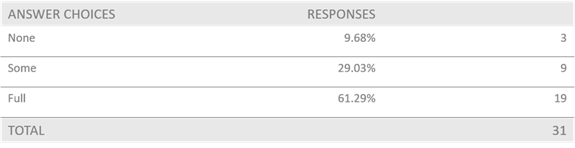
Our survey gave respondents the option to complete separate question sets relevant to their work situation. This included employees and locums. 69% of the employees and 72% of the locums who completed their question sets work in places where tests to inform the sight test are carried out by other members of the practice team. In most cases it was optical assistants carrying out these tests. We asked respondents how confident they felt about the quality of the tests carried out by others. In the cases of both employees and locums the majority are either extremely or somewhat confident. This implies that the respondents are generally comfortable with the skills of the people they know and work with.
Below are some of the relevant findings on this from our survey, listed by employees first, then locums. (Caution, low base size.)
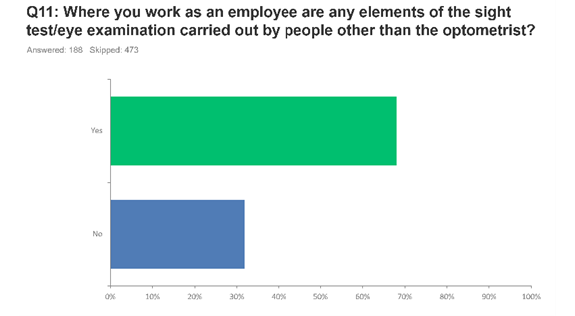
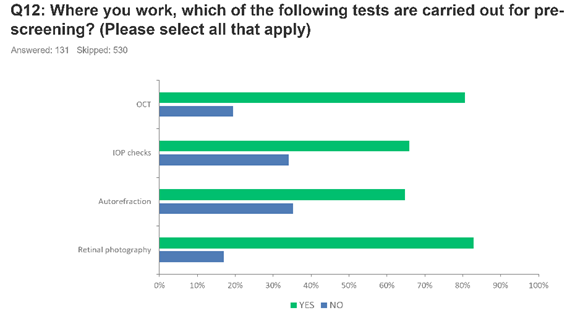
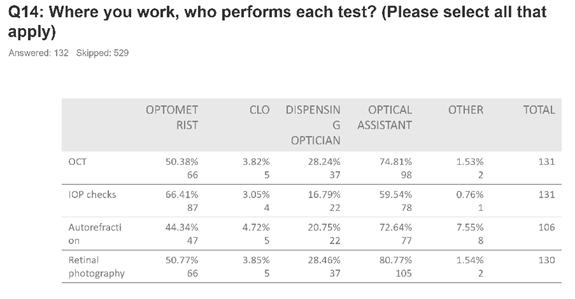
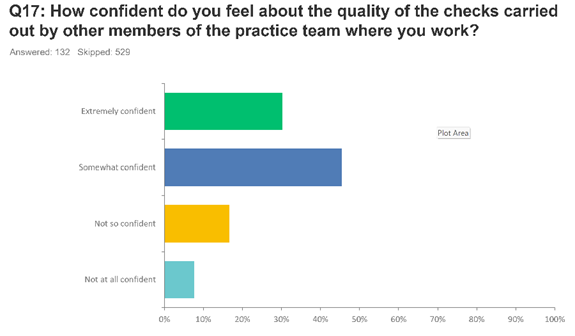
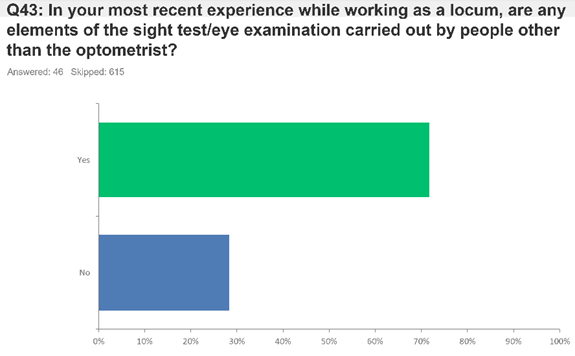
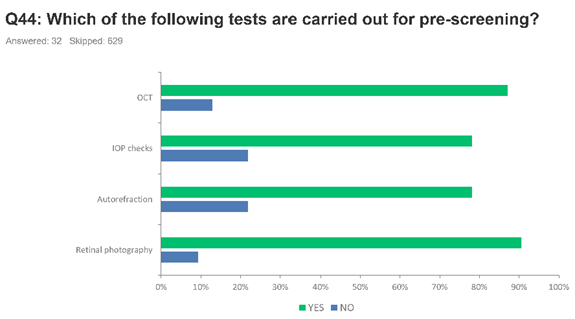
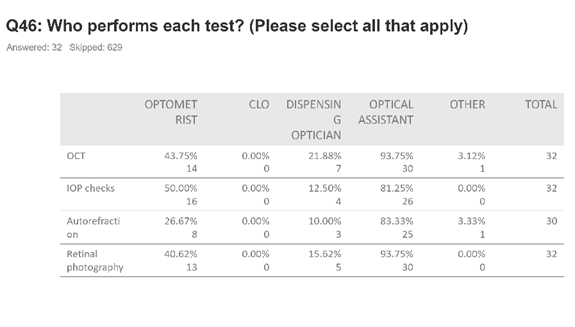
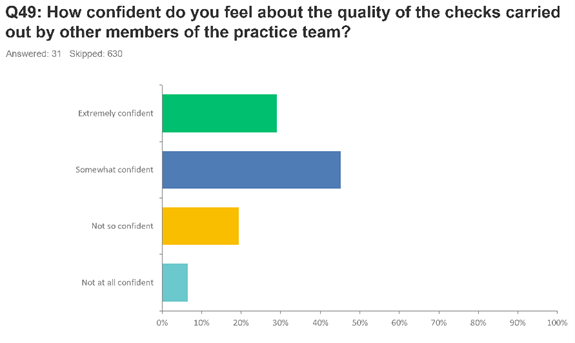
This shows a fair level of confidence between practice staff in reality. But in our survey many mentioned inconsistent training among optical assistants as an issue. Locums in particular mentioned high staff turnover, inexperienced staff doing clinical pre-screening, poor-quality images needing repeats, and patients leaving without repeat tests. A few went further, alleging fabricated results. Others noted that experienced, well-trained staff are excellent. The common thread is that quality depends heavily on the individual practice. Two respondents proposed some form of registration or recorded competence for OAs, with CPD.
Commercial motives and the role of large multiples
This was the most common theme in our survey by a clear margin. Many respondents saw the proposals as driven by, and designed to benefit, large optical businesses. Specsavers was named several times, and Vision Express once. Respondents expected businesses to use extra delegation and remote working to shorten appointments, see more patients, replace optometrists with cheaper non-registered staff, and push down salaries and locum rates, instead of using it to support optometrists to provide an extra service to patients. Typical phrasing includes "all about greed and money," "profits over patients," and "deregulation by stealth." Several people said they were raising this as business owners or long-serving practitioners themselves.
These findings are consistent with those of the GOC’s thematic review on commercial pressures, as well as with our own research and survey work over several years. This is why we believe that these proposals should not be introduced at all, but especially in the absence of compulsory business registration. The GOC’s role is public protection, and we believe these proposals introduce significant risk of harm, with no clear benefit to patients.
Criticism of the GOC
Linked to this theme, a significant group of our respondents questioned whether the GOC is acting in line with its duty to protect the public. Some say it is serving business interests instead, and a few allege it has been “captured by the multiples”. Several want the GOC to regulate optical businesses more robustly before changing anything, and one asks that business registrants share equal responsibility. We support the GOC’s aspiration for compulsory business registration and believe it is a prerequisite for these proposals. It is untenable to have a situation in which some businesses are committed to act ethically and can be sanctioned by the GOC if they fail, while others can ignore ethical practice with impunity while additional responsibility is placed on individuals working under them.
Remote management of elements of the sight test is the sharpest point of opposition
We feel that remote management of elements of the sight test is one of the most significant concerns. Many respondents echoed that concern drawing a clear line between on-site and remote provision, particularly when remote provision is combined with separation by time. In this they echo our biggest concern about these proposals: that the combination of elements of separation poses significantly greater risk than one type of separation. The current custom and practice of tasks such as IOPs, fields, OCT and fundus photos being performed by trained staff was broadly accepted, provided the optometrist is "in a position to intervene." What they objected to is remote supervision, online testing, and pre-screening done days or weeks before the examination. Several stressed that refraction and the health assessment should stay together and in person.
Liability without control
A recurring concern was that the optometrist will remain professionally responsible for business processes outside of their control and tests they didn't perform, can't supervise, and aren't given time to review. Respondents worry about GOC fitness –to practise exposure and litigation, and about who is accountable when data is missing, corrupted or not seen. Some suggested responsibility should sit with whoever carried out the test as well as business registrants.
Our employee and locum surveys included the following questions:
As a registrant, an optometrist is expected to meet GOC standards relevant to this topic, including number 9: Ensure that supervision is undertaken appropriately and complies with the law. As a reminder, the GOC describes the elements of standard 9 as follows:
9.1 Be sufficiently qualified and experienced to undertake the functions you are supervising
9.2 Only delegate to those who have appropriate qualifications, knowledge or skills to perform the delegated activity
9.3 Be on the premises, in a position to oversee the work undertaken and ready to intervene if necessary in order to protect patients
9.4 Retain clinical responsibility for the patient. When delegating you retain responsibility for the delegated task and for ensuring that it has been performed to the appropriate standard
9.5 Take all reasonable steps to prevent harm to patients arising from the actions of those being supervised
9.6 Comply with all legal requirements governing the activity
9.7 Ensure that details of those being supervised or performing delegated activities are recorded on the patient record.
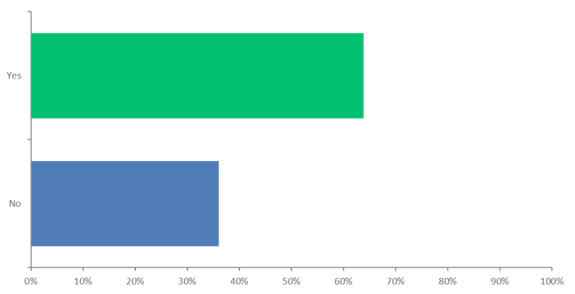
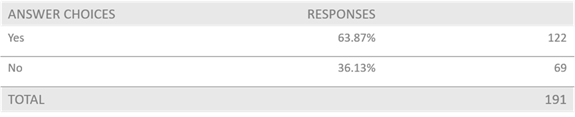
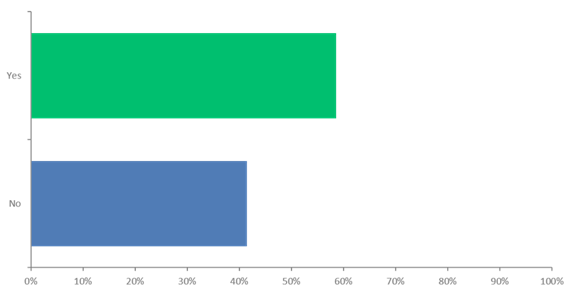
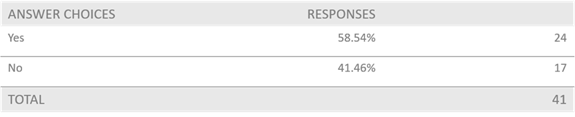
Do you feel this is possible to achieve in reality day to day?
Although in each case a majority do feel confident in this, we believe that the minority is large enough to deserve consideration, particularly when viewed alongside the results of the GOC’s own thematic review on commercial pressures, which showed the pressure that registrants experience to act in ways they do not feel are consistent with the best patient care.
Employee respondents
Locum respondents (Caution, low base size)
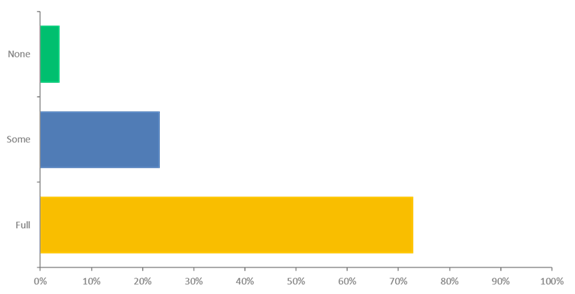
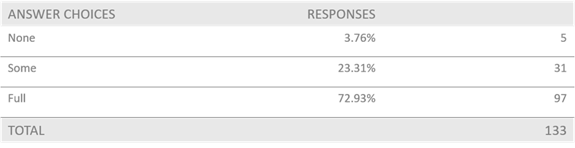
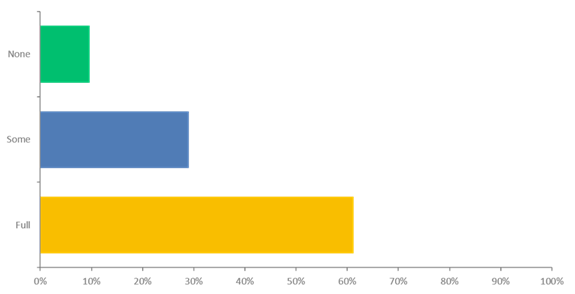
We also asked, “how much control the optometrist currently has over whether any or all of these tests are carried out”. Currently they report quite high levels of control. It may be that the negative comments about liability without control are based on a concern about what may happen if the proposals are accepted, compared with the current situation. However, we regard it as worrying that nearly 4% of employee respondents and nearly 10% of locums already say the optometrist has no control. If it’s true that any practising optometrists are not permitted to order tests they deem necessary, this is clearly unacceptable.
Employee respondents
Locum respondents (Caution, low base size)
Professional status and workforce morale
Many survey respondents felt the proposals devalue a degree-level healthcare profession and push it towards retail. Several described burnout, inadequate test times, low pay, and being pressured or bullied by managers. A few said they are leaving the profession or retiring early, or regret entering it.
Some of these remarks may be based on broader concerns than the sight testing statement proposals on their own. However, the mood described is consistent with the GOC’s findings on commercial pressures, and the GOC’s proposals could be seen as contributing to a widespread belief that the GOC is not fulfilling its function to protect the public.
Q4. Please provide evidence on the safety and efficacy of sight tests involving separation by time, person and/or place that operate currently.
There is little good quality evidence on the safety of different models of sight testing, as the GOC’s own research has demonstrated. Most studies either compare activity during the pandemic and the risk of doing nothing vs remote consultations, or draw comparisons with care delivered in other countries. These do not compare with the status quo, so are of limited value.
30 of the 51 included studies (~ 59%) either come from outside the UK or are set in the pandemic. Only 21 are UK studies set outside the pandemic period. None of the 21 directly tests the question the report or the GOC sets itself: separating the components of a routine sight test (refraction, history, ocular health assessment) by person, time or place for an unselected population. About five are relevant in part, eleven give some context, and five are of little or no relevance. This evidence is insufficient to satisfy the requirement for the GOC to take reasonable steps to avoid harm or the risk of harm.
Q5. Please comment on the content of the proposed updated statement on testing of sight in relation to delegation of activities for the sight test.
The wording is clear as in it can be understood, but it lacks the depth and detail that is needed and we disagree with the underlying assumptions contained within it.
It fails to define delegation sufficiently. Does it mean simply the mechanical element of the tasks? But who is responsible for making sure it is done properly? We assume the GOC means responsibility is not being delegated, but this is not made clear, nor is there any description of who is responsible for providing the appropriate working environment, the training, and any auditing of the quality of the work.
Taking each section of the draft in turn:
“An optometrist (or registered medical practitioner) may delegate some parts of the sight test to a suitably trained person (such as a dispensing optician or a non-registrant), provided the optometrist remains in overall control of the process and oversees the task(s) being carried out.”
AOP response: We agree with this statement but based upon the wider narrative within the consultation and other GOC workstreams it is our opinion that “the optometrist remains in overall control” requires greater clarity to provide sufficient risk mitigation. The GOC has documented a power differential in its thematic review of commercial pressures that is not addressed by this statement.
“Advances in technology mean that an optometrist can safely delegate some parts of the sight test in this way. Examples of tasks that can be safely delegated include intraocular pressure checks, visual field tests, autorefraction and retinal photographs/scans.”
AOP response: We accept that it is current custom and practice for some of these tests to be conducted by support staff before the sight test begins and this statement is consistent at least in part with that. However, this statement does not provide sufficient guardrails to prevent commercial pressures affecting the sight test or skills of optometrists via further changes to the provision of care.
“The legislation places specific restrictions on who may carry out refraction, depending on its purpose. Refraction for the purpose of issuing a prescription is restricted to a registered optometrist, a registered medical practitioner or a student optometrist / medical practitioner under supervision. However, refraction carried out for other purposes (for example, to verify a prescription issued by an optometrist or registered medical practitioner when fitting a patient’s spectacles), is not restricted by legislation and can therefore be undertaken by anyone.”
AOP response: While we agree with this statement in principle, the fundamental element of sight testing is refraction and, as we have previously explained to the GOC, language that sounds as if refraction is a small part of the sight test rather than fundamental to the process, risks denigration of the core purpose of optometry and the Opticians Act.
“We are not satisfied that subjective refraction can be safely delegated and therefore no-one else should refract for the purposes of the sight test.”
AOP response: We agree with this statement, but we are concerned that protecting only this narrow part of the clinical episode risks expecting optometrists to make complex decisions without full information. It is our view and that of our members that this may introduce risks to the public.
“In circumstances where tasks are delegated, the optometrist must comply with our Standards of Practice for Optometrists and Dispensing Opticians, including standard 9 on supervision and delegation.”
AOP response: We agree, but it has long been our concern that the GOC standards for registrants fail to consider the power differential that exists in most modern practices. As the GOC has now found in its own research on commercial pressures, registrants do not feel confident in challenging business practices that they believe are not in patients’ best interests. Nor do they see the GOC as a source of support in this situation. This creates an unmanageable burden on the registrant. In the absence of mandatory business registration and appropriate sanctions against businesses this once again places an unfair burden on the individual.
“Business registrants permitting delegation by the optometrist must satisfy themselves that, as required by the Standards for Optical Businesses, their staff are:
- Able to exercise their professional judgement (standard 3.1)
- Suitably trained, qualified and registered (standard 3.2)
- Adequately supervised and supported (standard 3.3).”
AOP response: We cannot see how this will be enforceable without compulsory business registration and refer to our concern above.
Q6. Please comment on the content of the proposed updated statement in relation to separation of the sight test by time, person and/or place.
Based upon our understanding of our independent legal advice the statement as written that the Opticians Act permits separation of the sight test by time, person and/or place is incorrect and routine separation is not permitted. We have explained our position to the GOC and it is outlined in the answers above.
Even if the GOC’s interpretation be held to be a correct judgement of the meaning of the Act, there are a number of issues with the proposed statement. For example, we have serious concerns that this will only apply to business registrants and not to businesses that have chosen not to register with the GOC. This is unfair and means that the GOC will have no control over businesses that act unethically. We believe that it is essential that the same standards apply to all businesses and that therefore this approach cannot be brought into use until such time as business registration is compulsory.
The proposed statement is at odds with other work by the GOC around commercial pressures. That work illustrates a power dynamic within optical businesses that in many cases prevents registrants from dissuading businesses from undertaking specific actions.
Taking each part of the wording in turn:
“Service delivery of eye care is evolving alongside developments in technology and formats have developed where some components of the sight test are carried out at different times, by different persons and/or in different places, whether that be remotely or in person”
AOP response: While this may be true within other regulatory environments there is no good evidence or examples of this being conducted within the UK. As we have said above, most evidence draws comparison to other regulatory environments or compares remote care to the absence of care caused by a global pandemic. It is our view that the safety of many novel solutions remains untested and such solutions are therefore not appropriate for the UK system. We believe that it is the fundamental duty of a healthcare regulator such as the GOC in such circumstances to perform a suitable risk assessment of new models of care as they are proposed.
“The Act permits separation of the components of the sight test by time, person and/or place, and does not restrict the type of equipment, products or technology that can be used by registrants”
AOP response: We disagree that the Act is permissive of the routine separation by time, person and/or place. With regard to the type of equipment, products or technology used we agree that the Act does not consider most modern technology as it was written and then updated in an era when this technology did not exist. Any new technology should be evaluated for clinical effectiveness and safety.
“Whatever format of sight test is used, the care, wellbeing and safety of patients must always be the first concern, and registrants must always act in the best interests of the patient. Clinical responsibility for the patient and all patient care remains the responsibility of the optometrist(s) conducting the sight test. Components of the sight test should only be delegated to others and technology or equipment should only be used where the optometrist is satisfied that these can be performed/used safely and accurately”
AOP response: We agree but again draw attention to the power dynamic highlighted by the GOC’s work on commercial pressures. We also seek to draw attention to the process of delegation. It is difficult to understand how an individual can maintain responsibility for processes they have no control over. Consider two examples: first, an optometrist asking an optical assistant to conduct a visual field test for them and to present the results once complete. This would appear to pass the test the GOC aims to set out. Second, the optometrist being presented with a suite of tests over which they have no control, no oversight and without significant time to appraise or interrogate the result. Clearly these two scenarios pose different challenges and different levels of risk. The lack of contact or targeting in the second example increases the risk of error and points towards an efficient business-based process rather than clinical decision making or oversight.
“Where more than one optometrist conducts different components of the sight test, it will be the responsibility of the optometrist conducting the most recent components to assure themselves that previous components were conducted appropriately and, if not, to repeat those components”
AOP response: This statement provides protection for the public but does so by creating an unmanageable burden for many practitioners. In many instances the subsequent practitioner may be forced to repeat large portions of the examination to satisfy themselves and the expectations of the GOC. But as businesses will be unlikely to provide sufficient time for this to happen, the practitioner may be placed under the exact pressures highlighted by the GOC thematic review into commercial pressures.
“If a business registrant introduces a sight test format involving separation of components by time, person and/or place, it is their responsibility to:
- Have satisfied themselves, and be able to demonstrate, the format is safe (including appropriate technology in place to support it) and keep it subject to ongoing audit/evaluation. This is particularly important for formats that separate sight test components by two or more dimensions of time, person and/or place
- Have documented protocols and service specifications for how the format should be operated, including:
- How to assess whether any patients would not be suitable for the format due to their clinical risk, vulnerability or other factors
- How to manage situations when it becomes evident during the appointment that the format is unsuitable for the patient
- Ensure that staff involved in any components of the sight test (including those that are assisting optometrists or those that optometrists delegate to) are appropriately trained and qualified
- How to manage situations when it becomes evident during the appointment that the format is unsuitable for the patient
- Ensure that staff involved in any components of the sight test (including those that are assisting optometrists or those that optometrists delegate to) are appropriately trained and qualified.”
AOP response: As we have stated previously, it is unclear how the GOC can enforce this requirement in the absence of mandatory business registration. Without that, an unfair burden is placed on the individual registrant who may feel they have no power to challenge unsafe or unfair practice.
“Both the business registrant and the optometrist have a responsibility to:
- Be able to clinically justify the reasons for any separation of sight test components by a significant period of time (eg where it was not possible to complete the test in a single appointment)
- Ensure that all relevant legal and regulatory requirements are complied with including ensuring that a spectacles prescription is not issued until all statutory components of the sight test are complete
- Communicate with patients to ensure that they understand the format of sight test they are being offered prior to the appointment or before beginning the sight test so that they can exercise choice and appropriately give informed consent (or otherwise)
- Consider the needs of patients in vulnerable circumstances, including:
some patients may need additional support in understanding what is being offered to them, or require information in different formats - Some patients may experience overlapping factors (for example, age, disability or socio-economic circumstances) which could affect their suitability for different formats of sight test
- Recognise where the format of sight tests disadvantages patients who may be less able to engage with remote or technology-enabled approaches and consider alternatives for these patients
- Recognise that different formats of sight test may affect patient experience as well as clinical safety, and that both should be considered when determining whether a format is appropriate.”
AOP response: As above, while we agree that there should be requirements on both individual and business registrants, these will not fall equitably on each. Compulsory business registration is essential before this can work at all, but even then the power dynamic within optical practices will mean that many individual registrants will not feel safe to challenge unsafe practice.
Q7. If you consider that additional safeguards are needed to protect the public, please provide details.
As the GOC’s thematic review on commercial pressures has demonstrated, many optometrists feel unable to challenge poor practice where they work/locum. They also do not feel confident that they can raise issues with the GOC. The GOC does not have the power to compel unregistered businesses to act ethically and trusts in goodwill and cultural change to improve the situation. In fact its current powers for all business registrants are insufficient to mandate change.
We do not think that this is good enough. At the very least, the proposals require the safeguard of compulsory business registration, and this must include meaningful sanctions against business registrants. We offer a parallel example from before the reform to Sunday trading laws. The token fines were seen as the “cost of doing business” and were dwarfed by the profits that the large supermarkets would make from flouting the law. The GOC is obviously aware of the structure of the optical market, in which a small number of large corporate entities possess extensive buying power and provide top cover from national offices. This is why we support the GOC’s proposal that sanctions on businesses should be proportional to their turnover. Additionally, the GOC has a lot of work to do to persuade registrants that they will be supported if they report concerns about patient care.
Q8. Please identify any sections of the proposed updated statement that could be made clearer and describe how.
As we have said in other answers in this consultation, the GOC needs to provide a clear definition of delegation and to also define clear guardrails and protocols for the adoption of new technology. For example, does it require explicit consent from the optometrist or is implicit consent acceptable? In our view it should be explicit and freely given, so that the optometrist feels that they have power to challenge their employer if they feel that their “accepted practice” is not in the interest of patients.
The section on separation could provide examples of each and set limits around what would be considered acceptable. In particular, it needs to explore the scenarios of combining two or three types of separation, and describe potential safeguards against the risks involved in those combinations.
Q9. Please detail any other comments on the proposed updated statement on testing of sight not covered above.
We do not have any other comments.
Q10. What do you see as the main benefits of the proposed amendments to standard 8 of the Standards for Optical Students and why?
The proposals imply an equality of power in the optical workplace that is not the reality of most people’s experience. Our 2020 research into the experience of students and their supervisors made clear that neither feel in a strong position to influence what happens in their workplaces. Although six years on, we have no evidence to show that the situation has improved, and the GOC’s own research has identified how registrants do not feel that they have the power to influence their work circumstances. We will be happy to share our report of this research with the GOC.
Q11. What do you see as the main risks of the proposed amendments to standard 8 of the Standards for Optical Students and why?
See our reply to Q10.
Q12. Please provide any suggestions for alternative wording.
It is not the wording that is the problem. The problem is that we know, as does the GOC, that many optometrists and students/trainees will not feel able to exercise the power that the words apparently give them. This has been compounded by the difficulties our members report around attaining post ETR placements which has further undermined their ability/willingness to raise concerns.
Q13. What do you see as the main benefits of option 1 and why?
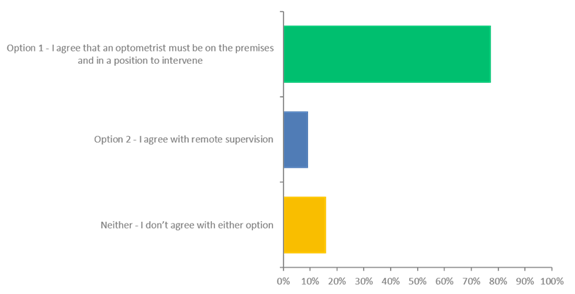
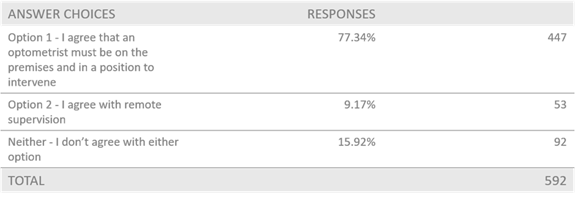
The GOC consulted on two options about delegation. Option 1 is that an optometrist must be on the premises and in a position to intervene. Option 2 allows for remote supervision.
When asked in the survey to indicate their preference, we found that Option 1 was preferred by respondents (see below).
Clearly, if on the premises the supervisor can be called in to support/answer questions or to conduct additional tests if required, for example a dilated Volk examination. They can also review records to identify anything that might have been missed, which gives the practice the chance to redeem the situation by calling the patient back.
Q14. What do you see as the main risks of option 1 and why?
Our view is that it is important to understand what is meant by “readiness to intervene”? If the supervisor is on the premises but fully occupied with patient care, as our 2020 research showed was frequently the case, they are less able to intervene (and patient care may suffer). But this also requires the person being supervised being able to recognise when they need assistance. Much of the time they will, but if they don’t, then poor care might take place regardless.
Supervision must be meaningful and the onsite practitioner must have their own clinic scheduled in a way that provides a genuine opportunity to intervene. This may require modification to the clinic scheduling for the onsite practitioner. As the GOC will be aware, a similar approach should be taken to pre-reg supervision. However, as the GOC will also be aware from recent work and FTP cases, this is not always the case.
Q15. Please provide any suggestions for alternative wording for option 1.
It is not the wording that is the problem. It is, as we say above, the reality of how it could be implemented.
Q16. What do you see as the main benefits of option 2 and why?
The only benefit we can see to option 2 is that it avoids the risk of overburdening the onsite practitioner. However, while we are mindful of this real risk and urge the GOC to address it, we do not think option 2 provides sufficient protection for patients.
Q17. What do you see as the main risks of option 2 and why?
We say it depends how the supervision is being conducted. One-to-one, real-time oversight of each sight test is different from someone being named and able to “drop in” to the test on request. As with option 1, the success of the second approach would depend on the supervised person being able to recognise when they need support. Risks lie with people not recognising that need, or the supervisor being too stretched to give the attention needed. As we have said above, we believe option 2 creates a patient safety risk. A number of the remote testing options do not provide the same quality of observation as is seen face to face. For example, our members tell us that the technology used remotely to supervise the testing of pupil responses is often poor.
Q18. Please provide any suggestions for alternative wording for option 2.
We do not think it is possible to sufficiently improve option 2 to provide patient safety. The proposed wording does not cover circumstances in which the supervision is separated in time from the on-site activity.
Q19. Are there any aspects of our proposals that could discriminate against stakeholders with specific characteristics? (Please consider age, sex, race, religion or belief, disability, sexual orientation, gender reassignment, gender identity, gender expression, pregnancy or maternity, caring responsibilities or any other characteristics.) a) Yes b) No c) Not sure
As those who responded to our survey have pointed out, significant information can be gained from subtle body language indicators. We do not think technology is sufficiently sophisticated to allow these to be picked up remotely.
Patients with learning or cognitive difficulties may also need distraction-free, one-to-one consultations, during which the practitioner can spend the time needed to explain the test and the equipment used, and be sure that their explanation has been understood.
We don’t think that the extra distraction of remote consultation will be suitable for some of this group of patients.
Q20. Are there any aspects of our proposals that could have a positive impact on stakeholders with specific characteristics? (Please consider age, sex, race, religion or belief, disability, sexual orientation, gender reassignment, gender identity, gender expression, pregnancy or maternity, caring responsibilities or any other characteristics.) a) Yes b) No c) Not sure
No.
Q21. Will the proposed changes have effects, whether positive or negative, on: (i) opportunities for persons to use the Welsh language, and ii) treating the Welsh language no less favourably than the English language? a) Yes b) No c) Not sure
Not sure
Q22. Could the proposed changes be revised so that they would have positive effects, or increased positive effects, on: (i) opportunities for persons to use the Welsh language, and (ii) treating the Welsh language no less favourably than the English language? a) Yes b) No c) Not sure
No
Q23. Could the proposed changes be revised so that they would not have negative effects, or so that they would have decreased negative effects, on: (i) opportunities for persons to use the Welsh language, and (ii) treating the Welsh language no less favourably than the English language? a) Yes b) No c) Not sure
Not sure
More consultations
-
 GOC consultation on the proposed update to the testing of sight statement and proposed revisions to supervision and delegation standards: our short summary
-
 GOC consultation on maintaining appropriate sexual boundaries and care of patients in vulnerable circumstances
-
 GOC consultation on indicative sanctions guidance
-
 GOC consultation on regulation of optical businesses