
General Optical Council (GOC) consultation on reforms to the system for Continuing Professional Development for optometrists and dispensing opticians
Our response to the GOC's consultation, April 2026

The GOC has launched a consultation on reforms to the system for Continuing Professional Development (CPD) for optometrists and dispensing opticians.
If approved, the changes would start to be introduced for the 2028-2030 CPD cycle.
The proposals involve a move away from the current points-based system towards a more outcomes-focused approach. The aim is to give registrants greater flexibility to tailor CPD to their scope of practice and career stage. A stronger role for optical businesses in supporting CPD was also envisaged.
Due to high satisfaction with CPD provision, the GOC also proposed to end its role in auditing and approving CPD providers.
Our response
The context for our response is that most other health professions already have the sort of freedom that the GOC is proposing for professionals in optics. We also know that many members experience the current system for recording their CPD as bureaucratic. But at the same time we know that our members appreciate clarity and structure in their professional lives, and that it is the job of GOC to provide that.
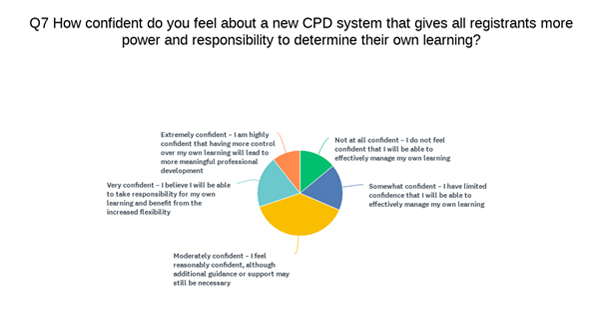
We gathered the views of AOP Council and Committees and also carried out a member survey. The survey asked our members how confident they would feel about a move to a system that gives members more power and responsibility to determine their own learning. The largest group expressed moderate confidence, with only 30% either extremely or very confident. With our members’ caution in mind, we made clear that if the changes go through, the GOC must provide guidance that registrants will need to go about planning their CPD, choosing their learning options and reviewing their progress. We also want the GOC to provide extremely clear guidance on what evidence registrants need to keep in order to satisfy any potential audit of their CPD.
Another key finding of our survey was the wide variety in the experience of our members:
- While nearly 60% of employee respondents reported some discussion with their employer/manager, access to structured personal development processes is inconsistent
- 60% of employers do not have established systems for supporting staff development, with some indicating that the size or structure of their practice makes formal processes difficult, even impossible, to implement
- 64% of locums, (who are nearly a quarter of registrants) reported they had no way to access CPD through the workplaces where they locum. And obviously none have access to formal career development discussions.
These findings underlined a key point we often make in our dealings with the GOC: how important it is to recognise the variability in the optical sector. We believe that it is not realistic to expect small businesses employing only one or two registrants to provide the sort of HR systems that a larger employer might have in place. We therefore made clear that the GOC should not expect employers to take responsibility for managing the CPD system.
How we will support members
We believe that the AOP will have an important role to play in supporting registrants as the profession moves towards a more flexible, outcomes-based CPD system. We will look at how we can best support members across different working arrangements, recognising that needs will vary across the sector. This is likely to include:
- For employed members: developing guidance and resources to support personal development planning and reflective practice
- For employers and business owners: considering what proportionate support or guidance may be helpful in enabling staff development, taking into account the wide variation in business size and structure
- For locums: exploring ways to support independent learning and development, particularly where access to workplace-based support is limited.
More broadly, we will consider what further guidance may be useful to help members understand what effective CPD looks like in practice, including approaches to planning, reflection and maintaining appropriate records.
We will also continue to provide high quality CPD for our members and keep under review how our wider support offer may need to evolve in response to any changes introduced by the GOC.
At the same time, we made clear that the GOC should remain responsible for ensuring that CPD across the sector is high quality – in the interests of patients as well as registrants.
Our full response can be found here.
Next steps
The GOC will analyse the responses to the consultation and report to its Council. Any changes they agree may be introduced from 2028, after the end of the current three-year CPD cycle. Some of the changes would require legislation so may be implemented beyond the 2028 to 2030 cycle. AOP will do all we can to inform and support our members throughout the changes.
We will also continue to provide high quality CPD that our members can depend upon.
And we will consider how to support our members in planning their learning and development.


