Making the case for fairer, faster, and more convenient access to eye care services
Adam Sampson, CEO and Shockat Adam, MP
Over the final quarter of the year, we continued to engage closely with parliamentarians and sector partners to ensure that eye care remains firmly on the political agenda. Activity focused on highlighting the contribution that community optometry can make to easing pressures across the NHS, improving access to care, and supporting the Government’s wider reform ambitions. Through parliamentary events, evidence sessions, and position statements, we set out practical steps to strengthen primary eye care and pressed for equitable access to eye care services for patients across the nation.
These are some of our key activities:
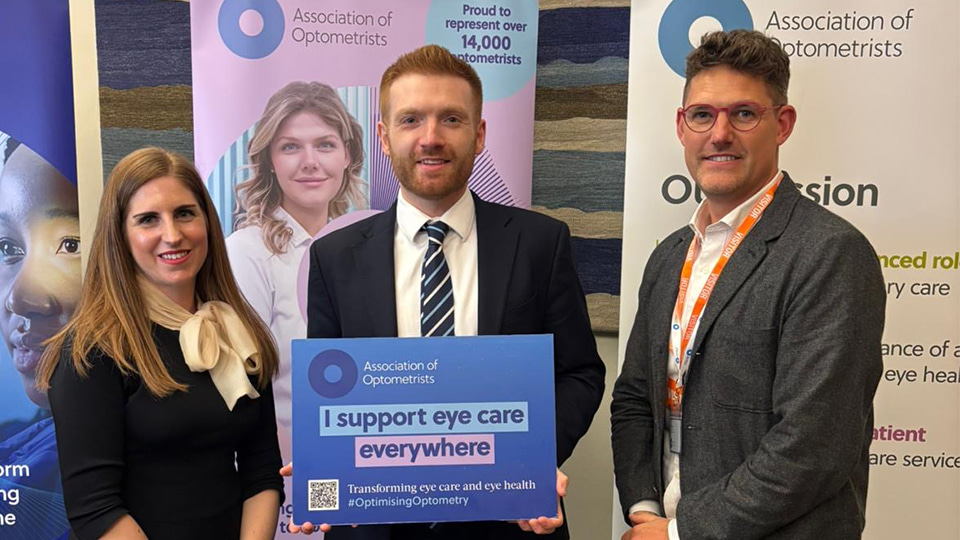
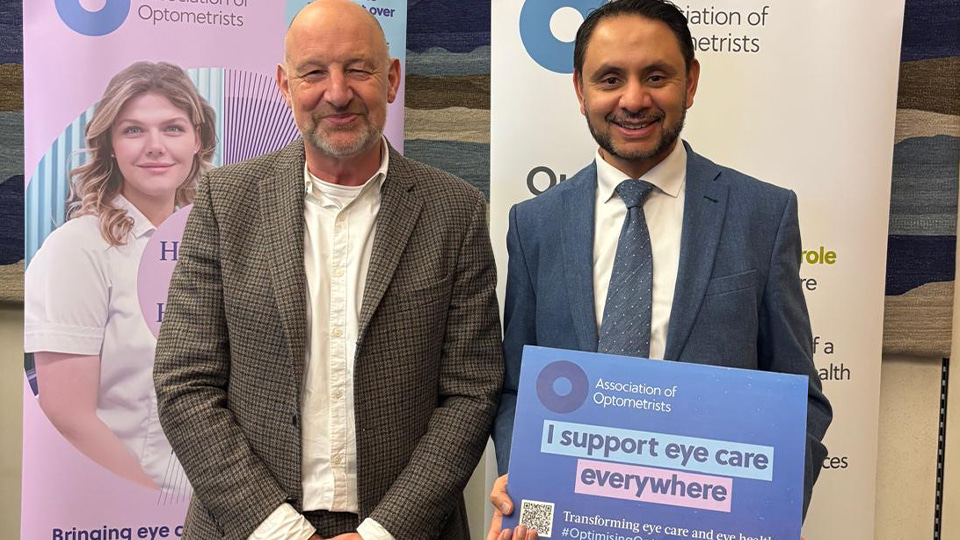
We held a Westminster drop‑in event to raise awareness of the role that community optometry can play in delivering faster, fairer and more convenient care. MPs heard how expanding primary eye care would ease pressure on GPs, A&E, and hospital ophthalmology services. The session also drew attention to the postcode lottery in access to eye care and demonstrated how community practices can provide timely treatment for minor and urgent eye conditions
Our Clinical and Policy Director, Dr Peter Hampson, gave evidence to the All‑Party Parliamentary Group for Health as part of its inquiry into improving access to primary care. He outlined how improved commissioning and better digital integration could enable optometry to contribute more fully to easing NHS pressures and supporting equitable access. The discussion reinforced that the Government’s ambition to shift more care into primary care settings will only be achieved if optometry is fully involved in shaping the reforms ahead
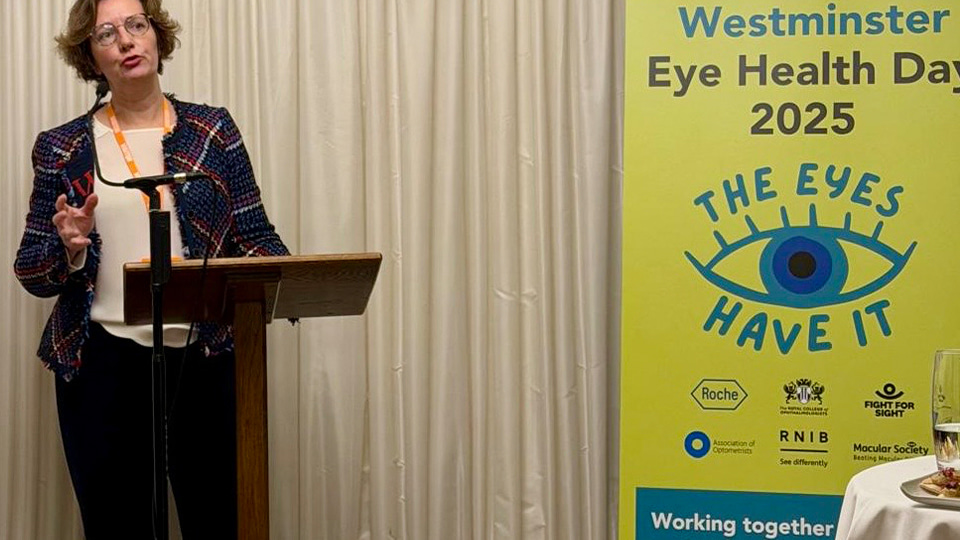
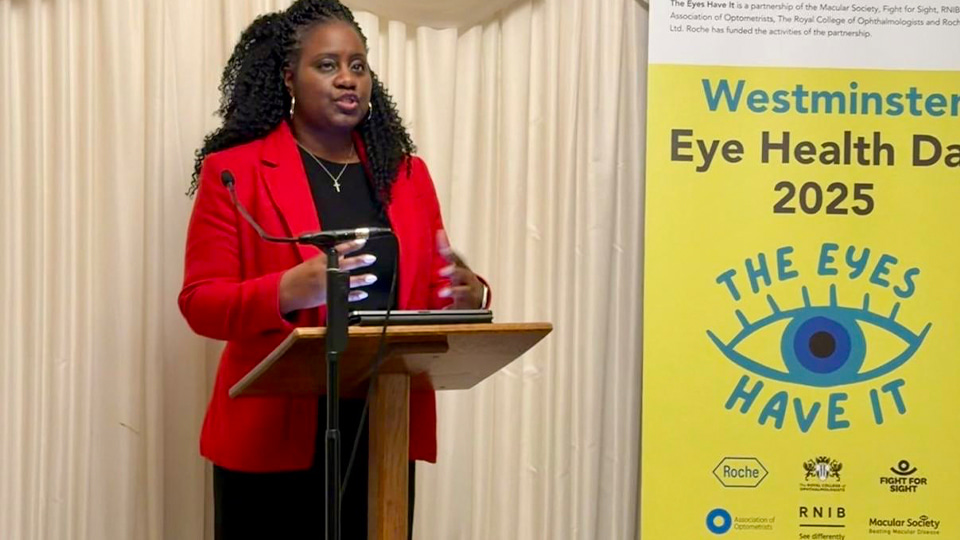
The Eyes Have It coalition marked Westminster Eye Health Day 2025 with a parliamentary reception attended by MPs and sector stakeholders. The reception helped to strengthen relationships with parliamentary champions and positioned the partnership as a key reference point for future system‑wide change
We responded to the Public Accounts Committee’s report on NHS waiting times, urging the Government to make greater use of primary eye care to address the growing backlog. With hospital eye departments facing unprecedented demand, we highlighted that optometrists are trained and equipped to manage many conditions safely in community settings. We emphasised that embedding primary eye care into NHS planning would improve outcomes, reduce pressure on hospitals and GPs, and build on proven schemes such as the Minor Eye Conditions Service
Following the Chancellor’s confirmation of new NHS investment, we stressed in our policy briefing that funding must support the whole of primary care if system pressures are to be resolved. We called for investment to be directed towards sustainable solutions, including greater use of primary eye care to deliver timely] treatment in community settings. We reiterated that optometrists can help ease pressure on hospitals, GPs and A&E while improving access for patients nationwide
Our joint research with the College of Optometrists showed strong public support for improving the UK’s vision standards for driving. Seven in ten adults support mandatory sight tests at both licence application and renewal, with many identifying the current number‑plate test and self‑reporting system as inadequate. Our joint recommendations set out how requiring proof of a recent eye test would help detect problems earlier, reduce collisions and support safer driving for longer
We welcomed new Government measures providing free prescriptions, dental care and eye care for young people leaving care up to age 25. While this will benefit tens of thousands of young people, we highlighted the wider need for equitable access to routine eye care for everyone across England. We urged the Government to build on this announcement by ensuring that a full range of eye care services is available on every High Street, reducing avoidable sight loss and easing pressure on GPs and A&E